Ponyhenge - Lincoln, Massachusetts a final home for rocking horses and a memorial for those gone too soon
Read MorePonyhenge - Lincoln, Massachusetts March 6th, 2021


Ponyhenge - Lincoln, Massachusetts March 6th, 2021
Ponyhenge - Lincoln, Massachusetts a final home for rocking horses and a memorial for those gone too soon
Read More
I have often been asked by friends looking to buy a camera, “What’s the best camera to get?”. My answer has always been “A camera is a tool, it depends on the job you want to do”. I sometimes relate cameras to cars, if you have a heavy load you want a truck, you want to go fast get a sports car, or if you have a tight budget look at a used car. It is no different with a camera, what do you want to photograph? Sports, landscapes, portraits? How will you use the images? Are you making large prints, posting to the web, publishing them? Finally what is your budget? No camera has ever done it all, and perfection really does not exist in life. Then this week Sony just announced the A1 which comes as close to the perfect camera as I have seen and appears capable of doing it all.
I have not seen one in person yet, and have not seen many image examples from it, but after seeing the release videos and hearing the specifications the A1 sounds utterly amazing, and if it is all they claim it to be I will be getting in line to get one. Sony appears ro be justified for reserving the A1 name for this model.
I will put some links in this post about the camera so I won’t go in to much detail about all the features. For my photographic needs I am interested in some of the following features:
- 30 fps
- 50 MP
- Superior autofocus
- The ability to use high end SD cards for storage
- a flash sync at 1/400th
It’s not a camera for everyone. It is a professional camera body so it doesn’t fit in your pocket and it has a $6500 price tag. I foresee this camera crushing the Nikon D6. Other than if you have Nikon lenses you love I don’t see why you would buy a D6 now? A D6 has 20.8 MP, only 14 fps, only uses XQD type media storage and weighs 44.8 oz which I am sure is heavier than an A1, both are currently the same price (expect a price drop in the D6 as the A1’s hit the marketplace). The D6 may have a superior battery life, because Sony has lagged behind there some, but with the extra battery pack you can put on the A1 that should hardly be an issue.
As I said above, I have not seen image examples yet, but knowing how good Sony sensors are I expect the A1 images to be amazing. This camera will be a game changer and it will force Canon and Nikon to counter it. I have also heard the Sony A1 is now the official camera of AP. One rumored delivery date is March 4th 2021 and I assume lots of reservations are being placed.
LINKS:
One of my go to cameras is a Sony RX 100 VI which fits in my pocket and I get great results with it. I did not upgrade to the Sony RX 100 VII because there were not enough improvements on the camera but I will most likely upgrade to the Sony RX 100 VIII which is rumored to be released soon. The improved autofocus, an f/2.8 aperture for all focal lengths are my primary reasons plus I like the hot shoe addition as well as it being a little wider lens. Below are the rumored specifications:
Rumored Sony RX100 VIII Specs
Sensor remain the same as 20MP sensor
New 10x zoom lens (two versions of the lens is in rumors a 20-200mm f2.8 and a 16-50mm f1.4) *
4k@60p for 5min
The camera will have the newest AF modes
USB-C connection
Hot shoe
Announcement expected in CES 2021
*The current Sony RX 100 VII has a ZEISS® Vario-Sonnar T* 24–200 mm2 F2.8–4.5 high-resolution zoom lens

Elsa’s self portraits with her husband and son.
On March 11th, 2020 my son and I stopped by the Museum of Fine Arts in Boston, which is one of my favorite museums. Even though at the time I knew COVID cases had reached the United States and things were changing, I didn’t think this would be the last exhibition space I would see up until now and till who knows when. The following day all Boston area museums closed.
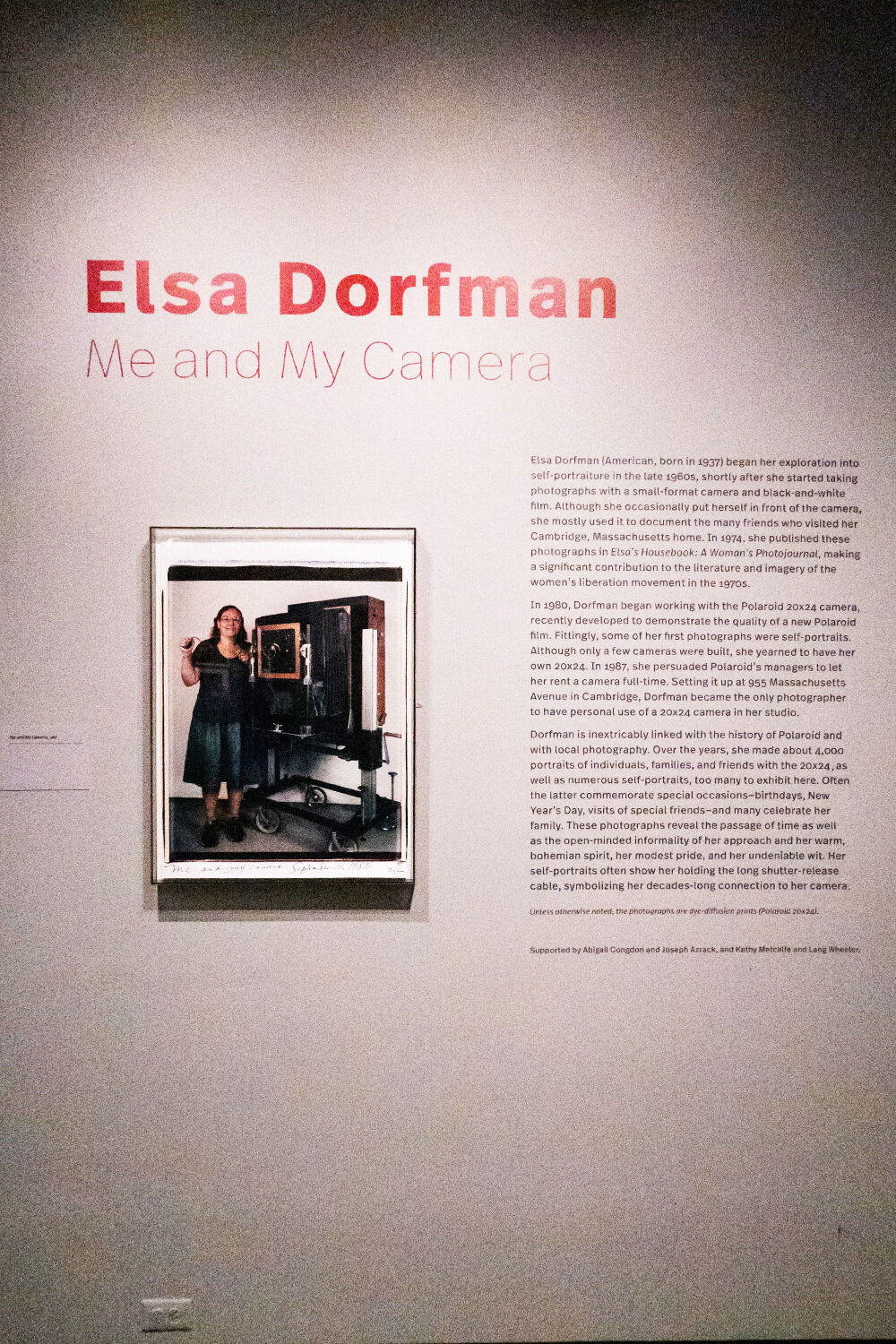
The Herb Ritts Gallery, the MFA’s primary photography gallery room, was showing Elsa Dorfman’s 20” x 24” Polaroid Prints in an exhibition titled “Me and My Camera”. It was scheduled from February 8th through June 21st, 2020. Dorfman was an American photographer born in 1937 who lived in Cambridge, Massachusetts. Her first notable work was her 1970 book: Elsa’s Housebook: A Woman’s Photojournal, which was seen as prominent within the women’s liberation movement of the 1970’s. Her notable work is her portraiture and this exhibition featured her images made with the very rare Polaroid 20” x 24” view camera, of which only five cameras were made. Dorfman began using this camera in 1980 and in 1987 she was granted a full-time rental of the camera. She was the only individual to have full time use of one. Over her career she made over 4,000 portraits with this camera.
The MFA described Elsa as having a “Bohemian Spirit” and I think that spirit really shows in her self portraits.
There are a couple things I really came to appreciate about this exhibition. Walking in the MFA door that day I did not know anything about Elsa or her work. But when I left that day, I had an appreciation for who Else was and how passionate she was about photography. We all know that we now live in the “Selfie” culture, where millions of self portraits are posted and shared daily on social media. It is how so many of us just say hello to each other. I do not want to deviate into a long discussion about self-portraits, but what I want to mention is the difference between Elsa’s portraits and the “Selfie” of today. The most obvious thing is the process. To create a 20” x 24” Polaroid print takes time, effort, and expense. But as simple as Elsa’s portraits seem they really are crafted in a way which really seem to reveal herself to the viewer. I think she portrays herself exactly as she truly is, and does so being very comfortable in herself. The MFA describes the exhibition of Elsa’s work perfectly with this statement: “Like all of Dorfman’s work, the photographs in this exhibition radiate warmth, inviting visitors into the intimate moments of an extraordinary life.” While looking for links to included in this blog post I discovered that Elsa passed away from kidney failure on May 30th, 2020, while her prints still hung on the walls of the MFA. The New York Times obituary had a fantastic quote by Elsa about the subjects she photographed: “I do not try to probe or illuminate their souls.” “They embrace their uneven features and the cowlick that won’t stay down — even the few extra pounds. The Japanese have a word for this pose of total naturalness and total attention — ‘sonomama.’” The Times also had another great quote from Elsa: “The camera is like a fork or a spoon. It’s an instrument you eat your soup with. It’s not the soup.” I just love the insight.
The other thing I came away with was better understanding of the 20” x 24” Polaroid view camera. I was very aware of William Wegman’s images and his use of the Polaroid view camera while I was studying at Arizona State University in the mid 1980’s. I think I even saw one of these cameras in person before. It was during my 1988 trip to New York to see the Winogrand retrospective at MoMA and went all over the city. It was an epic trip, I exposed at least a couple dozen rolls in my Leica walking around the street and I checked out a bunch of galleries. I think it was somewhere near 568 Broadway, there were a few galleries in that area, where I wandered into a space with all these Wegman Polaroid prints of Fay Ray on the walls. At first, I thought it was a gallery then I figured out it was a studio. No one was around so I explored it for a few minutes and I think I saw a 20” x 24” Polaroid camera in there, that was 32 years ago so my facts could be off but I definitely remember concluding at the time it was Wegman’s studio (I have tried some on line searches today to confirm the location, just for my own curiosity, but haven’t had any success). Finally, a woman came out from a back room and asked why I was there. She was super nice, and politely explained it was a private studio. Their fault for leaving the door open, but I thanked her and left while taking another quick glance around the space. Funny thing was someone also left the roof access door open in that building too, and the roof was actually had some nice vistas of SOHO.
I spent some time today researching the 20” x 24” Polaroid view camera today and here are the links to those sites:
Plus since I brought him up, here are some Wegman sites (always healthy to enjoy his images, especially in the stress of today’s world):
https://www.speronewestwater.com/artists/william-wegman
https://www.smithsonianmag.com/arts-culture/fay-ray-the-supermodel-dog-48273759/
Links for Elsa Dorfman:
https://www.harvardmagazine.com/2017/09/elsa-dorfmans-portrait-photography
The MFA also was showing the work of Iranian born photographers Gohar Dashti and Bahman Jalali. The images were beautifully crafted and again I enjoyed seeing work which I had not seen before.
Gohar Dashti - Iranian Born 1980 - “Home 2017” Ink Jet Print

Museum of Fine Arts - Boston, Massachusetts - March 11th, 2020

Father Serra statue - Los Angeles, California 5/29/20
I have written posts before about how Garry Winogrand is my favorite photographer. I saw his MoMA retrospective in 1988, his SFMoMA retrospective, the entire Women are Beautiful exhibition at Pier 24 and my library has lots of Winogrand books. One of my favorite books is John Szarkowski’s “Winogrand - Figments from the Real World”, and it was that book which led me to me to photograph the Father Serra statue pictured above.

I have gone through the book many times over the years, and early on I found something intriguing. That both Winogrand and Robert Frank had photographed the same Father Serra statue in Los Angeles in 1955. Neither of them knew one another but both stumbled on to this same statue, in the same year, while exploring America, and independent of one another. A statue that wasn’t famous and was in an unassuming part of Los Angeles. Below are their images from Szarkowski’s book.
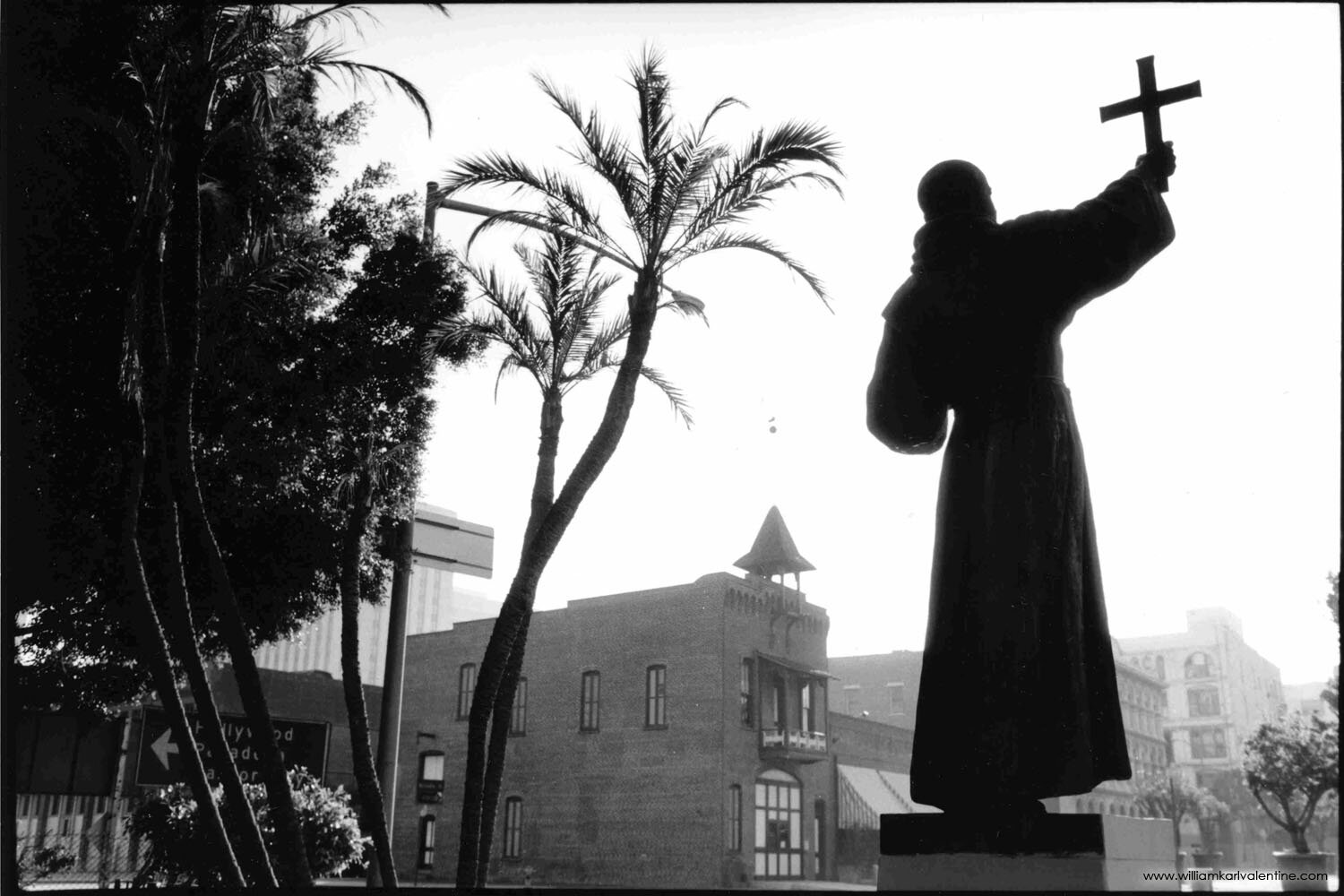
Back then I decided that I also wanted to photograph the statue, maybe as a right of passage as a photographer, maybe just out of interest to see how my image would compare to their images. Using the two images I had a good idea where the statue was and I decided to photograph it on my mom’s birthday, May 29th, in 1995. I had a feeling it might become an important photograph for me so I chose a memorable date, and there was no rush since the statue wasn’t going anywhere. On the way home from Pasadena, after seeing my mom, I headed to Sunset to photograph the statue. When I got there not only was the statue not there, that part of Sunset Boulevard had been renamed and the streets were reconfigured. I got out my Thomas Brothers map (iPhones and mobile internet access did not exist yet) and began searching. After driving around for a few minutes I located the statue a couple blocks away in what is now called Father Serra Park at N. Alameda and Los Angeles Street, across from Union Station. Having a new location my background options were completely different. I decided on photographing the statue from behind, looking West, with the sun creating a good silhouette of the cross. I included a couple palm trees to frame it and the 110 Freeway on ramp sign because it said “Pasadena” & “Hollywood” on it. I actually liked my image better than theirs, and a print hangs in my house still (CA - 087 #17).
For whatever reason I started thinking about this image in this past May and wondered how long ago I had photographed it. I checked, it was in 1995, and I then realized 2020 was the 25th Anniversary. I decided to photograph the statue again on my mom’s birthday. On May 29th my son and I headed to Los Angeles on the way to Pasadena. We parked at Union Station, masked up, and headed over to photograph Father Serra.
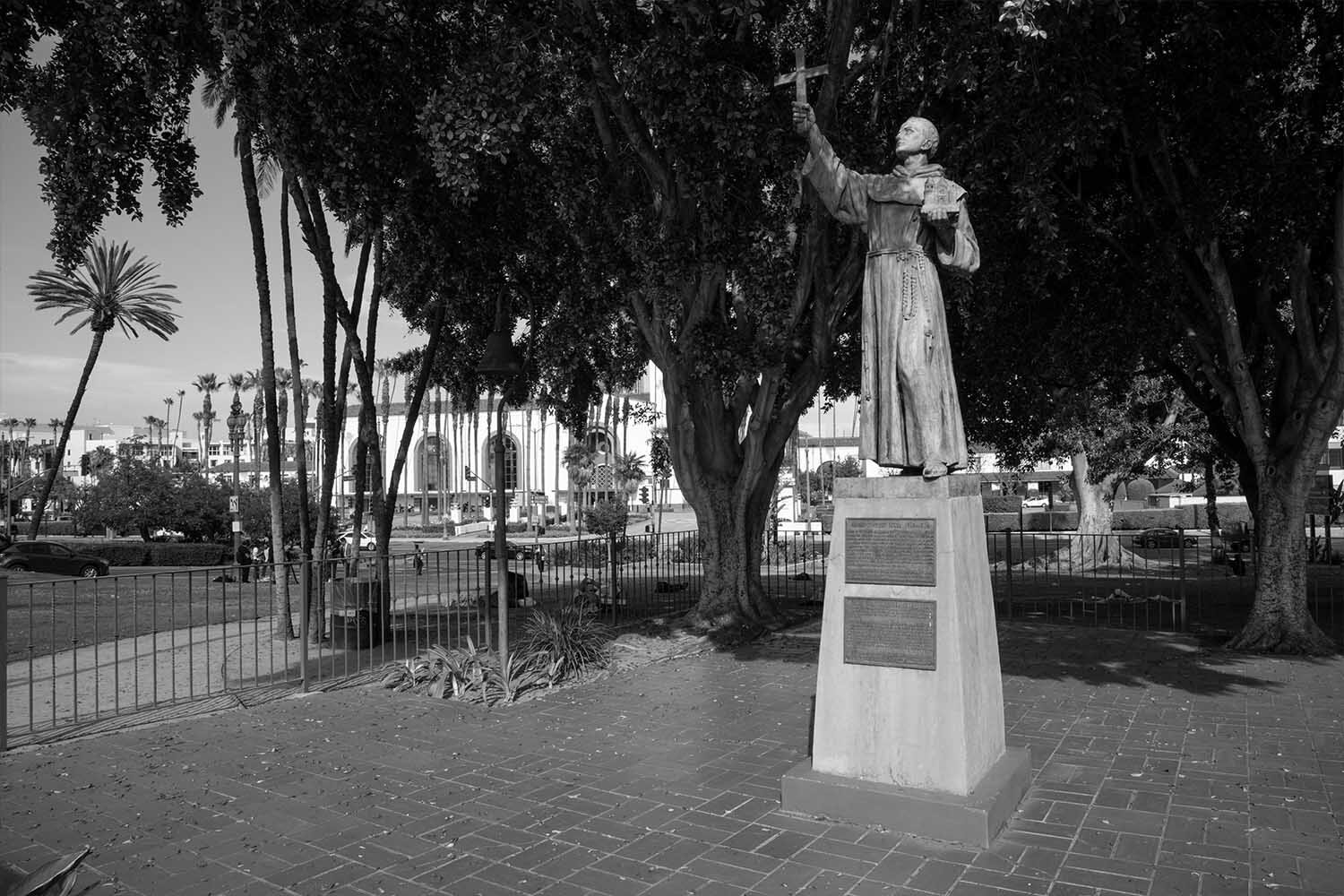
The palm trees were gone and the tree behind it had grown so much it engulfed the statue. The freeway sign had been moved and there was now a fence around the statue area, I assume to keep the homeless from camping under it. I tried all the angles above and I think the image with Los Angeles City Hall in the background was the best image now.

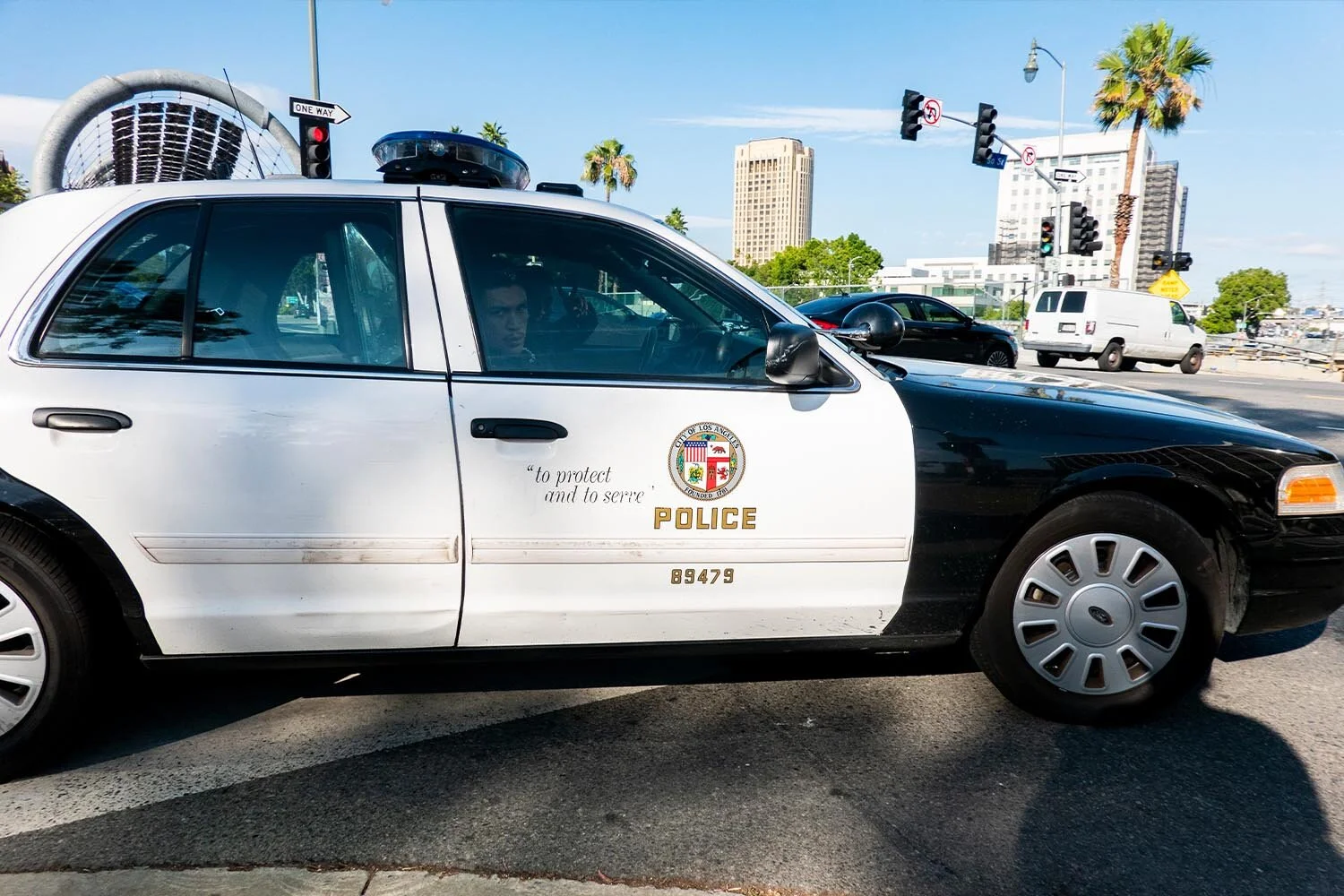
As I was finishing up we heard sirens, lots of them, and saw several news helicopters South of us. We began walking towards City Hall and saw multiple LAPD patrol cars headed to City Hall and LAPD’s Headquarters, the George Floyd Protests of Los Angeles were beginning.
I photographed some in the area and found the protesters were much farther South and moving away from us. They were attempting to take over LA Live and Staples Center. Because of the distance and not knowing the situation down there we headed back to the car and went to see my mom.
As we all know the protests and civil unrest have continued, and have expanded to encompass so many more things. On June 20th , sixty indigenous activists used the current climate to stage a protest at the Father Serra statue, The activists invited the Los Angeles Times to come document the Father Serra statue being toppled and the Times accepted. The activists pulled the statue down in a ceremony, poured red paint on the head, spray painted “ACAB” (All Cops Are Bastards) on the torso, and cut the cross from his hand. They left the statue afterward but kept the cross as symbolic souvenir I assume. I have no idea how they linked the anti police narrative to Father Serra but I guess it made sense to someone with a can of spray paint.
25 Days after had I re-photographed the Father Serra statue (my 25th Anniversary of photographing it) I returned and photographed the empty pedestal.
This man saw me photographing where the statue had been and came over to start a conversation and take his own photographs. He said as a kid he had gotten in trouble at school for talking about Father Serra’s atrocities against indigenous people instead of talking about how the missions helped to develop California. No idea if that was true but he was polite enough and I have absolutely no problem with his viewpoint. I respect his argument and I was not here in the 1700’s to see first hand what the conditions were like at the Missions.
What I do have a problem with is 60 people deciding to destroy something that belongs to an entire community of millions of Angelinos . We can not accept acts such as this to be considered an exercise of one’s “freedom of speech” if we are to maintain a Democratic society. If the activists wanted to petition for an Indigenous Statue to be placed next to the Father Serra statue to tell the full story, great!, I would support that 100%. If the public display of the likeness of a man who died 236 years ago is hurtful to the majority of the community, and the community decides to have the statue removed to a secluded place where it won’t offend people, then I am fine with that too. I am also not writing about this to defend Father Serra or the Catholic Church, nor to criticize people who exercise their First Amendment Right appropriately. But you can’t destroy history, no one rights any wrongs with toppling a monument. In this case, for me as a photographer, that statue had so much more meaning than the person it depicted because of the people who have photographed it. Its gone now, and what gain did that group get besides a brief moment in the news spotlight which has already faded, especially in today’s world of constant conflict and health worries.

When I studied Photography at Arizona State University, Bill Jay taught me about Walker Evans and the FSA photographers. About 30 years ago I decided to start building my photography collection by ordering a number of my favorite FSA prints from the Library of Congress. The largest print I ordered was a Walker Evans print from Bethlehem, Pennsylvania.
I love photographing in cemeteries, I always find it fascinating to work there, and I loved the composition of this Evans print. I made a point to stop in Bethlehem on a 2006 road trip to photograph this cemetery. I got to the same spot in St. Michael’s Cemetery as Evans did in 1935, photographed, but was pressed for time to get back on the road. I put it on my bucket list to return and spend more time there one day.
In March of this year I was in Boston with my son, watching his hockey playoffs, with the plan being to drive his truck back to California through the South after the season. We have never seen the south and were looking forward to exploring it. When COVID-19 hit Boston his season was soon cancelled and it was obvious the country was going to shut down quickly. I decided on the most direct route home so we wouldn’t get stuck, but I still took in to account the things I wanted to photograph along the way, Bethlehem being one of the spots.

Our first night on the road trip was spent in Bethlehem and I used the following morning to photograph before continuing on to Chicago. I had seen one thing driving in that I wanted to photograph, Herbert’s Typewriter , and that led me to a few other discoveries before the cemetery. I got lucky on the way to the Bethlehem Steel Mill when I saw an old timer with a camera waiting by the Norfolk Southern Railroad tracks. I assumed a train was approaching so I got my son to stop. Turns out I was right about the train which arrived five minutes later. I also discovered that the man with the camera was Bob Wilt who lives in Bethlehem and has been photographing trains in the Lehigh Valley for well over 50 years.

Photographer and author Bob Wilt watching a Westbound train - Bethlehem, PA

The Bethlehem Steel MIll
The City helped create an Arts District called the SteelStacks around the old Bethlehem Steel Mill which allows awesome access to photograph the old steel mill. The last time I was there it was somewhat fenced off, now it is a fantastic place to visit, so well designed. It was incredible to get so close to the mill and appreciate the scale of the facility.

The approximate line of Walker Evans’s 1935 photograph
St. Michael’s Cemetery is still not cared for, but that adds to its photographic qualities. The large white cross headstone in Evans’s photograph is gone now, I need to check my files because I thought it was there 14 years ago. Whenever there is change in a subject that I specifically went to photograph I do the obvious, I adjust and see what other opportunities there are. I had plenty of great images there still. All my photographs from Bethlehem are posted on a new second web site which just features my images from 2020. I decided to launch a second website because most of my new work is in color and 2020 just belongs off on its own, its just an insane year.
I was impressed with Bethlehem, I would love to go back there and photograph again.

William Karl Valentine in St. Micahel’s Cemetery - Bethlehem, Pennsylvania Photo by Brent Karl Valentine 3/14/20
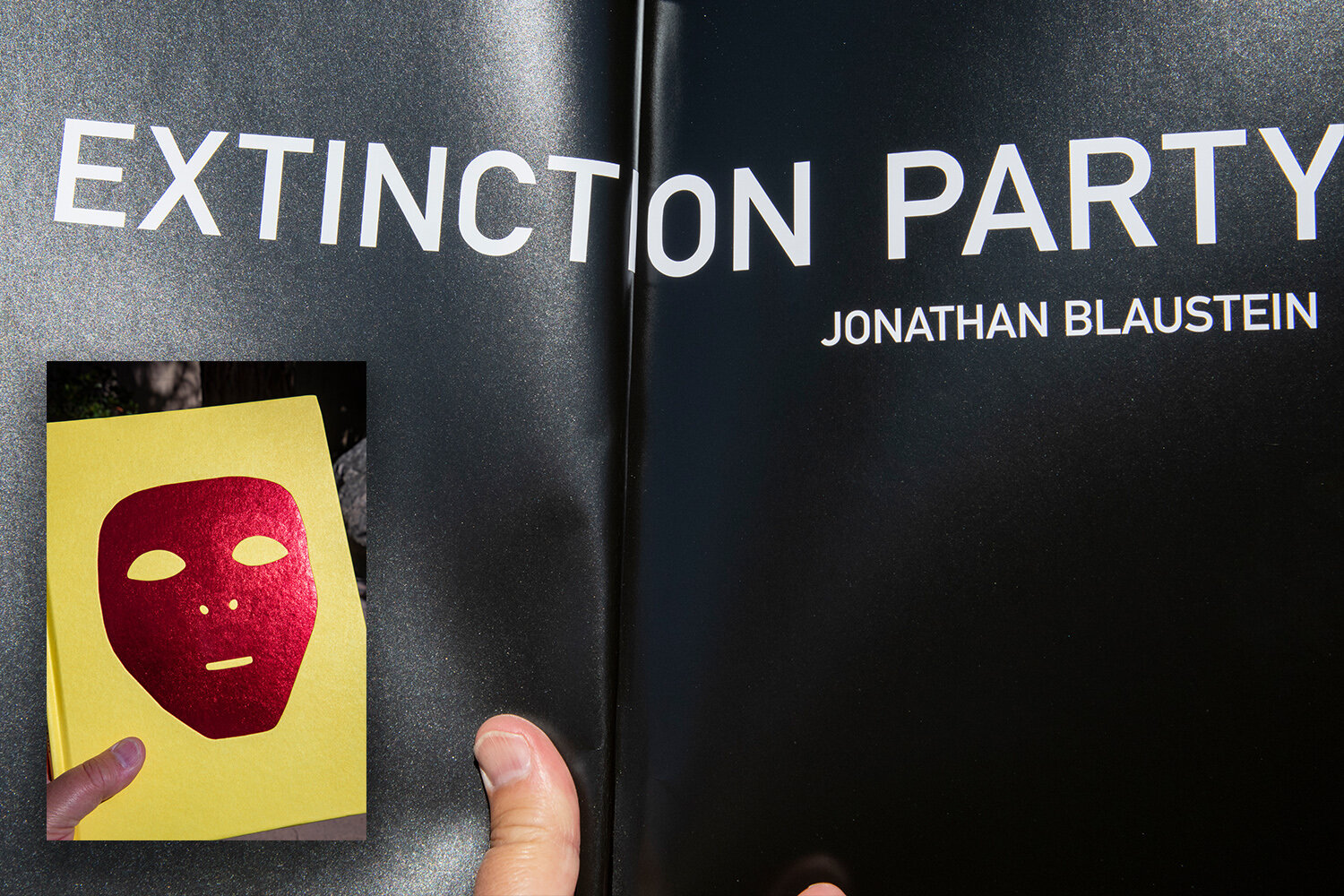
I have known Jonathan Blaustein for a few years now, we met at a Medium Festival portfolio review. He liked my work and I liked his insight into the medium of photography. He is an educator and writer (contributor to the New York Times Lens Blog and others) as well as being a photographer.
In November of 2019 I saw a Tweet by Jonathan about his Kickstarter campaign for a proposed book. The project was described as this: "Extinction Party" is a limited edition photo book about over-consumption, and its impact on the planet”.
I headed over to his Kickstarter campaign and checked it out. I liked the concept but was not exactly sure how the example images were congruent. I figured that seeing the finished product was the only way to fully understand it so I jumped in and supported Jonathan’s project.
With the current pandemic my copy arrived later that most folk’s copies because it was delivered to a closed office, where I used to ship all my packages to. A few weeks back I finally got my copy and now I am finally getting time to review the book with this blog post.
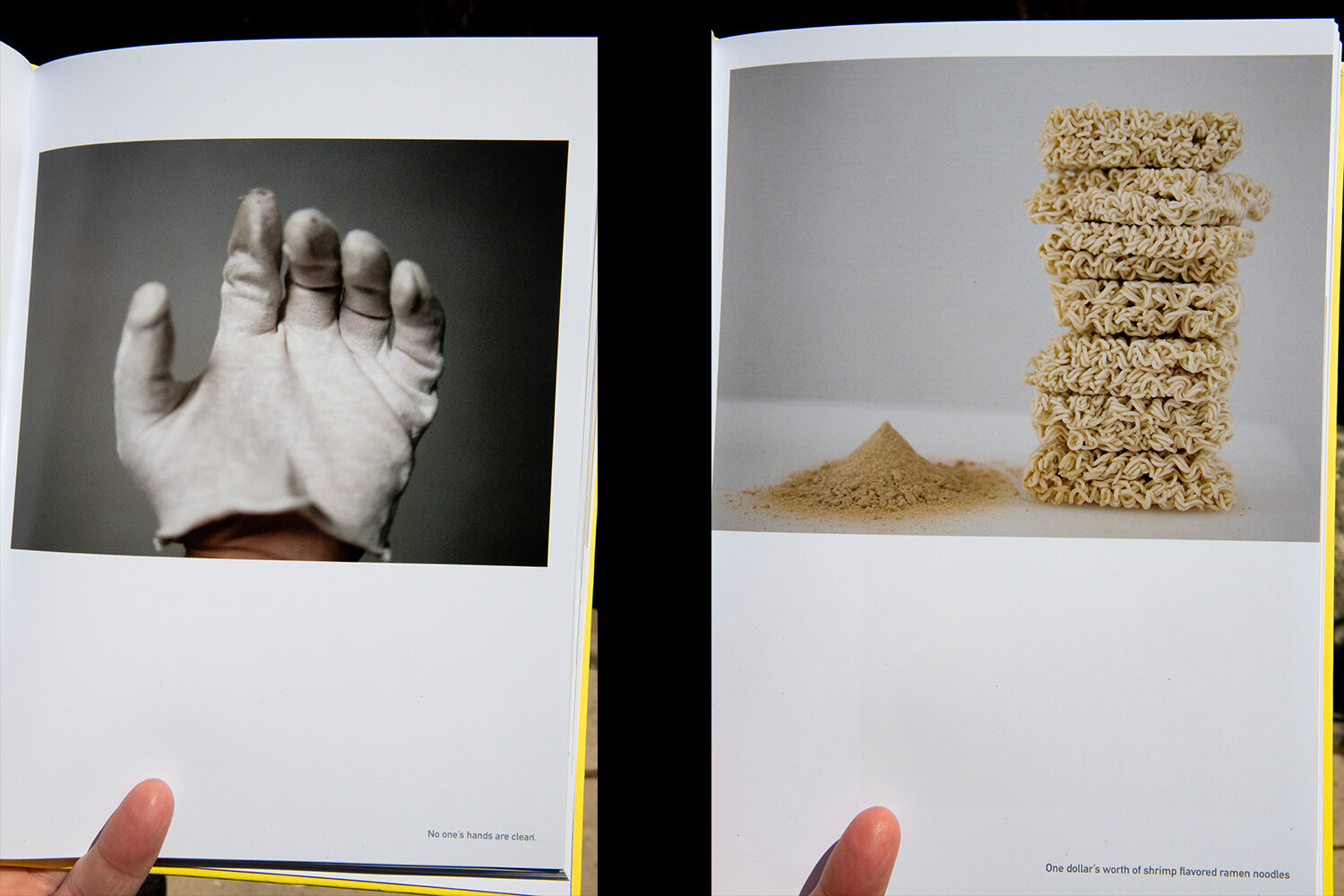
I wrote Jonathan after spending some time with the book and told him this: “You nailed it, I wasn’t quite sure what it would be like when I jumped in on the Kickstarter but figured it would be good. It’s very tight.” The concept was good when he went to press in 2019 and viewing it now during the COVID19 pandemic, the book’s value has multiplied, it is pretty incredible. There are so many parallels that can be drawn between the questions Jonathan asks about the over-consumption habits of our society and the priorities in life people have rediscovered after living in a COVID19 lockdown world. There are also some incredible ironies now in the book, like the image of a white cotton museum glove with the title “No one’s hands are clean” and image of a candy necklace titled “One dollar’s worth of candy necklace from China”.
My work is so different than Jonathan’s body of work (yes, diversity within the medium is a good thing) so when I was going through the book seeing his message so well, how the images all tied in together, I actually got fired up. I loved the fact that even though we see differently, I still found his message was clear and concise. This brings me to the images in the book, since it is a photography book, I need to talk about the images. I guess at first glance someone could describe many of his photographs as simplistic product portraits but I found when I spent time with them, and took in the entire project, his images have a lot of depth. The images are carefully constructed and do have a lot of value individually but then more value when viewed as a series.
The book was published by Yoffy Press and printed in Amsterdam. Solid build, nice paper stock & printing, and the layout and design are prefect for the project. I encourage folks to check it out.
Click here for a Link to Yoffy Press for more information and ordering

Dr. Maurice Berger at the Legacies of LIGHT Symposium at the Center for Creative Photography 1-19-20
As I have written before in posts, when I was at the Legacies of LIGHT symposium at the Center for Creative Photography back in January I realized I was participating in something very special. Not only was the event documenting an important period in the history of the medium of Photography but I felt the symposium itself would one day be looked back upon as an historic event. One thing I noted was that the symposium would most likely be the last time all these incredibly influential people, those who helped shape where our medium is today, would be in the same room together. I had no idea how soon this would happen but on Monday March 23rd the Photography / Art / History worlds lost an important professor and curator who was at the symposium.
Maurice Berger was a writer, cultural historian, and curator whose work focused on the intersection of race and visual culture. In 2018 he won the “Infinity Award” in Critical Writing and Research for his NY Times Lens Section columns “Race Stories”. He was also the Research Professor and Chief Curator at the Center for Art, Design and Visual Culture, University of Maryland, Baltimore County. His spouse of 27 years was Marvin Heiferman who was a former LIGHT gallery employee and presenter at the symposium. Maurice passed away in New York from complications related to the COVID-19 virus.
I did not know Maurice personally but I photographed him several different times at the symposium, including the moment he was photographing Marvin with their long time friend a fellow LIGHT gallery alum Laurence Miller, some of my best images from the symposium.
Earlier this month I sent prints to many of the people I photographed at the symposium . Larry Miller got his prints before Maurice and Marvin, Larry showed his prints to Marvin who immediately reached out to me asking for a copies, not knowing I had already made him prints. I am in shock right now with the realization that two weeks ago I was trading emails with Marvin about these images and two days ago Maurice died from the COVID-19 virus. After hearing the news last night I looked on Maurice’s Instagram page and saw a week ago he had posted an image of Marvin photographing in Hyde Park, NY and made a comment in another post about being in a crowded upstate New York market listening to people discuss the virus. Maurice’s decline and passing must have been incredibly fast which is scary. I was in Boston with my son, Brent, when concerns about COVID-19 started to really take hold in this country. We had planned a long road trip back when Brent’s hockey season ended but changed plans for a fast direct route when we realized how serious the situation was becoming. We have been back in California for almost a week now after witnessing the country shut down more and more as we traveled West. Hopefully we will continue to stay healthy as this pandemic passes through our society. Maurice’s passing brings mortality in to focus for me one more time this year (just a brutal year of loss), hopefully others in society will recognize the seriousness of the situation and be even more vigilant in their habits. My thoughts and prayers go out to Marvin, Maurice, and all their family and friends.
Obituaries for Maurice:

Anne Breckenridge Barrett, Peter MacGill, Susan Harder, Laurence Miller, Jack Sal, and Rick Wester.
The CCP describes the Qualities of LIGHT exhibition as this: “The Center for Creative Photography’s exploration of LIGHT Gallery is an institutional history that investigates the impact of this commercial space through its role in the larger community.”
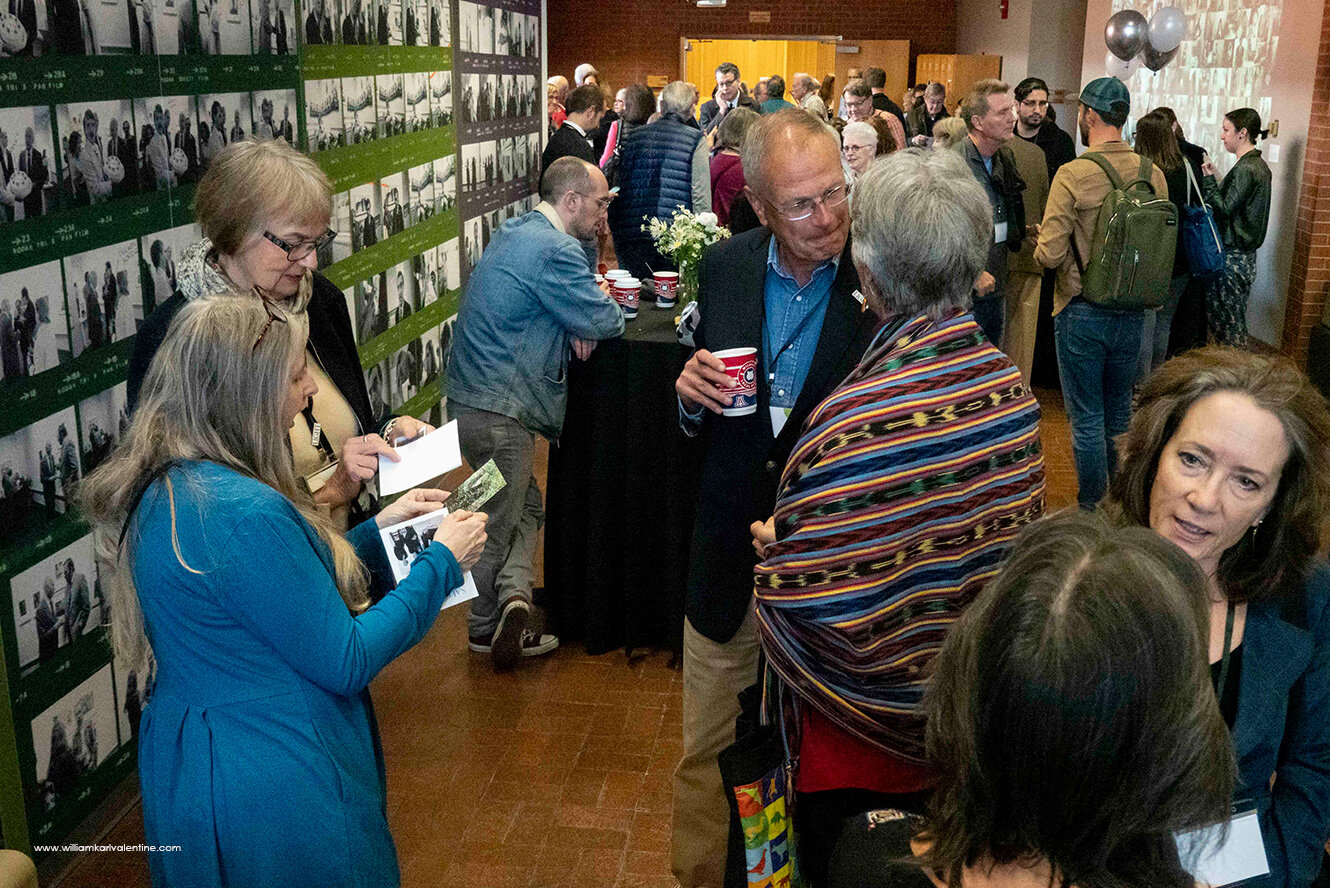
When I attended the opening in December, I saw the description was accurate. It’s a unique exhibition in how it recreated certain physical elements of the LIGHT Gallery, displayed works of LIGHT’s artists, had a component for highlighting emerging artist of today (an important function of LIGHT back when it was open), and was able to show how important this gallery was to the history of the medium. One of the most impressive elements for highlighting the impact LIGHT had on photography today was Curatorial Assistant Adam Monohon’s brilliant concept of creating a line map showing the connections of so many important photographers, curators, and photography institutions back to LIGHT gallery. The exhibition also has so many cool interactive elements which I documented in a separate post. I had no idea that so many of the people who effected my growth as a photographer were linked back to LIGHT in some way. I think the entire exhibition really does well to capture the spirit of LIGHT and that time period.
Another important aspect of the exhibition is to highlight the connection between CCP and LIGHT. Harold Jones was the first Director of LIGHT and his vision set the course for the galley. Harold left LIGHT to help with building the Center for Creative Photography and the Studio Photography Program at the University of Arizona.
So this blog post is about the “Legacies of Light” symposium which was held in January at the CCP in conjunction with the exhibition. I signed up for the symposium as soon as I learned of it after having my work included in the exhibition. I thought it would be a good experience to learn more about LIGHT’s history and to have an opportunity to interact with so many people involved in photography. I was blown away with the experience of this symposium, it far and away exceeded my expectations.
Here is a link to the description of the speakers and the subject matter o the “Legacies of Light” symposium on CCP’s website. It is the best way to accurately describe the event in detail.
Another great resource is this link of CCP’s videos of the symposium: https://www.youtube.com/channel/UCRnlWp7M-YuVQY_okRmQmGA .
Now for my impressions. While attending the Legacies of Light I quickly realized one of the symposium’s primarily goals was to document the history of photography’s evolution to becoming a recognized as fine art. The people connected to LIGHT, many of whom attended the symposium, played so many important roles in photography’s rise in status within the art world. The symposium also talked about the current state of the photography community and our future. Everything was so well done by Anne Breckenridge Barrett, Rebecca Senf, and the entire CCP staff. There is so much to cover I will just jump in and start talking about the weekend and hopefully all my notes and recollections are accurate.


Things started Friday with small tours of the CCP facilities (I covered that experience in this linked: blog post) and a Keynote speech by Britt Salvesen who is the Curator and Head of the Wallis Annenberg Photography Department at LACMA. She gave an overview of LIGHT’s impact on the development of fine art photography followed by a panel discussion with Fern Schad and Charles Traub about LIGHT. Fern owned LIGHT with her husband Tennyson. She had an early interest in photography and had worked for Bill Jay in England before coming to the US where she spent time as a picture editor for LIFE magazine. Tennyson was an attorney who had the vision for the gallery and supported it financially. Traub spent time as a Director of LIGHT gallery and later was instrumental in establishing The Museum of Contemporary Photography in Chicago. He is also an established photographer an educator. I was fascinated by how much effort went in to establishing the gallery and maintaining it.


Saturday began with two former LIGHT employees Marvin Heiferman and Sally Stein reminiscing about the gallery and the atmosphere of New York in the 1970’s art world. Marvin spoke about how he learned to “see” pictures at LIGHT. He said Harold Jones taught him to “Just look at stuff” and to learn by the experience of looking. He went on to explain how he came to understand what pictures communicate to viewers. This really resonated with me because I feel too many people today don’t take the appropriate amount of time to actually look and experience images, we live in an Instagram world of the two second page view then “Like and Swipe”. Marvin gave examples of how photography wasn’t always accepted as art then. He remembered how a New York Times art critic had told Harold that photographs were not art. He also remembered an occasion when a woman accidentally got off the elevator on their floor while looking for another gallery He said she stepped off the elevator looked down the gallery wall at all the prints and stated “Oh photographs…” then stepped immediately back on the elevator. Marvin said Weston Neff and representatives from the Fogg Museum at Harvard would come in to the gallery but MoMA’s John Szarkowski would not, speculating because he didn’t want to acknowledge there was another “game in town”. Sally spoke to how the gallery struggled financially to survive.


Michal Raz-Russo, who is the Associate Curator of Photography at the Art Institute of Chicago spoke next of her Master’s thesis research about LIGHT gallery. She talked about how LIGHT was innovated in how they presented work, specifically hanging rows of images in grid form which hadn’t really been done before. She described Light’s 1972 exhibition of Stephen Shore’s “American Surfaces” which was shown three rows high and taped to the wall (No installation prints from this exhibition survived) and the 1975 exhibition of Garry Winogrand where LIGHT displayed over 100 of his prints behind glass and “L” hooks on one wall. Michal said Harold Jones used the grid style to try and show how Winogrand approached photographing: “Rapidly and Quickly”. It was fascinating to learn this because I can see the impact on some of the exhibitions I have seen. Most notably the Pier 24 Gallery exhibition where Winogrand’s complete “Women are Beautiful” series was displaced in a grid in one room while Stephen Shore’s prints were in another room. I can also recall MoMA, MFA, The Milwaukee Art Museum, The Art Institute and other institutions using grids in fantastic exhibitions, so I found it interesting to know where the possible origins of these designs came from.
Andy Grundberg spoke next on the evolution of photography as an accepted art form and LIGHT’s important involvement in that process. For those of you reading this who aren’t familiar with Andy he is possibly photography’s most well known art critic and the author of numerous great books on photography. He has written for the New York Times and is also a professor at the Corcoran School of the Arts and Design at George Washington University. Andy was in New York City during this period and summed it up perfectly when he commented “I was a witness of photography at its most incredible time, the 70’s and 80’s”. I loved hearing him describe the New York scene like the print bins at The Witkin Gallery and studying under Lizette Model at the New School. I am also interested in upcoming new book, How Photography Became Contemporary Art because I understand there was considerable focus on LIGHT gallery’s impact.
Becky Senf lead a Q&A panel session next which focused on the history of photography and LIGHT’s impact. In summary they acknowledged how prior to the Witken Gallery and MoMA showing photographs that photography magazines and publications were the primary source for people to see good photography (way different than today’s Instagram era). They spoke how Winogrand and other photographers all got their start with photography-based magazines. Fern Schad, LIGHT’s co-owner, brought up how LIFE magazine closed in 1972 with the advent of television news, and how images on TV are fleeting. The panel spoke of Susan Sontag’s writing on photography and John Szarkowski’s catalogues at MoMA and how photography began to be looked at for its artistic value and not just a means of describing news. Michal Raz-Russo added to that saying that some Photojournalism is now starting to be accepted as artwork.
The panel recognized the important influence entities like The Society of Photographic Education, The George Eastman House, The ICP, National Geographic, The Visual Studies Workshop and others had on the medium. They also identified that the 1970’s were really when much of the movement occurred; in example the first formal photography department was at the Art Institute of Chicago in 1974. Becky Senf then pointed out something very important when she said “It’s remarkable how much (photography) history from the decade of the 1970’s isn’t documented.” Becky’s comment came in to focus for me more and more as the weekend went on. I realized the symposium was really focused on preserving photography’s history while it was still possible to get it firsthand from people who were part of it. Looking around the room there were so many icons from the industry and I knew because of reality of their ages that this symposium was most likely the last time you would have so builders of the medium together in one room. I also realized that with all my previous history of photography courses the focus was primarily on the photographers. Yes, Beaumont and Nancy Newhall were recognized, and we used their textbook, and we were taught about Stieglitz’s influence but most my knowledge was on image makers. It makes since because I studied at Arizona State University in the mid 1980’s when this New York scene was still strong and the Center for Creative Photography was just getting started. For me personally it was very good to grow my knowledge of the medium. By Sunday I realized the symposium was not only exploring and documenting the history of the medium, and considering its future, but I think the symposium was becoming an historic event in the history of the medium itself by what was being accomplished there.
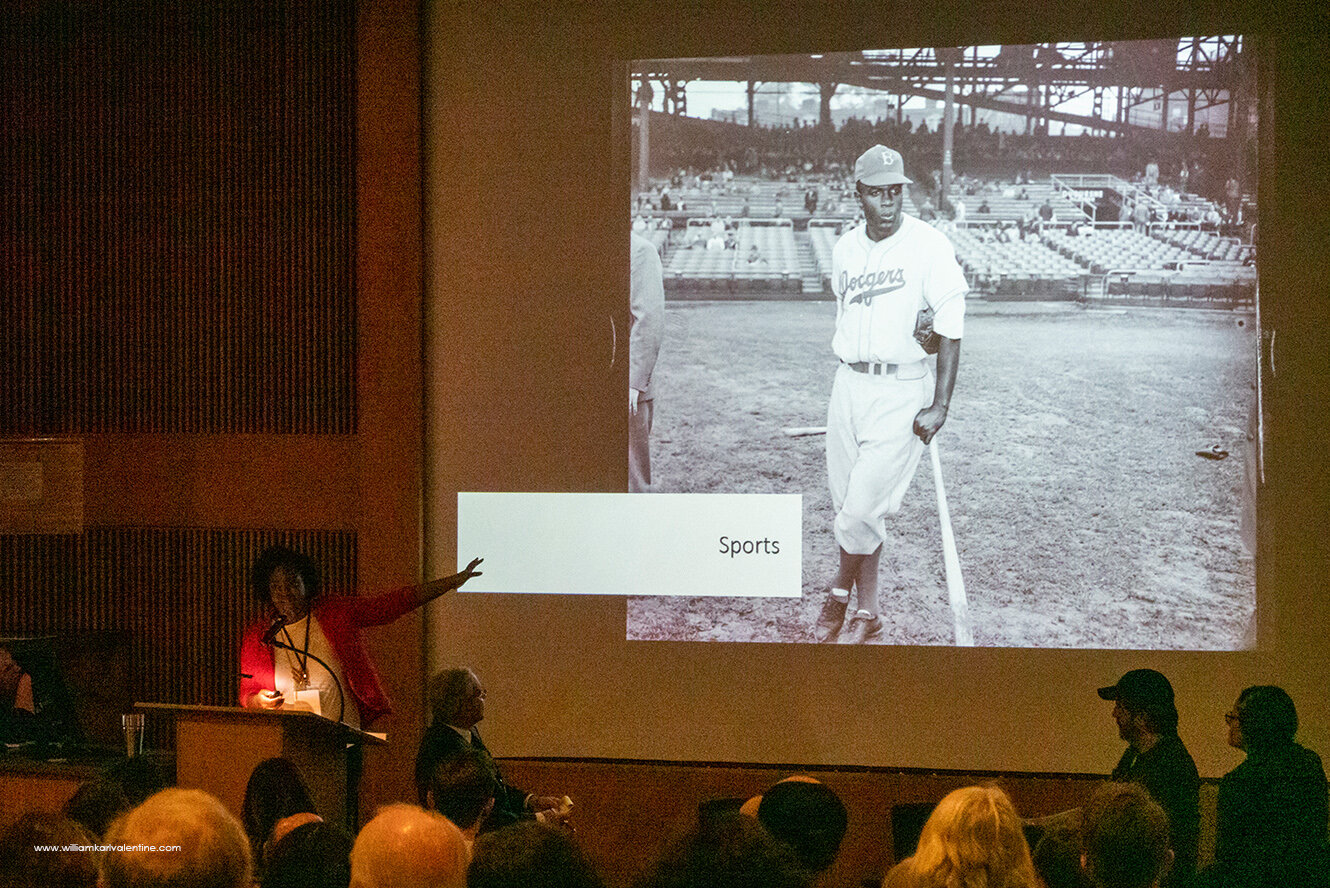

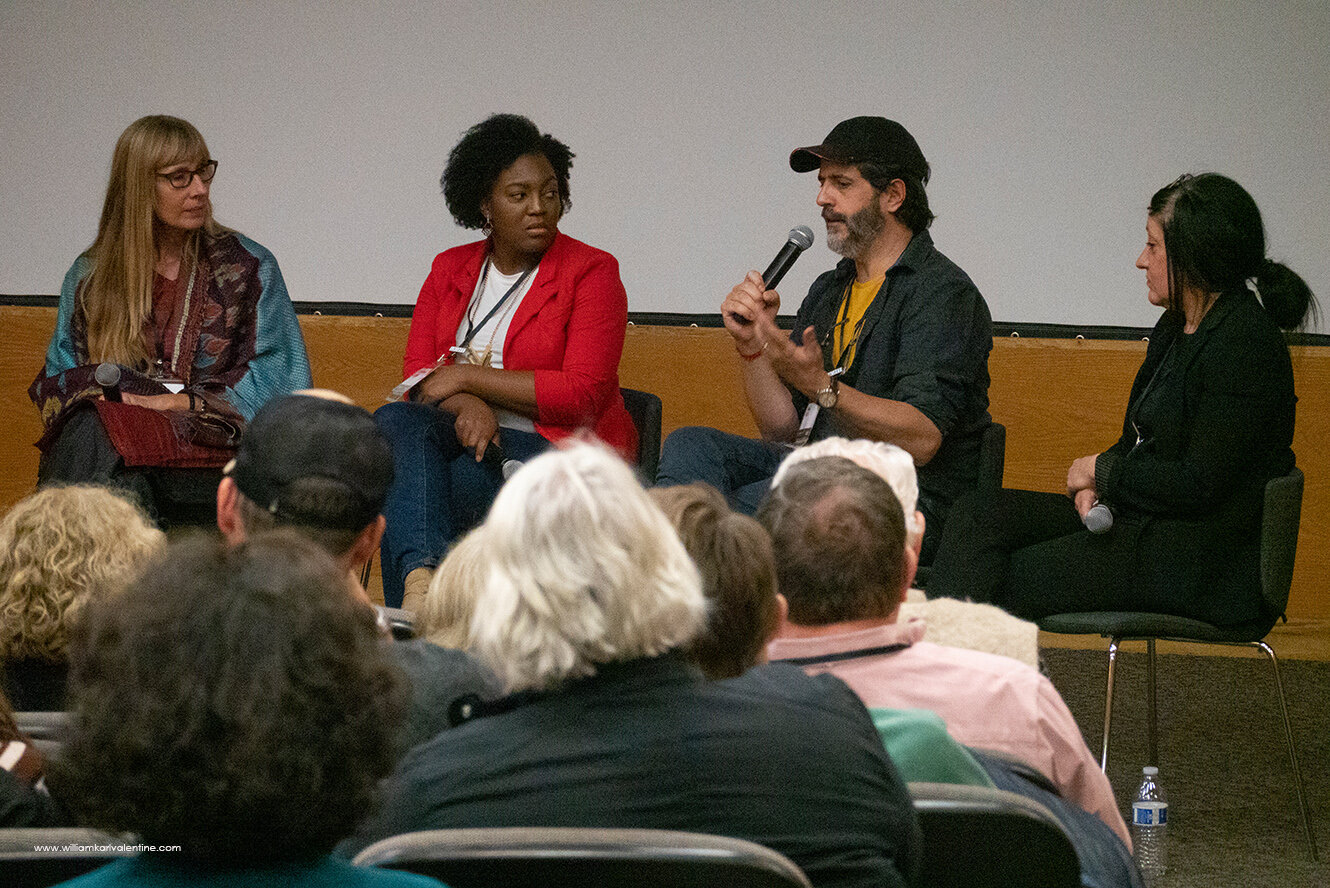

The afternoon session on Saturday began with a panel discussion “Engaging Community” moderated by Rick Wester. The first thing they focused on was how we define the photography community. ASU Professor, and current Society for Photographic Education President Liz Allen spoke about SPE’s formation in the 1960’s under Nathan Lyons. She talked about the changing landscape of education the challenges educators have now with colleges having fewer tenure tract professor positions. Dominique Luster who is the endowed Charles “Teenie” Harris Archivist at the Carnegie Mellon Museum of Art spoke about her role with the Harris archive. I was not familiar with Harris who was a Pittsburgh based commercial photographer who documented the African American community. It was highly interesting to hear the impact Harris had on documenting the history of his community with his camera and how their museum is keeping that legacy of community moving forward. Magnum Photographer Alec Soth spoke about once he had a photography career, he craved a community. Something I can related to after graduating from ASU and leaving behind the academic environment. For Soth he started blogging in the early days of social media and found a safe way to engage a photography community. Soth remarked how he now followed by over 100,000 people which he still is awe of considering how few comments he got on his earliest posts. He also mentioned the weekend of the symposium was the 10th Anniversary of Instagram and added the “Corporation of Instagram has taken over” how we interact with photographs. Rick Wester added insight from a gallerist’s point of view when he said “The Internet has replaced the experience with information, people are now getting information and want to get the experience to go with it.”.
Following up on the last two quotes, I want to again talk about a theme I heard throughout the weekend and mentioned above, that you learn about photographs by looking at them. Now this might seem like an obvious thing but it isn’t today. We now live in the age of the “two second page view”, where people scroll through Instagram, or any other social media platform, as fast as they can until an image catches their attention. Unfortunately these “lure images” are usually the ones which catch people’s attention (my term based on the concept of shiny fishing lures). Intense saturation, lots of post-production, or a trending subject. Many people are missing out because they aren’t spending time with images to experience them. One of the best exhibitions I saw recently was the Howard Greenberg Collection at the MFA last November. The prints in the exhibition were some of the best I have ever seen. But to get the full experience you had to spend time inspecting them, noticing details, and thinking about them. I walked through there exhibition twice to make sure I experienced it as well as I could, and if I could have gone back and seen it a second time, like I did the Warhol at the Whitney Museum recently I would have. Everyone I saw at the MFA was taking their time viewing the prints, it gave me hope.

CCP’s Meg Jackson Fox and Emily Una Weirich moderated the next session which was “Valuing Story”. I think the best way to describe this session was an exploration of how institution are preserving history in non-traditional ways; basically history used to be written in text books and now we are capturing oral traditions and digital forms of communication to preserve historical information. Cassie May – an Oral History Archivist focused on the medium of Dance, Molly Garfinkel – Managing Director of City Lore, Dr Matthew Grilli – Assistant Professor of Psychology at the University of Arizona, and Photographer Judy Natal were the panelists. Cassie, Molly, and Judy spoke about the projects and the process in their approach to documenting oral histories. It was interesting because they had diverse approaches and subject matter. They expressed the common theme that telling one’s story was important to create connections between people. Dr. Grilli then went on to examine what motivates people to tell stories, “The Why”. He said this motivation can change over time, often with younger people the goal may be to solve a problem while with older people the goal of story telling may be to teach, to inform, or to contemplate what may come to pass. They all agreed that documenting oral history is often a challenge because it is usually recorded in a long form manner which is hard to create sound bites from to be used in different ways of presentation. Several panel members also spoke of past problems they have with documenting oral histories and use rights. The panelists told of several stories where the original use release signed for an audio recording or filming for a specific project did not include wording in the release such “In all media for perpetuity”. The problem they have encountered is when they want to digitize the original oral histories and share them the original releases do not specifically authorize that and the interviewed persons are now deceased. Where it is obvious the person interviewed wanted to share their story, heirs have at times refused to grant new releases to use the materials in new formats.


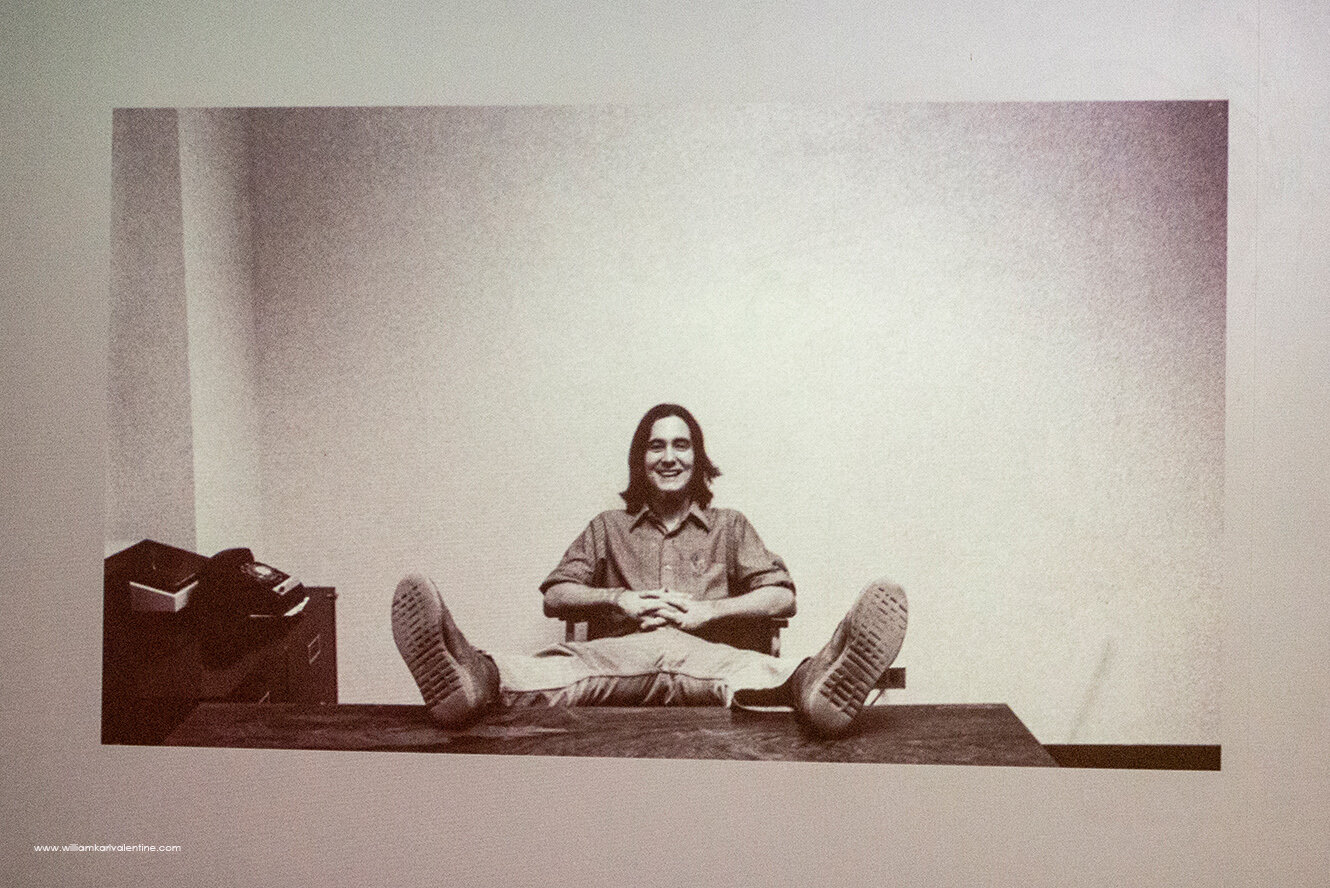


Saturday concluded with a screening of Lisa Immordino Vreeland’s new documentary “LIGHT; When Photography was Undiscovered, 1971-1987”


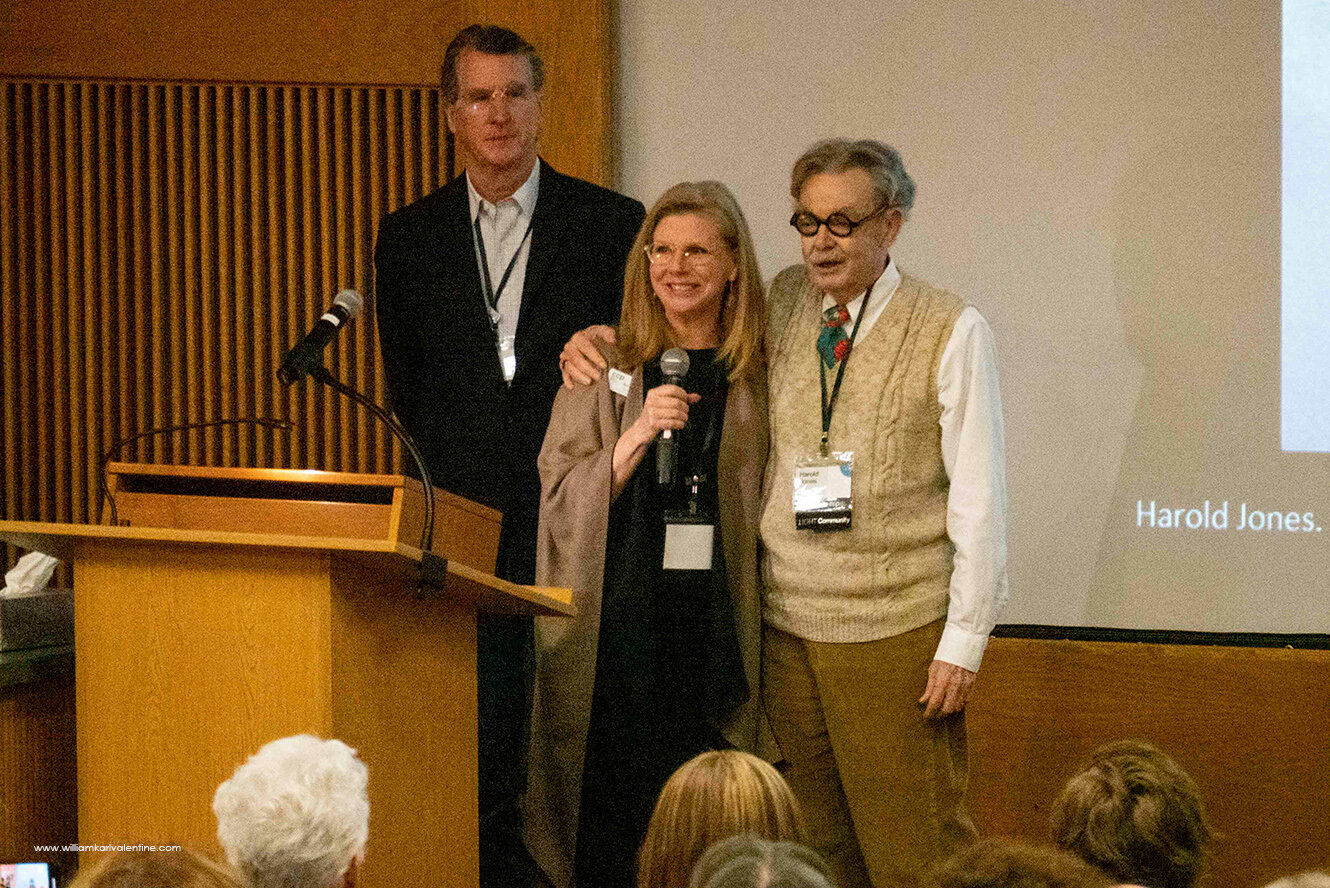
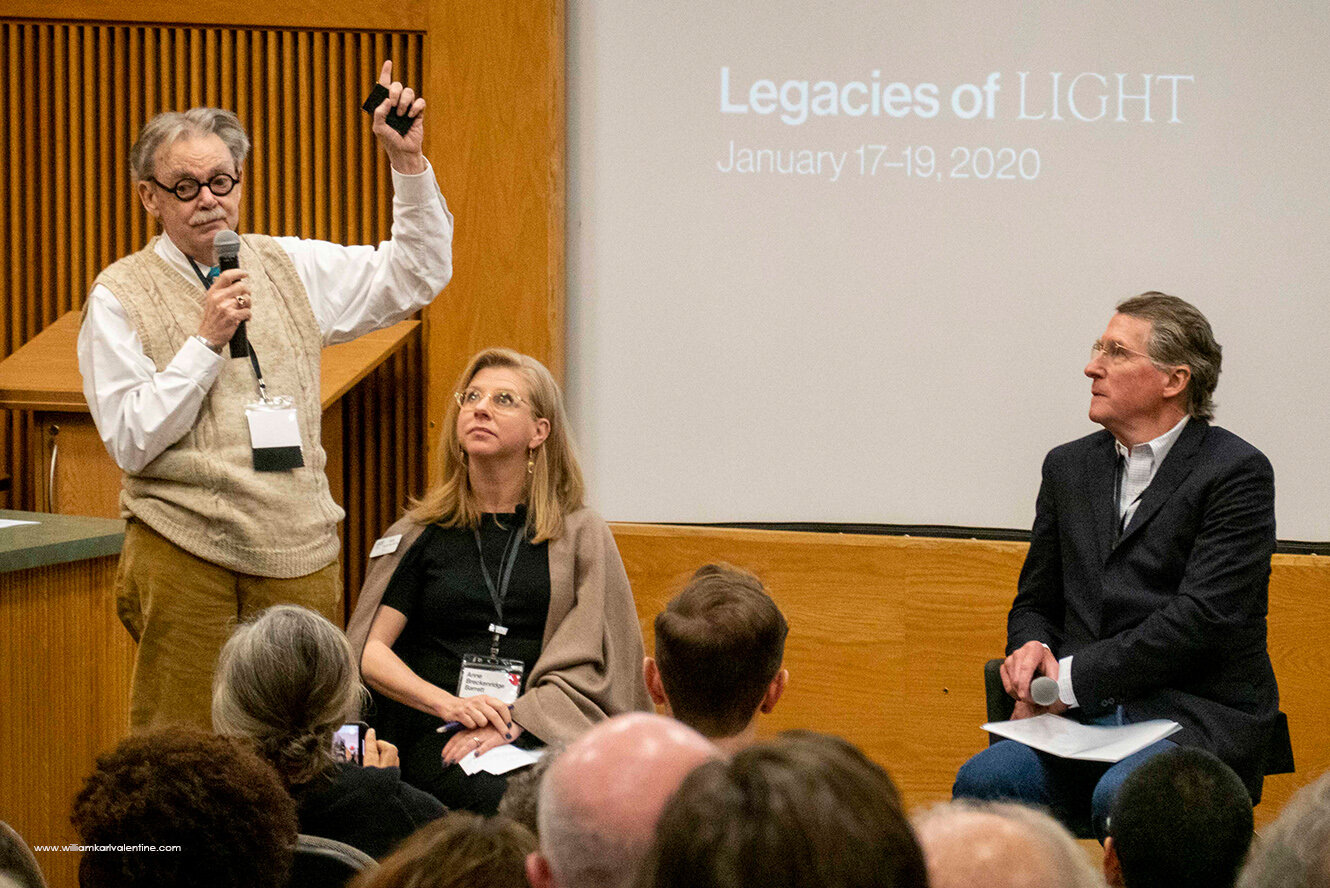

Sunday started with a panel discussion about LIGHT from the perspective of people who worked there. Included in the panel were Peter MacGill, Laurence Miller, Rick Wester, Susan Harder, and Jack Sal. Its too hard to go in to all their comments, and this post is longer than I had intended already, but the thing I really came to understand listening to this group was an understanding of the atmosphere and energy of the LIGHT gallery. Susan Harder and Peter MacGill talked about handing them portfolios of photographer’s work and being sent out to museums across the country to cold call curators to promote photography as art and stir up business. They also told stories of going and staying with iconic photographers as they were preparing to exhibit their work at LIGHT and had so many funny experiences they shared. There is no doubt everyone involved with LIGHT helped pave the way for every photographer today. The panelists also accurately recognized how important the symposium was for recording the history they were part of because much of the knowledge of those days is on the cusp of going away with the aging of those involved. The final event was a celebration honoring Harold Jones who spoke along with several his close friends and family members.
Personally, I am still processing all the experiences of the weekend because it truly was an epic event. I believe this symposium, which was designed to document Photography’s history, will in fact be recognized in its own right as an historic event for Photography. The topic material from the symposium was fantastic but I more so I had so many valuable interactions with people, I am just thankful I was able to attend.

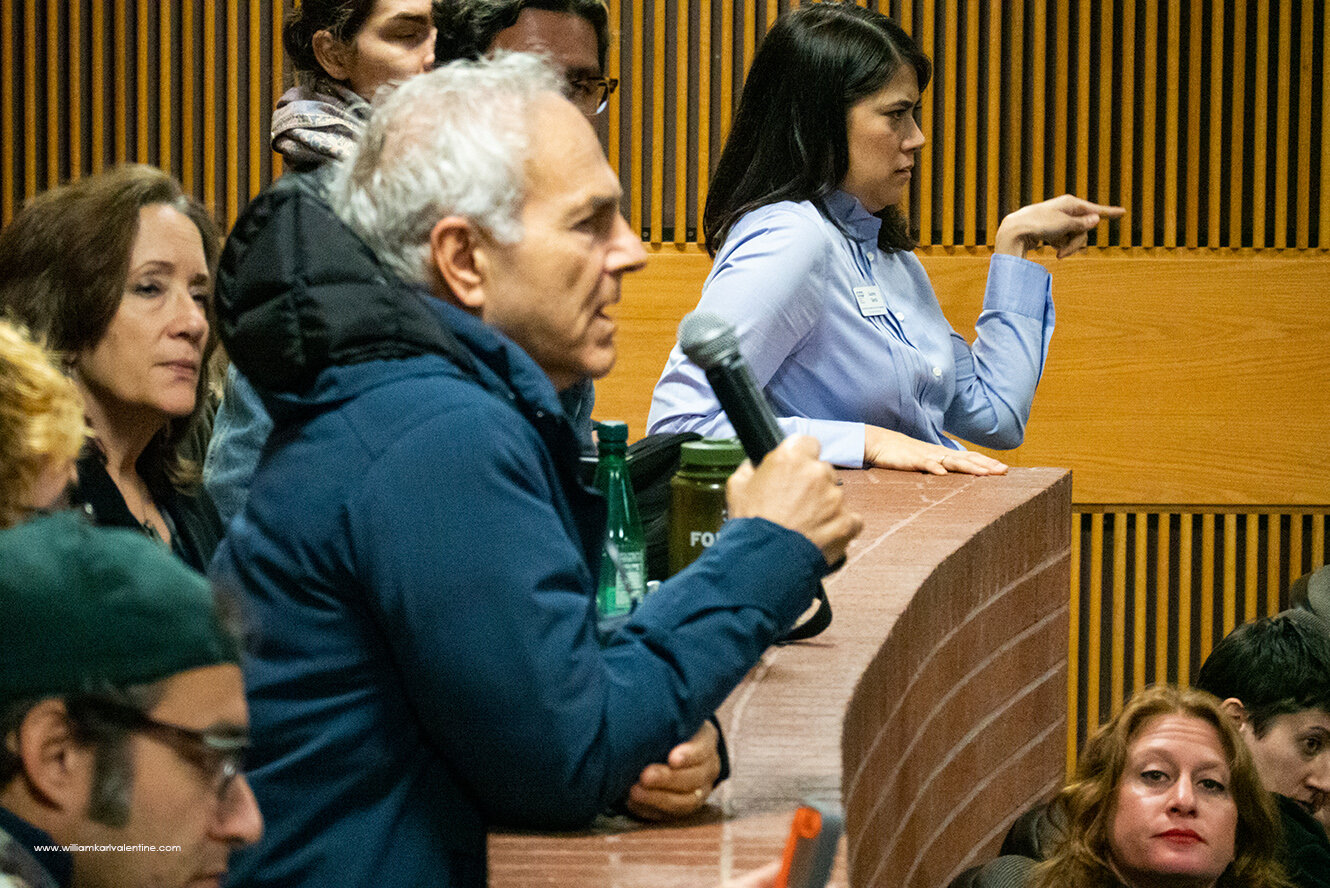
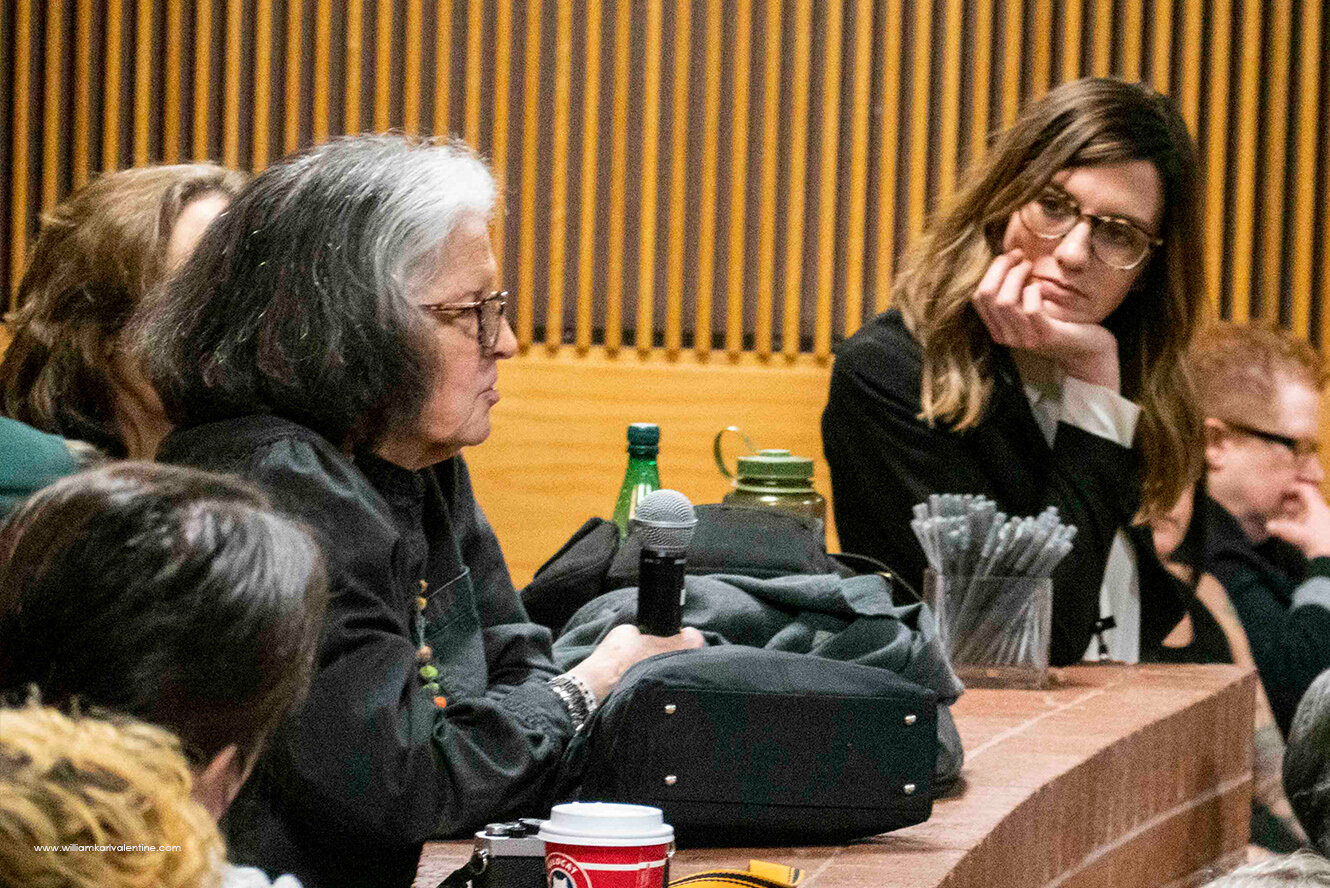


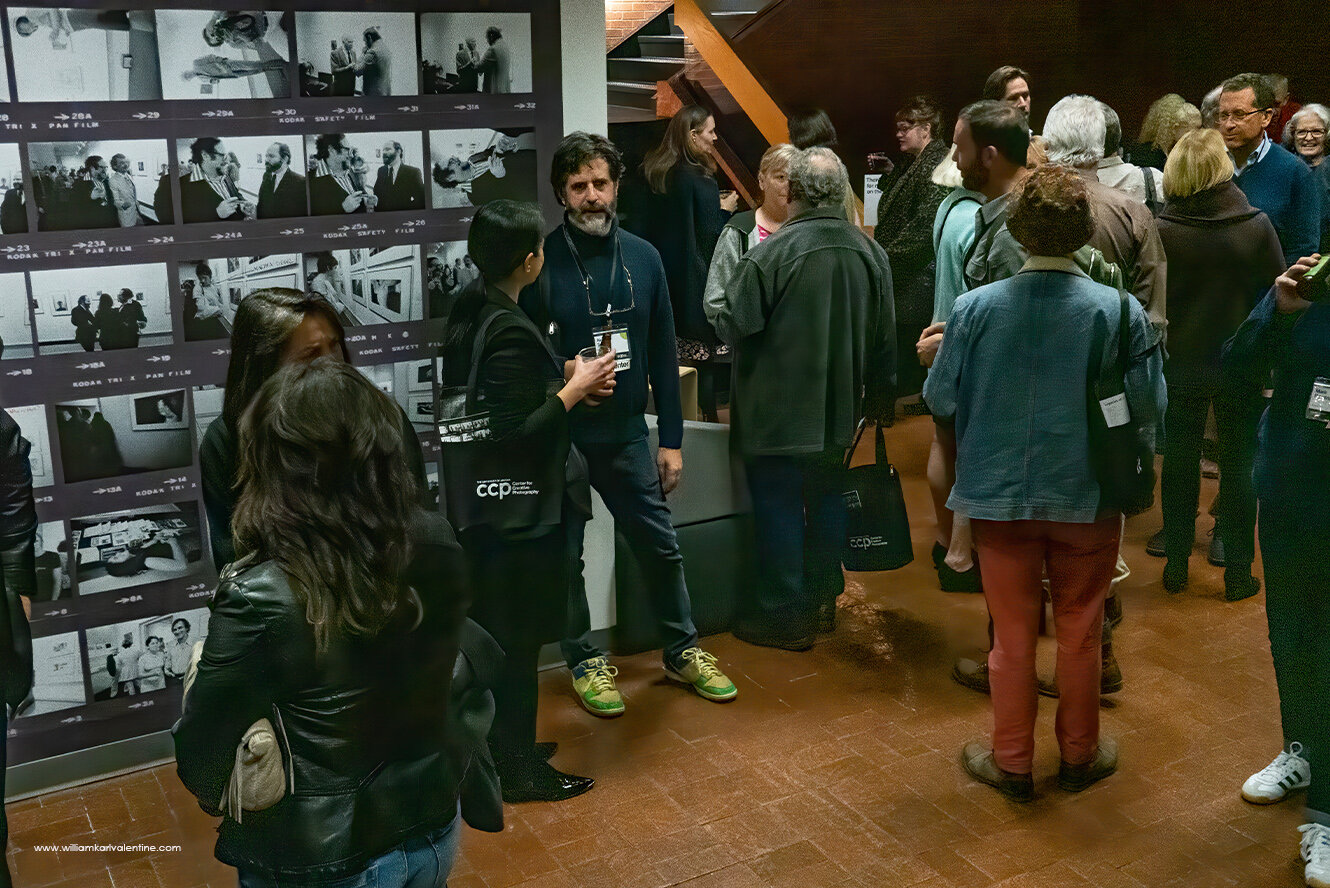


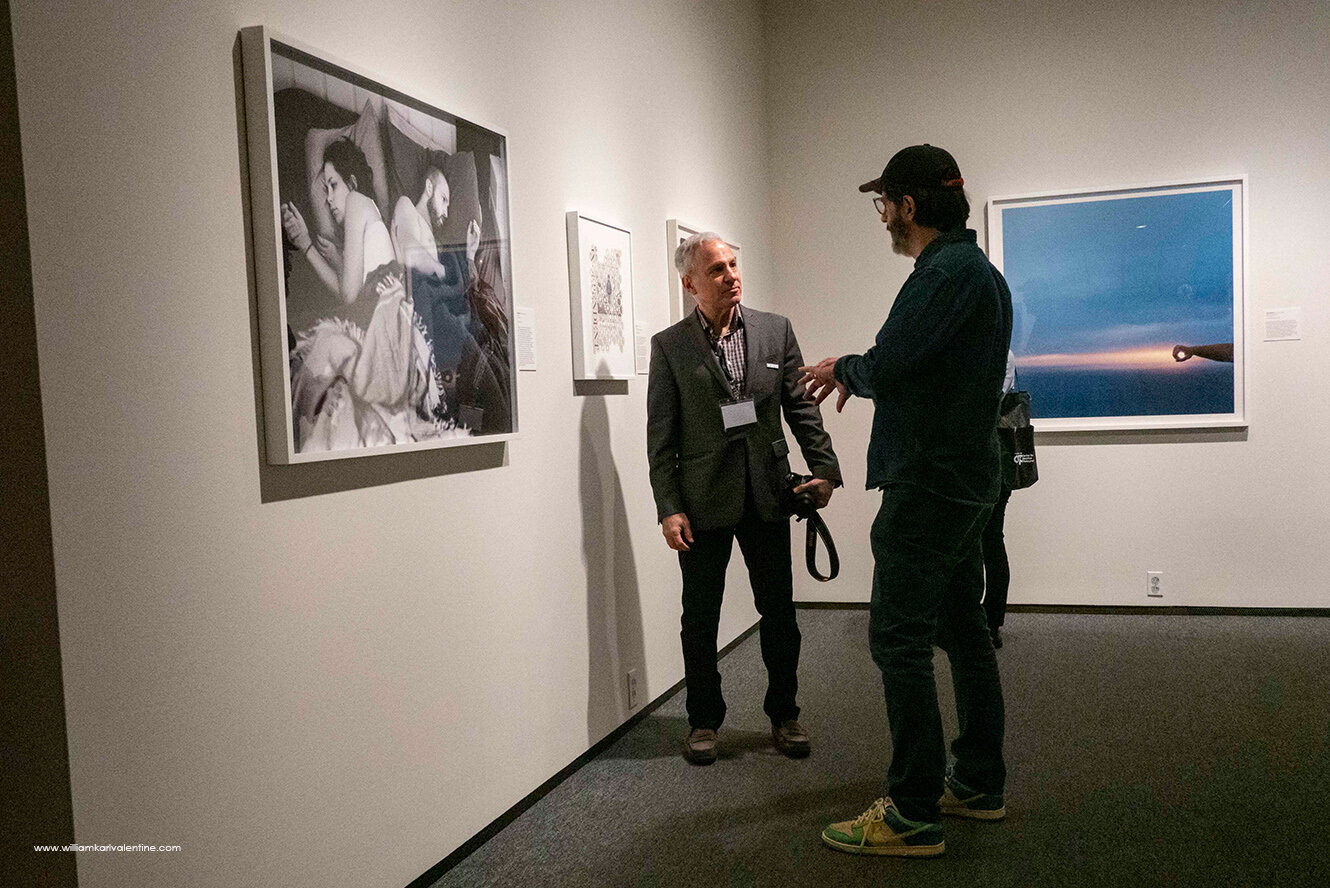


After-party Sunday at Mary Virginia Swanson’s home - Mark Klett and Peter MacGill - perfect finish to the weekend.

Liz Allen working on her “hand” print for the book
An important component of the Qualities of LIGHT exhibition is the interactive element. I focused on it some in my initial post about the opening. Since there was more activity during the symposium I documented it and felt it worked best to highlight it again in a separate post.
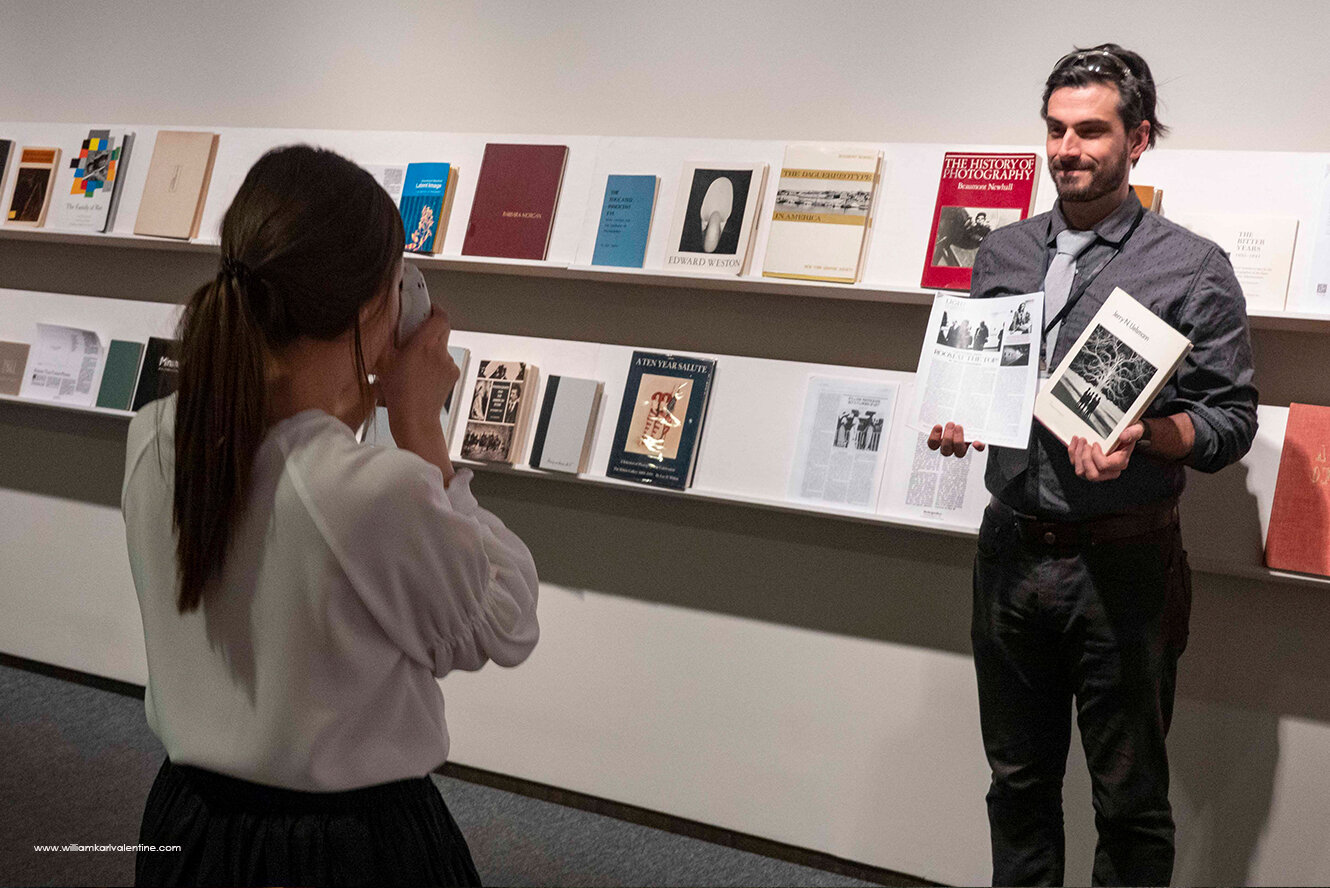
So again there were basically three interactive elements people could do. First was someone could have their photograph taken at a replica of Harold Jone’s LIGHT gallery desk by CCP’s David Ragland. Next you could sketch your hand to create a drawing to be bound in a book at the conclusion of the exhibition. LIGHT gallery did this at one point and the CCP was recreating that. CCP’s Camilla Stevenson was in charge of getting people to participate with this at the symposium and added a component by taking instant photographs of people to be included in the book with their hand sketches. I pushed the envelope with my sketch using my left had to sketch my right hand (most hand sketches were of left hands), then I had Camilla sign the instant print she took of me so she could lay claim to having a print in the exhibition then . The final station was where you could draw your own personal line map connecting yourself back to LIGHT gallery. I had completed my line map in December and after the symposium I could have added a lot more connections. I brought home a blank sheet so I will probably eventually update a copy for myself. All completed maps were pinned to the back wall of the interactive space to be shared. All three elements were fun and I especially loved the process of the line map.

Marvin Heiferman and Laurence Miller recreate their photograph from LIGHT gallery 1/19/20
I thought this moment was worth a separate blog post so it didn’t get lost in the larger body of post on the symposium.
On Sunday when there was a break before the final event I wandered around the gallery, which was mostly empty, and was rewarded for it. I already wrote a specific post on meeting Fern Schad which was fantastic. I was also able to photograph Alec Soth talking to Rick Wester about prints in the exhibition. Then I noticed Laurence Miller and Marvin Heiferman preparing to recreate the photo of them when they both were at LIGHT. Emily Una Weirich from CCP was getting a stool for Marvin to sit on and Dr. Maurice Berger was preparing to use his iPhone to photograph it. I saw the opportunity to photograph again so I took it.
For me I am very interested in the use of the cell phone in today’s world. I often look for phone use in my street photography and probably already have a solid body of work documenting phone use. I look for folks photographing with cellphones then see what I can compose. So not only did I capture the image above but I also photographed the photographer. One side note that I found interesting at the symposium was I one of the few people using a camera to document the event. Granted it was a small Sony RX100 vi , it still has a one inch sensor and is a camera. Everyone else seemed to just be using their cellphones to take an occasional photograph. This I found really odd because the lobby of CCP had large proof sheets of images from the parties and openings at LIGHT and it was obvious they used to document and photograph each other all the time. I am thankful they didn’t mind me intruding on their moment to document it.

Dr. Maurice Berger photographing Marvin Heiferman and Laurence Miller

William Karl Valentine and Fern Schad - The Qualities of LIGHT exhibition at the CCP - Tucson, AZ 1/19/20
I must admit something, before the inclusion of my print in the Qualities of LIGHT exhibition I didn’t know who Fern Schad was. I graduated from ASU in 1986 just before LIGHT closed so they were still an active gallery and most my history of photography lessons had been about photographers not galleries or institutions.
At the Legacies of LIGHT symposium at the Center for Creative Photography, I quickly learned who Fern was and what an important role she played in helping to establish Photography as an accepted medium of art. I detailed the experiences of the symposium in a separate blog post, but I wanted to do a separate post on Fern to highlight some things.
First, I truly enjoyed listening to her describe LIGHT, the time period in New York City, and her experiences. She is a great presenter.
On Sunday after the last panel session concluded there was a break before the concluding celebration of Harold Jones and his work. Most people were interacting in the lobby but luckily I went back in to the gallery to look around again.
I found Fern walking through the main gallery alone looking at the photographs of the LIGHT artists. I watched her as she spent time with each image and tried to imagine all she was recounting, not only about the images but of that period of her life. I stayed back and took several photographs hesitating for her to between walls before interrupting her.
I introduced myself, and explained I had studied under Bill Jay at ASU because she had spoken about working for Bill Jay. I asked her about what it felt like being in this space and she spoke briefly about her memories. I then thanked her for LIGHT and explained how the ripple effect of LIGHT was still continuing because I had a print in the Emerging Artists flat file component of the exhibition. She was very gracious and asked to see my print. It was a very powerful moment for me to watch Fern holding my print, studying it, and then talking with me about it. Receiving validation from someone with her expertise and experience meant a lot to me considering how many important prints she has handled in her lifetime. I am thankful that I thought to photograph her holding the print because the moment is important to me. Having this print in the exhibition and later having it added to the permanent collection of the CCP is important for my career. I only spent a few minutes with Fern but the experience will be one of the more memorable ones in my photography career.

Fern Schad viewing William Karl Valentine’s print which is included in “The Qualities of LIGHT: exhibition flat file drawers” at the Center for Creative Photography - University of Arizona.
When I returned home from Tucson I wanted to learn more about Fern. I found she remarried Alfred H. Moses after Tennyson passed and that their Alfred H. Moses and Fern M. Schad Fund has sponsored numerous major photography exhibitions, some of which I have seen. More photographers should know about Fern and her contributions to the medium, I am so lucky I was able to get to meet her and learn of her impact.

Installing the exhibition - push pins, level, tape measure, and “eyeballing it” 1/24/20
I drove the 500 miles home from Tucson on Sunday afternoon after everything with the Legacies of LIGHT symposium wrapped up. The next day I headed to Pasadena to check in on my mom and run some errands.
I stopped in at Samys Camera to get a couple things and to tell my friends there about the experience I had at the symposium. While talking with Jeff O’Brien he told me how the prints on the store’s small gallery wall had been up almost three months and he wanted to get some new photos up. He knows my work well and asked me to come up with something. I immediately agreed and started thinking about what I would do.
I realize the back wall of a camera store is not necessarily prestigious but in this case it had a lot of value. First of all the wall is very prominent and accessible. Almost every customer sees the wall when the exit the store and any customer going to the rental department walks right by it. This store has lots of knowledgeable photographers who are customers, plus it is two block away from a Pasadena City College which has an outstanding photography department. So the volume of potential viewers is very good.
I grew up in Pasadena and went to Pasadena City College, for me there was sentimental value to go home again. I had also exhibited work at Flags Photo (camera store) in Pasadena during the 1990’s, the store Jeff’s father had owned. I know that most any opportunity to showcase your work is a good thing because you never know who may see your images. I also know the process of editing and presenting an exhibition is a great exercise for a photographer.
When it came to what images to show I knew I had to include the image from my Pasadena PD series which was in the CCP’s Qualities of LIGHT exhibition, but I didn’t want to only showcase images from that series because they are from 34 years ago. I knew I wanted to give an overview of my work when I started editing for it, was thinking a linear display at first, and wanted to highlight images which had been in prominent exhibitions or were in permanent collections. I also had only glanced at the wall, had a guess at the size, but I hadn’t measured it.
Because I wanted to turn the project quickly I decided to make prints specifically for the show and didn’t want to deal with framing them. Michal Raz Russo’s presentation at the Legacies of LIGHT about some of the LIGHT gallery’s installations was fresh in my mind, so I started thinking about a simple way to the present work. The more I thought about it I realized I wanted to avoid a single straight row of prints and that I wanted to break up the pace of the images visually. I decided to make digital prints that were all consistent with each other even if the images were from film. I just can’t bring myself to casually display good silver gelatin prints since it takes so long to make them.
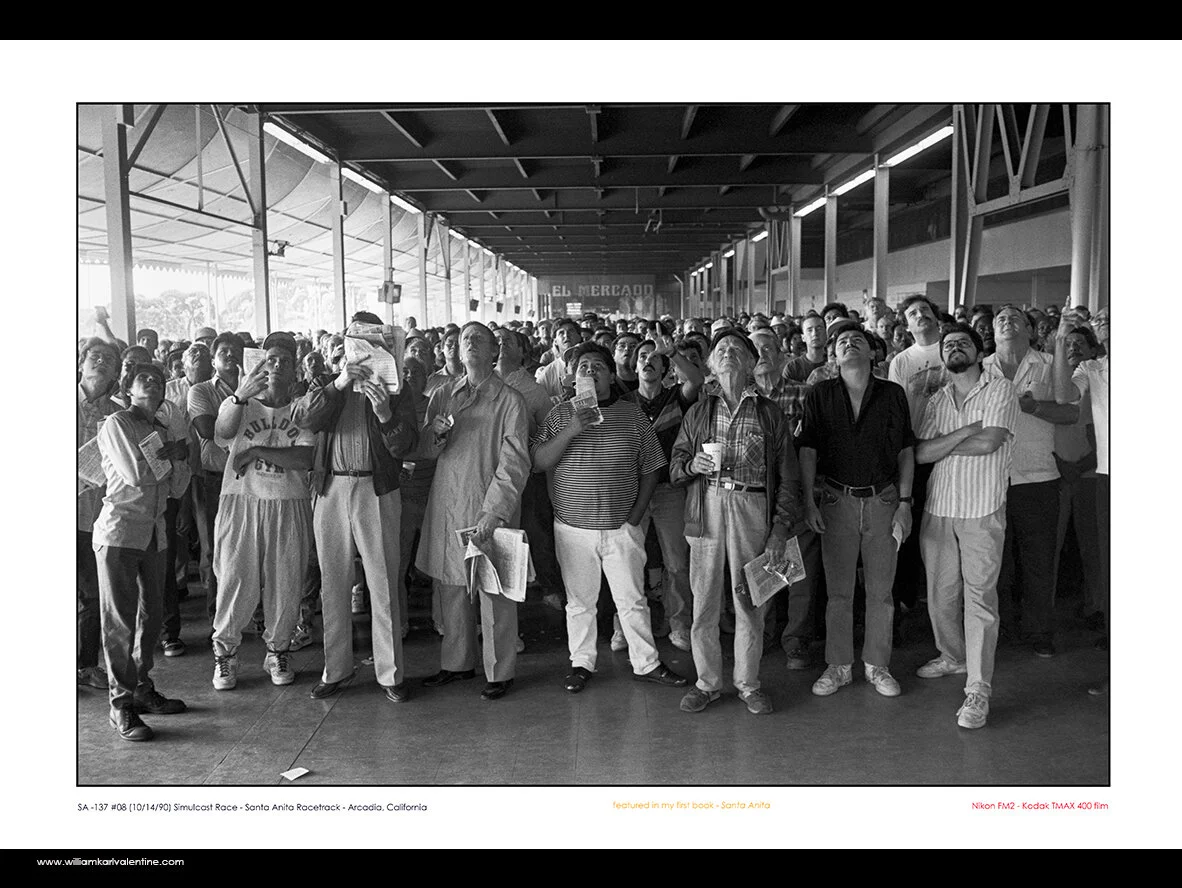
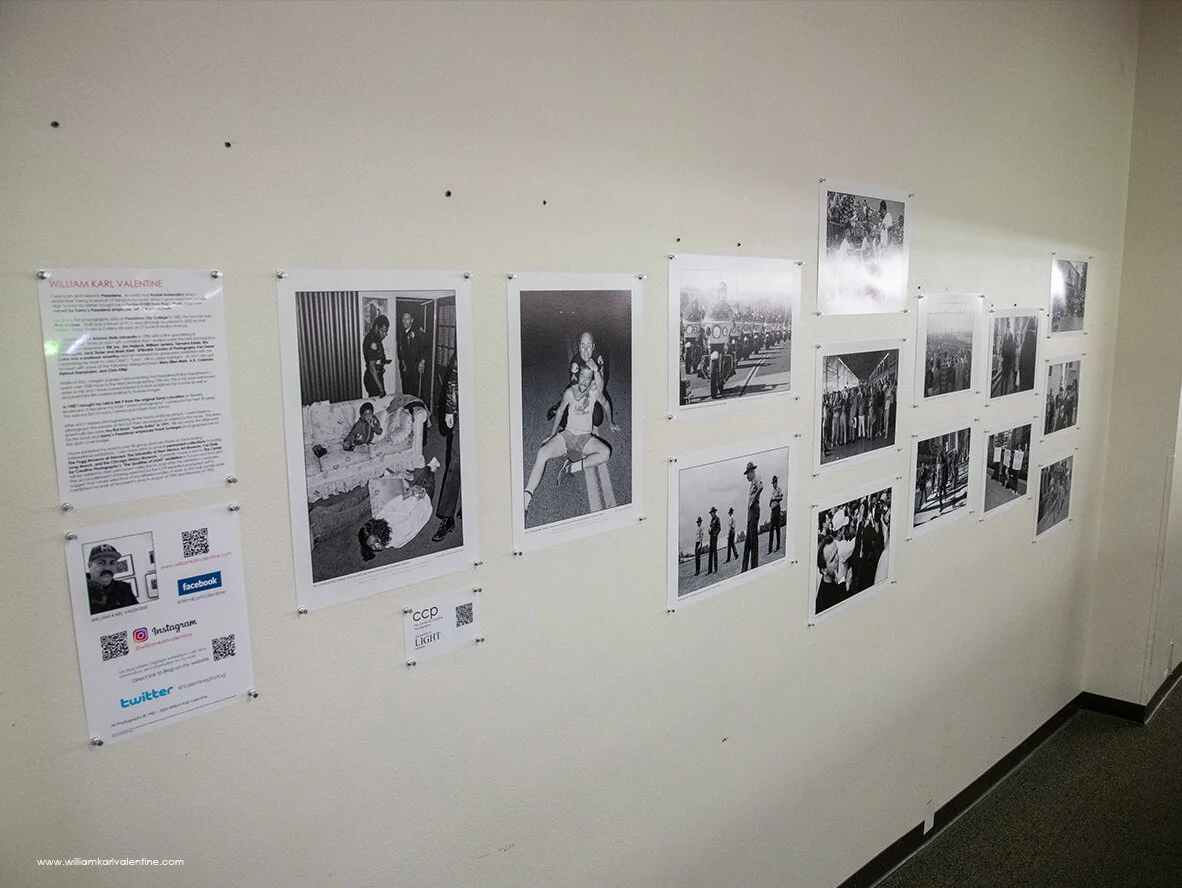
I started going through my image files thinking about which other images would fit. Lee Baroni applying the Carotid hold on the Duster jumped out as a good companion to the CCP image. The photo of Lee is in the permanent collection at the University of New Mexico. The Photograph of the motorcade from Officer Russ Miller’s funeral was another obvious choice. It was featured in the Billboard Creative in Los Angeles a couple years ago and is a signature image. “The Killing Fields” image is in the permanent collection of the Fogg Museum at Harvard, plus it represented my Rio Hondo Police Academy series well. I chose the “Simulcast Race” image from my Santa Anita book because it is one of my favorites. I also wasn’t looking to inspire any more debate over the horseracing industry which an actual horse related image might do. I chose the photo of the Giants coaches to represent my Cactus League series because it really captured how pure spring training used to be. In today’s world I would never be able to access to stand in that position to capture that exposure. I liked the Mariano Rivera image to represent my Wrigley-Fenway-Tiger series because it would help transition well into my street photography images. An interesting side note had never printed the image as large as I did for this exhibition and when I did I found new and exciting details in the image I had not seen in the 23 years since I had made the exposure. The view of the World Trade Center from the Empire State Building was another obvious image and one I have wanted to show more.
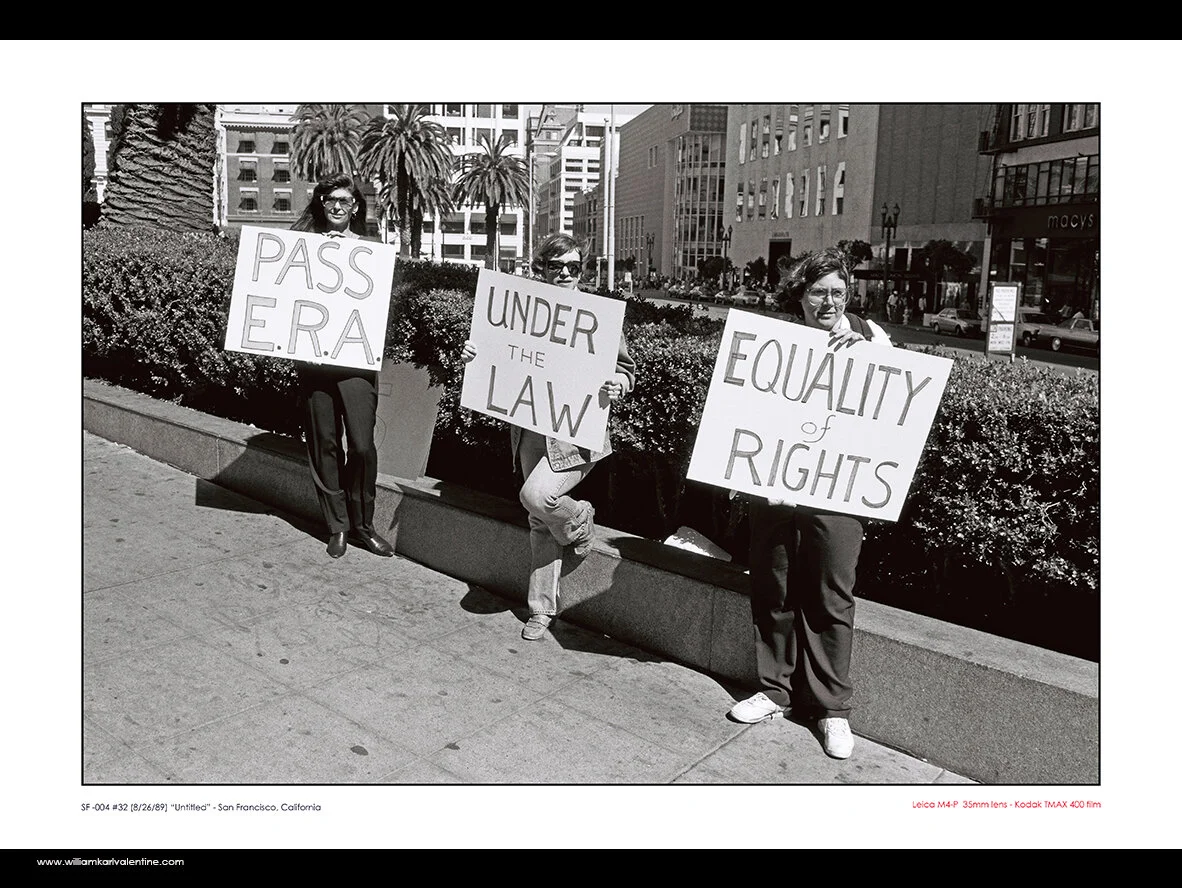
After selecting those 8 images I figured I probably had enough images but decided to choose more images so I would have options in my wall design since I was going to figure things out as I installed it. The ASU pool party image was a good representation of my Alphaville series and I came across a scan of ERA activists from San Francisco in 1989 which really jumped out at me. I have become so tired of today’s world with people who have differing opinions screaming at one another and thinking they are properly applying their 1st Amendment Rights. After these choices I selected five recent images that I keep returning to. I wanted to have images from Chicago, New York, and Newport Beach in the show if I could. One image was in color from the 4th of July and I didn’t think it would fit but I decided to print it and just see if there was a place for it.
Since the prints were just for this exhibition I added text to the prints below the image so I wouldn’t have to deal with identification labels. I put the image information and because they were on display in a camera store I also added information about the camera I used and the film type for the older images. I also listed information if the image was in a permanent collection or had been in a recent prominent exhibition. After making the 15 different prints I made a single 8.5 x 11 print with all the images on it in a rough design which I thought might work. Actually I thought the first four rows would be as they were and the last row was just a reference point of the images, that I would only use a couple of them maybe.

The reference sheet I used while designing installation of the exhibition.
I wrote the artist statement specifically for this exhibition with the primary focus being my connection to Pasadena. Realizing many viewers would be passing by quickly I used bold font to highlight key points so the statement could be quickly scanned. Because I am always trying to increase the exposure of my work I created several QR codes with links to my Instagram and website then created an information page for people who wanted to learn more about my work. I also created a smaller page with a QR code link for the Qualities of LIGHT exhibition.

I decided to pin the images to the wall, because it was a quick and secure way to install the show plus it would do minimal damage to the wall. I also liked the look and feel of presenting that way, but I knew I needed to have metal push pins for it to be right. I thought the idea of the pins was a simple one until it came time to buy them. I literally had to go to four stores to finally get enough pins for the exhibition, thank God for Office Depot still carrying them.
I began the installation process with a tape measure, note pad, and math. I also realized the angle of the floor next to the wall was greater than I remembered since it really a ramp allowing handicap access to the store and easy carryout for large amounts of rental equipment. So obviously the sight line of the space changes and I had to take that in to account.
I always remember from my Northlight days at ASU that the center line of artwork should be like 56” from the floor. I know I am 6’5” and that I like a higher center point, plus I realized the way the store was configured I wanted to have at least some of the prints high enough to be seen above the displays to draw viewers in. Using blue painters tape I marked the center line from the floor up. I taped up a couple test prints and I had my friend who is much shorter than I am go along the wall to find what her eye level was. From that point I went by feel and judgement to adjust the center line and then kept it fairly consistent to the floor by measuring for each new row of prints.
I found that double stacking two vertical images made them too hard to view so I adjusted the Pasadena PD images to go side by side. I decided to pin the prints keeping a 3” gap between all prints. I also used my level with a built-in ruler to keep things accurate. I then kept putting up prints, designing as I went. I had the one-color print left over, but I soon found a place for it. The next section of the wall surface changed, and it had a large framed color print on it which was is a permanent thing but lots of blank wall before it. So, I found a home for the 15th print.
I know this is a relatively long blog post on a simple thing but I thought some readers may find value with the insight in to my process.
This Samys Camera store is located at 1759 E. Colorado Boulevard in Pasadena, California and is open daily 8am to 6pm. I am not sure how long the exhibition will be up, most likely through the end of March.

William Karl Valentine

Mark Klett speaking with guests at the Land Re-Form opening - Etherton Gallery, Tucson, Arizona 1/18/20
While I was at the Legacies of Light Symposium in Tucson, the Etherton Gallery coordinated to have the opening of their current exhibition Land Re-Form on Saturday night after the symposium events were done. Land Re-Form features the work of Michael Berman, Frank Gohlke, and Mark Klett.
The best way to enjoy seeing the work in this exhibition on line is to follow the link above, Etherton’s website has so much outstanding content on their artists and their exhibitions.
Owner Terry Etherton has fantastic vision and has built a perfect gallery space in downtown Tucson. His roster of artists rivals the best galleries on either coast, and its also impressive that his gallery is now almost 40 years old.
I have long been familiar with the work of all three of these featured photographers, and Mark Klett was already at Arizona State University when I studied there so we know one another. All three produce beautiful prints and the design of the exhibition is a perfect pairing of their work.

Frank Gohlke’s Mount St. Helens prints.
I have long enjoyed Frank Gohlke’s work, his prints are so beautiful. I was glad I was able to spend time with him at the opening talking about his printing. Seeing great prints always motivates me to produce work, nothing like spending time seeing a perfect print. There is no one more gracious than Frank, I was lucky to be able to chat with him at the symposium too.

William Karl Valentine and Frank Gohlke - Etherton Gallery Opening - Tucson, Arizona 1/18/20
I also picked up two of Frank’s books at the opening, “Mount St. Helens” and “Landscape as Longing: Queens, New York” which he collaborated with Joel Sternfeld and Suketu Mehta.
Other work was also on display in the smaller rooms within the gallery. Just a fantastic variety of iconic images by masters and newer cutting edge work. If you are ever near Tucson, the Etherton Gallery is a must see.

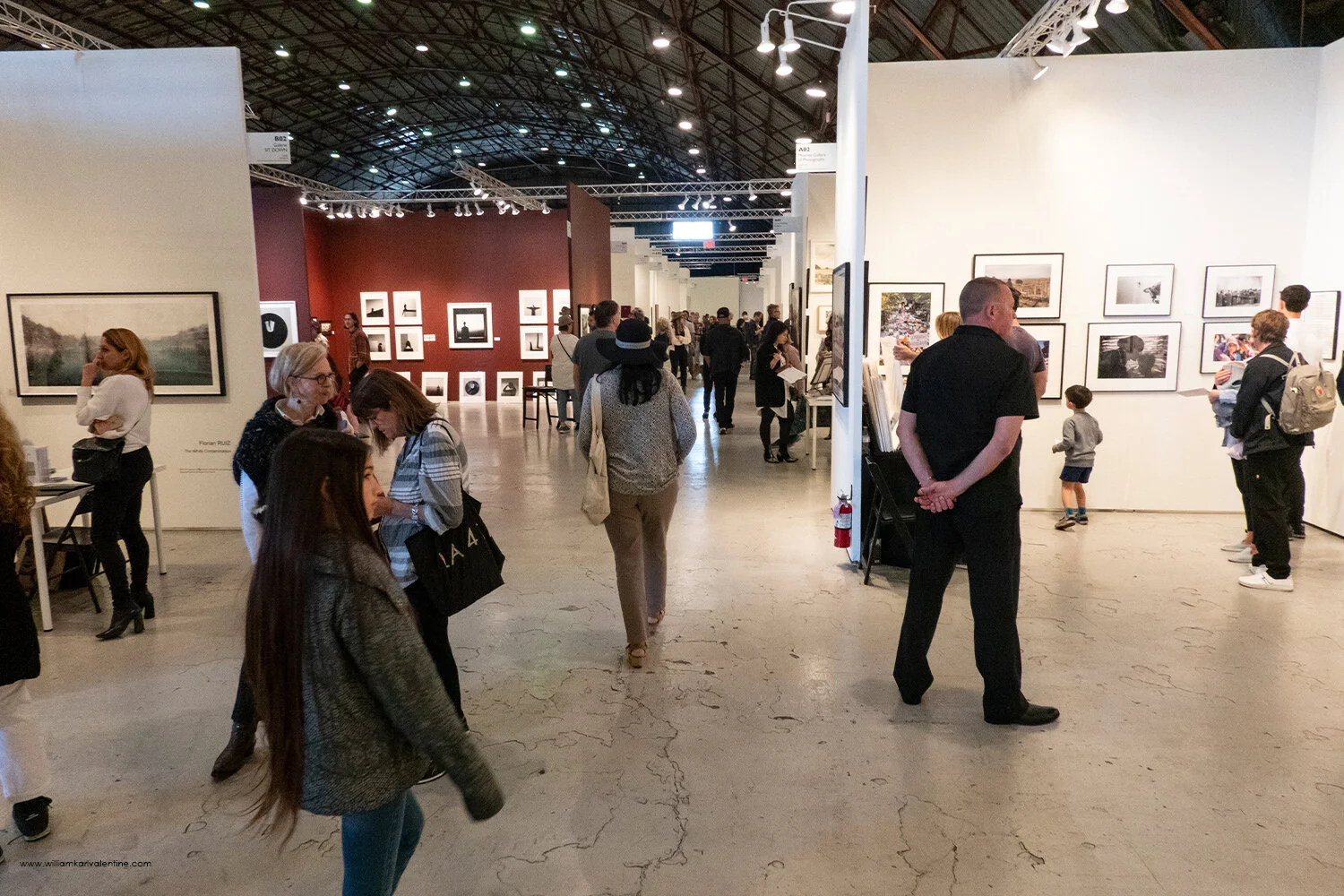
William Karl Valentine at PHOTO LA 2020 - Barker Hanger, Santa Monica, California 2-2-20
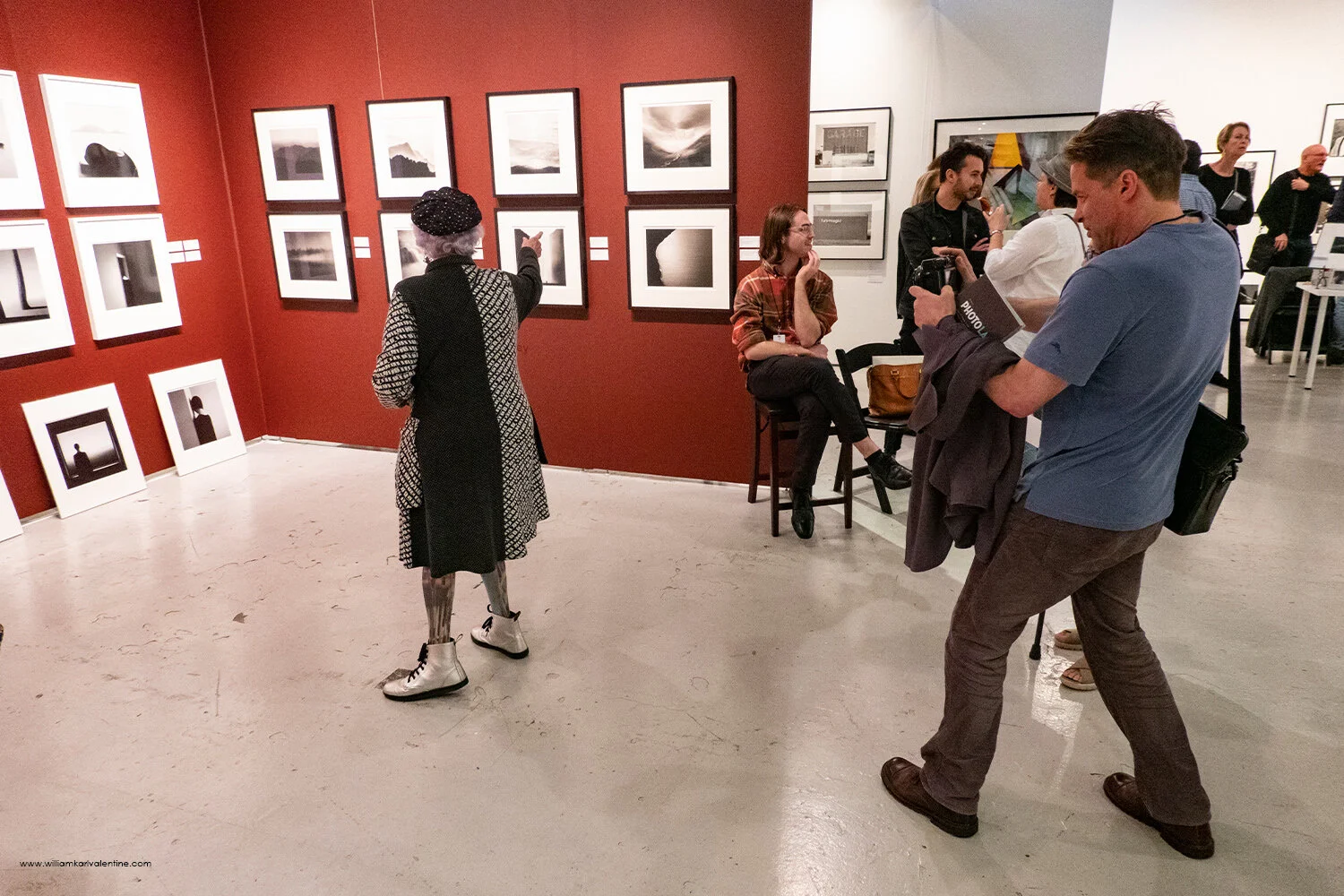
Even though 2020 has been a hectic year, I was still able to make it out to PHOTO LA this year. I definitely saw some great photographs there, and even better still I found lots of images to photograph myself. I have been writing volumes for this blog the last few days so I will keep this post simple, and for the most part let my photographs do the talking with the exception of one image.

William Karl Valentine with Mel Etherton by Danny Lyon print - Photo LA 2020 - Santa Monica CA 2-2-20
I met Mel in Tucson in January when I was out for the Legacies of LIGHT symposium in Tucson. Her Husband, Terry, founded Etherton Gallery and I am featuring the gallery in another post here in my blog. To be specific I actually met Mel in Mary Virginia Swanson’s kitchen at a party after the symposium Sunday afternoon as someone was photographing her hair (true story, cool party). Anyways, at PHOTO LA I see Mel at the Etherton Gallery booth and I start a conversation with her, eventually asking her which print is her favorite. Without hesitation she pointed to this Danny Lyon print behind us in the photo , a photograph which is one of my favorites. After we talked about how great Danny’s work is she explained her connection to this particular image. She said they were at a Paris Photo LA event in 2014 when Brad Pitt came by their gallery space which was featuring Danny Lyon. She said Terry was busy with a client or off somewhere conducting business so she talked to Brad and basically sold him the print. The sale of the print made several news outlets and she got to tease Terry about it after that she was the one who closed the deal with Brad Pitt. Epic story, so happy she shared that with me.
So as for the rest of the PHOTO LA 2020 Experience I am just going to post a gallery and let the reader plow through some images.

Memorial for Kobe and GiGi Bryant at LA Live - Los Angeles, California 2/1/20
The day Kobe Bryant died it was overcast here in Newport Beach, and I wasn’t surprised to find out later weather was the most likely reason he and eight others were killed that Sunday.
I first learned of the helicopter crash from a text my son sent from the East Coast. He saw the news on TMZ and initially could not confirm it on other news sites. I was initially skeptical but then it was soon confirmed.
Kobe’s family lives in the Newport Coast part of the city which is about five miles away but people still ran in to him all around town. I saw him one night late at the my CVS after he had played at Staples, and know they frequented shops all over town. His family was a part of the town and lots of people know them.
The atmosphere in Newport Beach, Los Angeles, and Southern California after the helicopter crash was something I had never seen before here. In the Newport area so many people had some connection to one of the nine killed. In a smaller community the shock is understandable. But the atmosphere which gripped all Southern California, and most of the world, was incredible. Kobe was obviously larger than life, vibrant, and successful at everything. For him to be gone, and at that point in his life, shocked the world. I think it brought everyone’s own mortality in to view which is never fun.
With this event I knew I was present at an important moment in history and I wanted to find an appropriate way to photograph it. I had no interest to intrude on grieving family members, or capture images from private services, but I wanted to try and document the impact on the community, the atmosphere I was feeling.
What I decided to do was photograph the pop-up memorial at LA Live across the street from Staples Center. It was the most obvious subject and I was going up there to Kings games anyway so I had good access to the area.
These photographs are from LA Live. It was incredible to move through such an eclectic and diverse crowd where everyone was so reverent in unison. No one shoved or pushed, no one argued, it was quiet with the exception of the occasional “Kobe” chant, and everyone was basically one. Guaranteed there were folks in the crowd who normally would not be cordial with one another who stood side by side without an issue.
With a loss like this there are lots of lessons, I was thankful to have the opportunity to document it because I think these images can speak to that, but obviously I wish there wouldn’t have been a memorial to photograph.

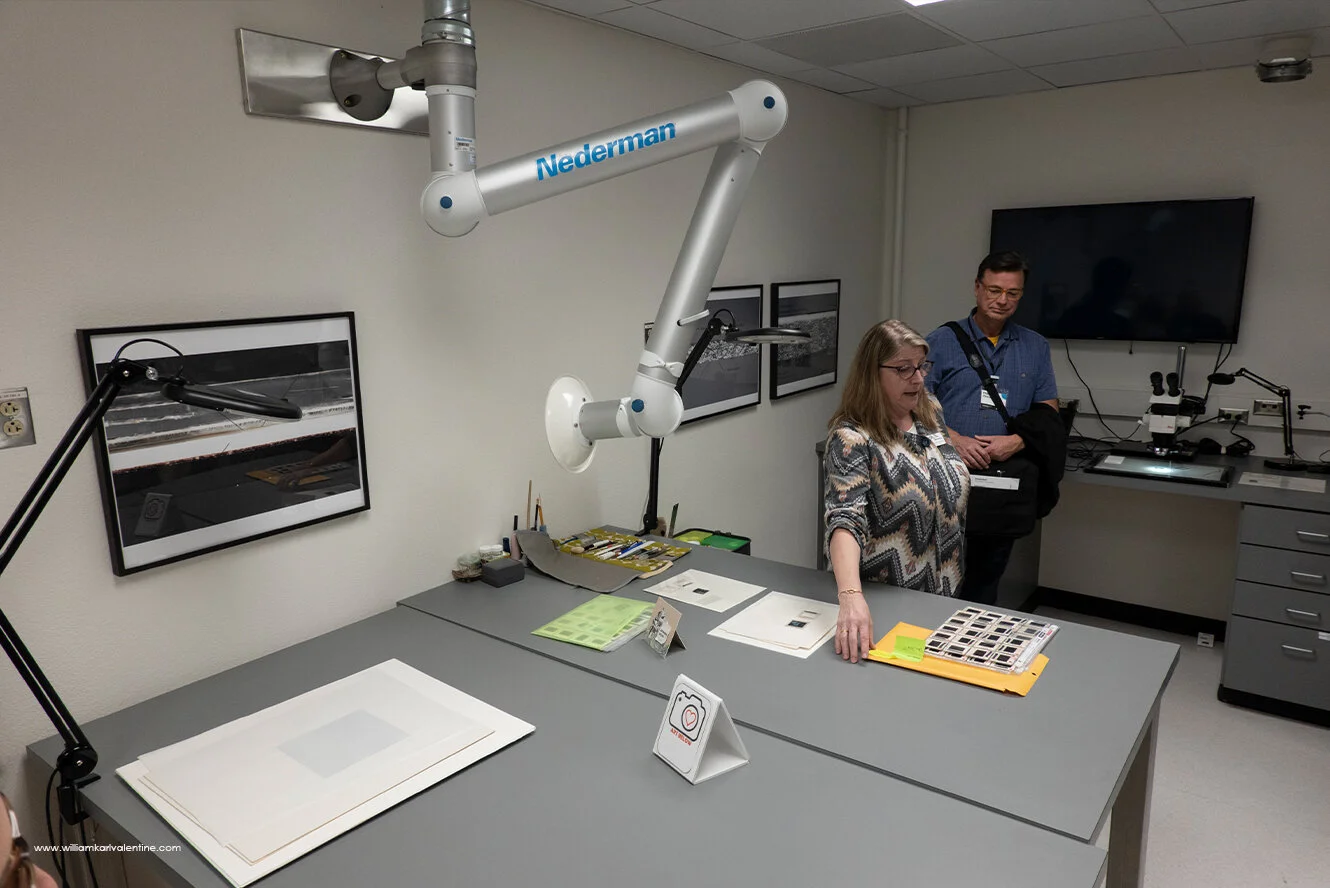
On January 17th, Prior to The Legacies of LIGHT Symposium officially starting, attendees of the symposium were allowed the unique opportunity to take a behind the scenes tour of the Center for Creative Photography. The tour lasted about an hour and was fantastic. I always find “behind the scene tours” interesting, which this tour truly was, but with this one I also learned some things which should help me as a photographer with archiving my work. The primary reason I found this tour so enjoyable was the staff. Anne Breckenridge Barrett and Becky Senf have assembled a team at the CCP which is as world class as the facility and its holdings. Staff members are experts in their fields, they are passionate about what they do, and they enjoy sharing their knowledge with others. My tour was one of the last groups of the day and everyone on staff was still motivated to share their different worlds with us.
I think the best approach for me to share what this experience was like is to just post a series of galleries of each area we visited then briefly describe what I saw.
The first stop on the tour was the room where curators layout and plan exhibitions. I didn’t get the official name down, as you can see it is basically a narrow room about 50 feet long with tables and ledges to lay out work. The room is secure so a curator can spend as many days as she or he wants assembling an exhibition without having to worry about putting artwork away each night. The lighting was obviously perfect with plenty of room to experience the sequencing of images for any project.
Dana Hemmenway is the Arthur J. Bell Senior Photography Conservator at the CCP and her area of expertise is fascinating. She had selected several examples of acid contamination to prints and explained how they work to protect the assets of the CCP. In the images above with the large light table she explained how they can recover image information from badly damaged negatives to allow quality prints to be made from those negatives. The last two images above show badly damaged Extachrome slides from David Hume Kennerly’s 1979 series “Drug Trade” which documented the war on drugs at the time from the point of origin in South and Central America. In the fall of 2019 the CCP acquired David Hume Kennerly’s archives including these slides. These Extachrome slides had been processed in the region where he had been photographing and years later developed these unique crystals on the emulsion making the images almost unrecognizable and completely unusable. Hemmenway and the CCP is currently conducting experiments to identify the cause of the crystals and how to recover the images.
Although the CCP does not house Richard Avedon’s entire archive they do have a massive print archive of his work with a dedicated space and archivist specifically for his prints at CCP. I have seen his large prints in exhibition before so the large flat files to house the work did not surprise me but I was still in awe of those drawers. This is a room very few get to see, I was happy we got to look in.
If I remember this correctly the Archivist space for the CCP’s Digital Initiatives section is currently located off of the CCP’s library but they are getting a new larger work space with more dedicated equipment. In December, at the opening of LIGHT, I had a fantastic conversation with Associate Archivist for Digital Initiatives Emily Una. Weirich , who detailed how they are digitally preserving the Center’s archives and preserving images originally created in digital media. The Digital Initiatives section can handle almost any type of artwork and its staff is helping to establish modern standards for archiving digital imagery. I find the subject fascinating as well as important for me to understand as I work to properly maintain my own files.
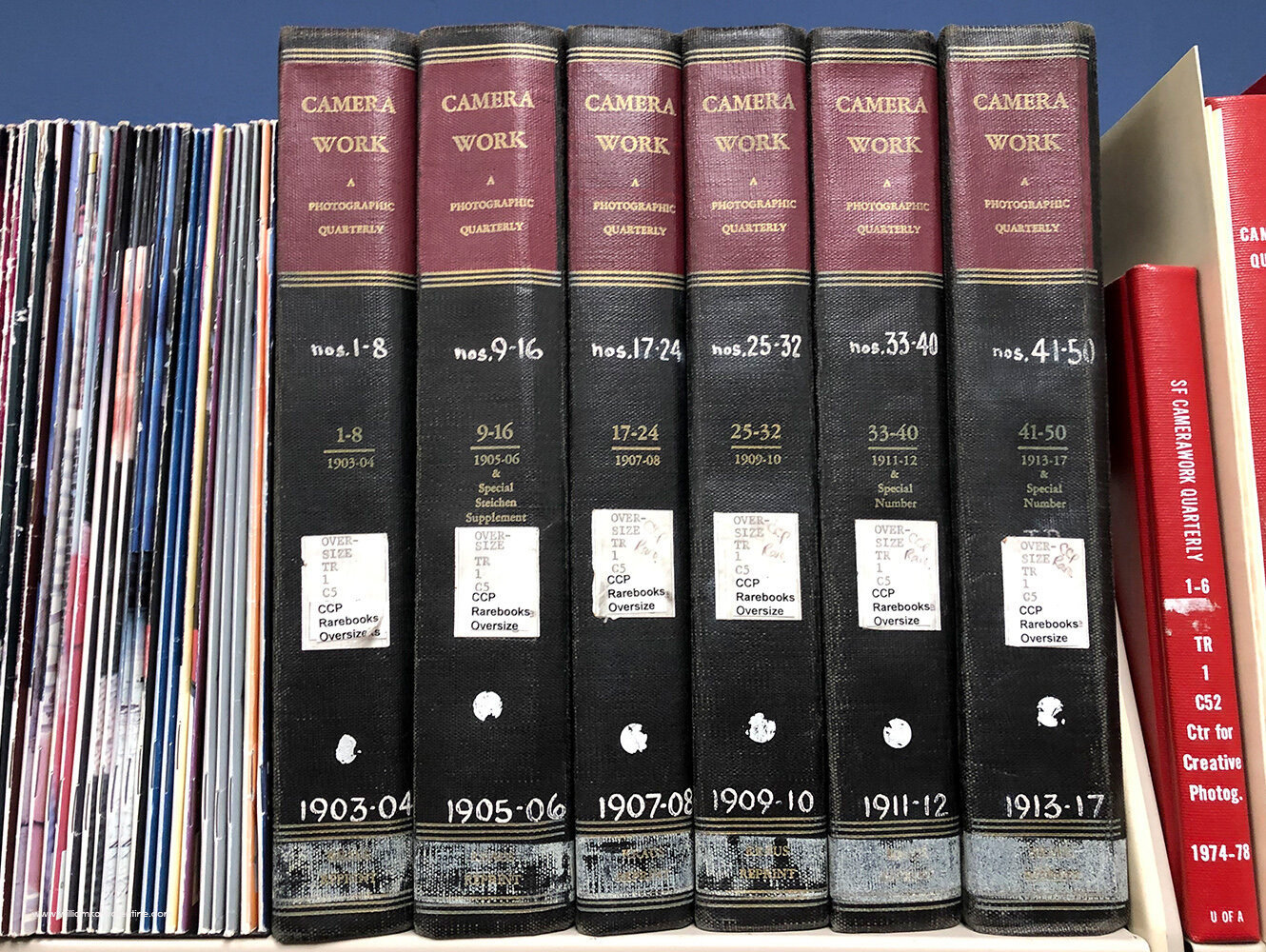
I think the CCP’s library is still working to fill out it’s collection. They have some fantastic historic books and periodicals and their collection is decent size.
I did find two things in the library that I absolutely loved. One was a Winogrand 1964 book still in its shrink wrap, love that someone hasn’t gotten to that because I also have a book or two on my shelf which is still in shrink wrap. The other was a small framed announcement for the Witkin Gallery’s 1975 Sixth Anniversary Exhibition which was shoved back up on a shelf under the fire alarm. I assume it is an original poster, loved where it was being stored, the fact the exhibition was only five weeks long, and that the image they used for it was Stieglitz’s iconic “Steerage”.
Great tour and I am sure we probably were just scrapping the surface of all they have at this premiere institution.
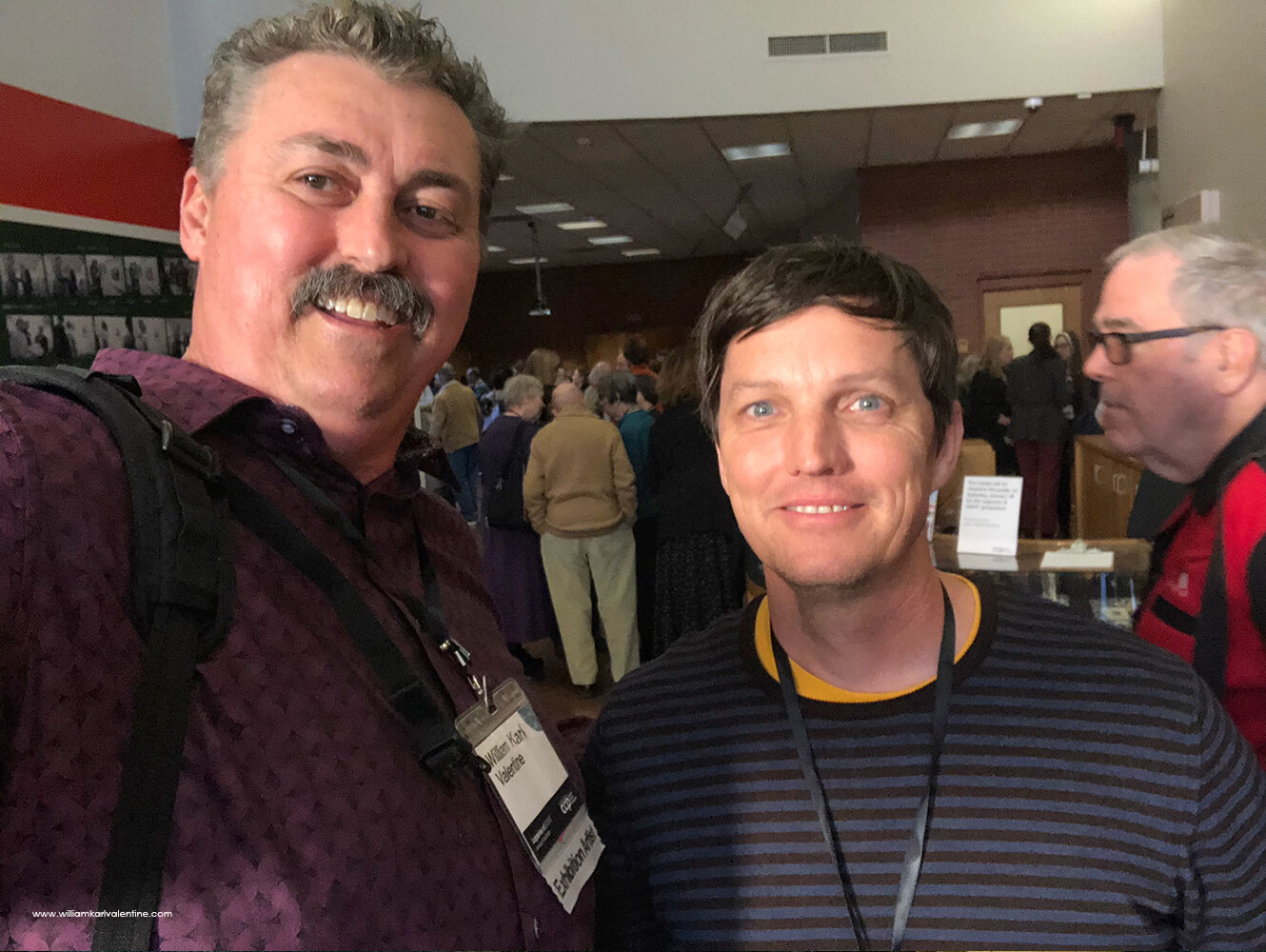
William Karl Valentine with Scott B. Davis at the Center for Creative Photography’s Legacies of LIGHT
At the Center for Creative Photography’s Legacies of LIGHT I also had a chance to catch up with Scott B. Davis , someone I always enjoy talking with. Scott is an amazing photographer and founder of Medium Photo which is a non-profit organization centered around educational workshops and annual photo festival in San Diego. I have attended several of the festivals and they are fantastic, they include lecture series and portfolio reviews. Scott’s passion for photography is so strong, I appreciate all his leadership with Medium, and especially the images he captures as a photographer.
Scott currently has a platinum print in an exhibition at the Getty which was recently featured in the LA Times Entertainment and Arts section, The platinum print exhibition runs through May 31st and also includes prints by photographers such as Tina Modotti and Alfred Stieglitz. Also at the Getty until March 31st is “Unseen” featuring works from the Getty’s permanent collection which have never been exhibited at the Getty before. This exhibition celebrated the 35th anniversary of the Getty’s photography collection.
Arizona State University MFA candidate Julia C. Martin and William Karl Valentine at the LIGHT symposium
One of the best experiences I had with attending the Legacies of Light Symposium was getting to know two MFA candidates who I am confident will have impactful photography carriers.
I’ll start with Julia C Martin who is studying at Arizona State University. We had a couple long talks during the weekend and I was very impressed. She already has solid insight in to world of fine art photography and I could definitely see her doing big things in a curatorial role one day. She has positioned herself perfectly for something like that already having worked for the Santa Fe Photographic Workshops and Aperture. She has also interned with Mary Virginia Swanson and has a good relationship with her. But Julia is also a photographer and makes some pretty powerful images. Julia’s work right now deals with the themes of death, mortality, and femininity. She primarily photographs using film and oftentimes prints her images using alternative processes to captured the feelings she is dealing with. She could impact the photography world in a number of different ways. I learned a lot from talking with her, Julia’s insight has value and she communicates her ideas so well.
I only had a chance to speak briefly with Alex Turner but I think that was mostly because so many other people were trying to speak with him. Alex is studying at the University of Arizona and was just awarded one of the 2020 Society for Photographic Education’s Student Awards for Innovations in Imaging. He will also be presenting his Blind River project at SPE Houston this spring. From what I have seen of his work he is a strong image maker who is starting to make an impact.

My Father passed away last week, and where I usually keep my personal life separate from my photography site and Instagram, I think it is appropriate to talk about my dad because of his impact on my photography. My dad always encouraged my photography, bought me my first 35 mm camera, a Pentax K1000, and he paid for all my schooling. He was the one who arranged my access to photograph the Pasadena Police Department which was probably the most important documentary series I have done to date. That series led me in to a law enforcement career and it currently is getting a lot of interest from people exploring the issues of the criminal justice system. My dad liked to photograph, had a Rollei among other cameras, and a bathroom darkroom before I was born. He always encouraged me with my photography. Successful people need a support system and advocates, he surely was both for me. At 93 he was very tired and had lived a full life. His moderate dementia had taken away his mentoring abilities a few years back but our bond was strong to his last breath and his love is something I will always have. I have no regrets, and I am nothing but thankful for all the time I had with my dad, he had a huge impact on my life and who I have become.
Without getting in to all the details why , with my dad’s passing I found myself in a situation where I had to pull his funeral together in 48 hours. Luckily I have photography skills and a great friendship with the owner of the lab who prints my larger prints, otherwise I don’t know how I would have pulled it off. When I was waiting on the prints for the service the owner and I were talking about how often he print memorial photographs. He then brought up the fact that so many people only have low resolution files of important images now. We have talked about it before, but he told me that he has had numerous people come to him looking for enlargements for a funeral and they have image file sizes which couldn’t even produce a quality 5 x 7 print. I am lucky in that my family has an extensive collection of family prints and some negatives. I also was able to get most these prints in to safe archival storage years ago and have done some digital archiving of images. I only mention this because too many people today live in a Snap Chat world where images are just seen for several seconds and archiving of the most important images is left to a third party cloud service with no hard copy backups. Luckily my mom has maintained all family photographs in good order.
As we all know the camera allows us to capture a fraction of time and retain memories for our lifetime, hopefully longer. I found myself photographing my parents a lot over the last couple years, probably in an attempt to preserve time and hold on. The color photograph above is from my dad’s 93rd Birthday , just with my iPhone, he passed 35 days later. Its powerful for me because my mom is in red in the background getting things ready in the kitchen. She cared for my dad a lot the last few years, and she was the homemaker in the relationship. I know I am stating the obvious by pointing out how important it is to maintain good quality prints and files of the images which will over time mean the most to us.

Brent Valentine with his Grandfather 6-16-19
As a photographer I am constantly looking for images and framing elements in my mind. So this summer when I saw this image, and the way the light was, I knew I had am image with the potential for strong meaning. As I took it I also knew that image would have the most strength after my father passed and that time was approaching. It was one of those photos you take but wish it wasn’t there for you to see. I ended up using this image on the back of the memorial service program along with a Bible verse my son provided me that he felt described his grandfather best. That verse by the way was Philemon 1:7 “Your love has given me great joy and encouragement, because you, brother, have refreshed the hears of the Lord’s people.” No matter your faith, or even if you don’t have a faith, the message is a good one for all of us to live by.

Dr. Rebecca Senf - Chief Curator at the Center for Creative Photography and the Norton Family Curator of Photography and photographer William Karl Valentine
On December 13th I drove out to Tucson for the opening of The Qualities of LIGHT Exhibition at the Center for Creative Photography at the University of Arizona.
In my previous blog post I spoke about having a print selected to be included in this exhibition and I wrote about the history of that image. I also spoke about the concept for the exhibition which is to show the importance of The LIGHT Gallery and its impact on the development of Photography as an accepted art form. The CCP exhibition does a fantastic job capturing the spirit of the LIGHT Gallery and documenting LIGHT’s history. One thing LIGHT was famous for was showcasing work from emerging photographers. My print was included in this exhibition as an emerging photographer. My print, along with 120 other prints from other emerging photographers, is on display in one of four large flat files in the middle of the gallery. The concept is that people who view the exhibition can explore the drawers and make their own discoveries. There is also an interactive area where visitors can map their own association with the LIGHT Gallery or others who were influenced by LIGHT. There are also a number of historic artifacts from LIGHT to help recreate the gallery atmosphere.
Below is my print and the accompanying artist statement information. This is a digital print from a negative scan which is archivally mounted.
CCP Director Anne Breckenridge Barrett and CCP Chief Curator Dr. Rebecca Senf speak at the Members opening of the exhibition. I also got meet CCP Curatorial Assistant Adam Monohon and CCP Archivist Emily Una Weirich. Everyone I met was fantastic and I am looking forward seeing them again at this weekend’s sold out LIGHT symposium.
In my previous post I mentioned how this was the first time one of my prints has been in an exhibition with a WInogrand print, and how special that was for me. Below is the Winogrand print, a classic image from Women are Beautiful.

Garry Winogrand print form his Women are Beautiful series - 1968 New York