• PORTFOLIOS
  • Prints
  • Licensing
  • Books
  • About
  • CONTACT
  • Blog
  • Instagram
  • TECH INFO
  • LINKS
Menu

William Karl Valentine

  • PORTFOLIOS
  • Prints
  • Licensing
  • Books
  • About
  • CONTACT
  • Blog
  • Instagram
  • TECH INFO
  • LINKS

Beautiful Senoritas - So Good! Album Cover Licensing

September 3, 2022

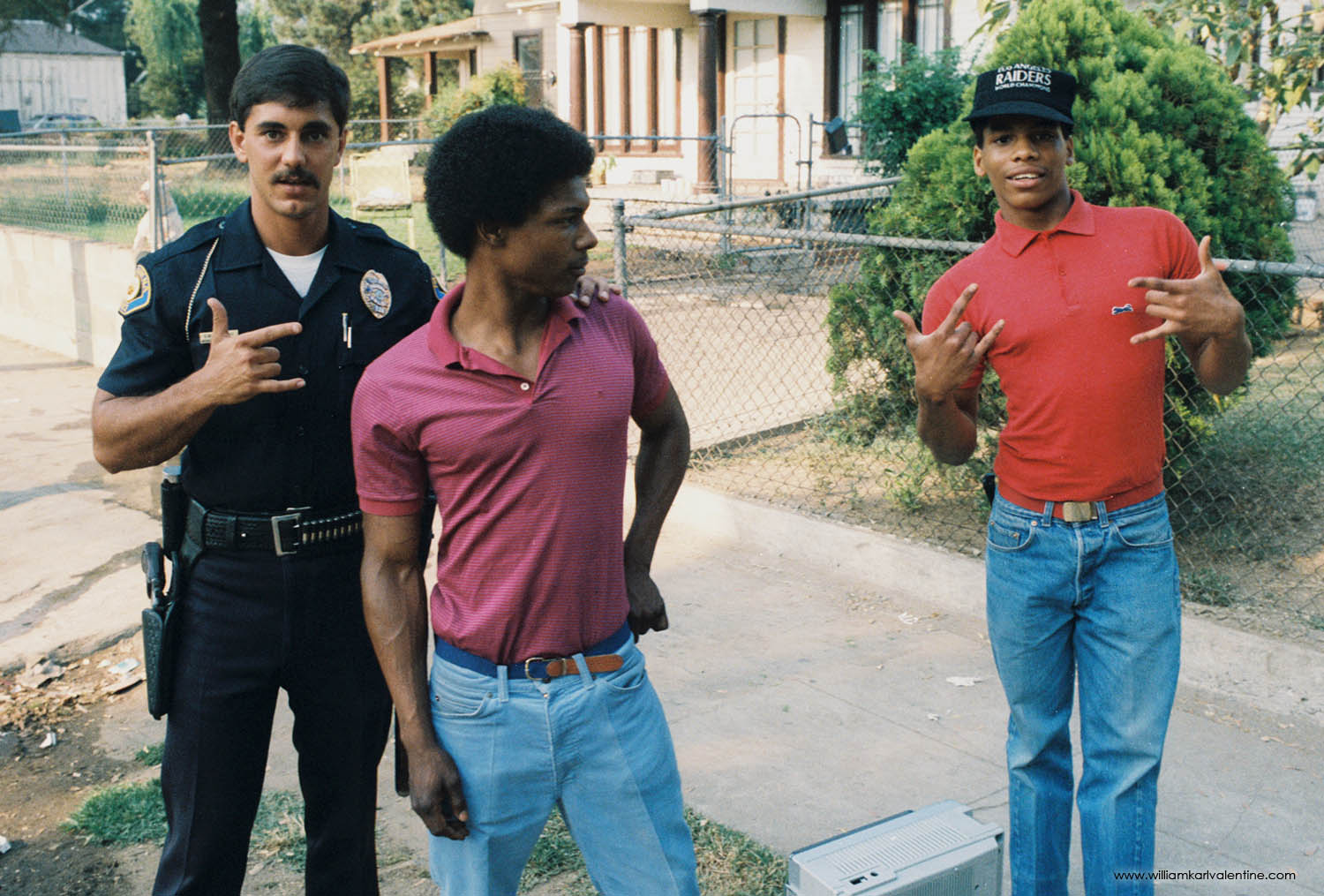
Officer Gary Capuano "Caps" PPD-075 #05 (1/17/86)

I had another Photography first this summer when I licensed one of my images to be an album cover. The Spanish band Beautiful Senoritas found the above photo from my Pasadena Police Department Portfolio and really wanted to use it for the album cover of their new record “So Good!”. I had to hear their music and read the lyrics to “Call the Police” before considering the licensing. I liked their sound and there wasn’t anything negative in the lyrics, so I was good with it. I then called up “Caps” to make sure he was fine with the use, and he was. The band is emerging still, so the album will probably be a small project, but I have to admit the band members were so professional during the process. One of the best licensing experiences I have ever had. Hopefully the album takes off and does well because I love seeing good people have success. I just got a proof of the artwork and wanted to share it.

In Photography Tags Beautiful Senoritas, Album Cover, Pasadena Police Department, Pasadena, William Karl Valentine, Folc Records
Comment

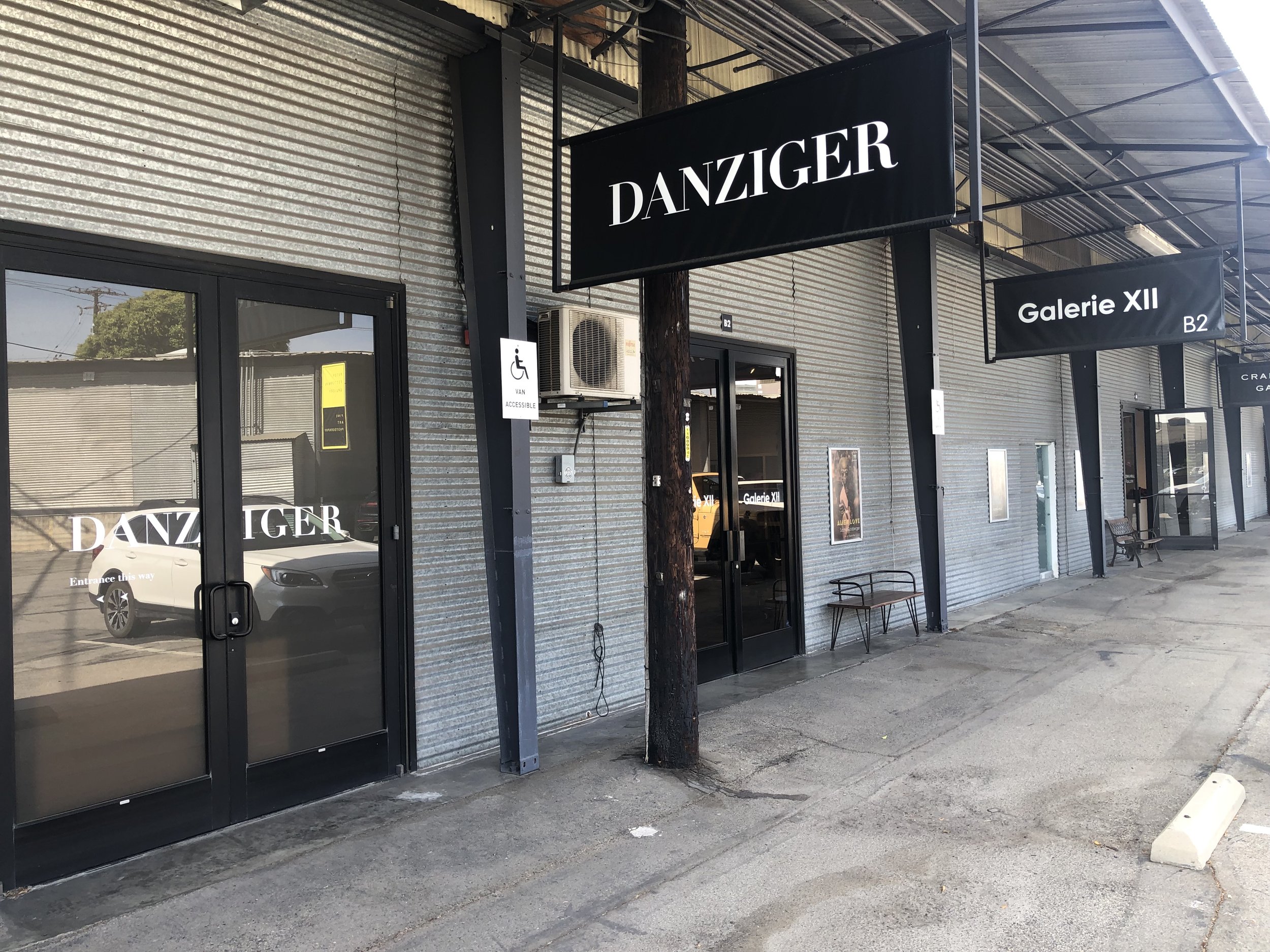
Tod Papageorge at Danziger Los Angeles

July 23, 2022

I was able to get up to Danzinger yesterday afternoon and it was absolutely worth the drive. Danzinger is a great space, in Bergamot Station which has so many cool gallery spaces and is actually pretty easy to get to considering how hectic summer traffic can be in Santa Monica. The staff at Danzinger is also outstanding, they know the exhibition well and were actively engaging visitors to explain interesting facts about the work. The staff obviously has a passion for art and are motivated, I wish every gallery was like that.

Read More
In Galleries, Photographer, Photography Tags NY Times, Tod Papageorge, Santa Monica, Malibu, Venice Beach, Documentary Photography, Vintage Surf Photos, Surfing
Comment

Bergamot Station Arts Center - Santa Monica

July 23, 2022

In the other blog post I am putting up today I talk about the Todd Papageorge exhibition at Danziger which is why I went to Bergamot Station Arts Center yesterday. While I was there, I bounced around the other galleries and found enough other good work that I liked so I decided to do a separate post on the other spaces.

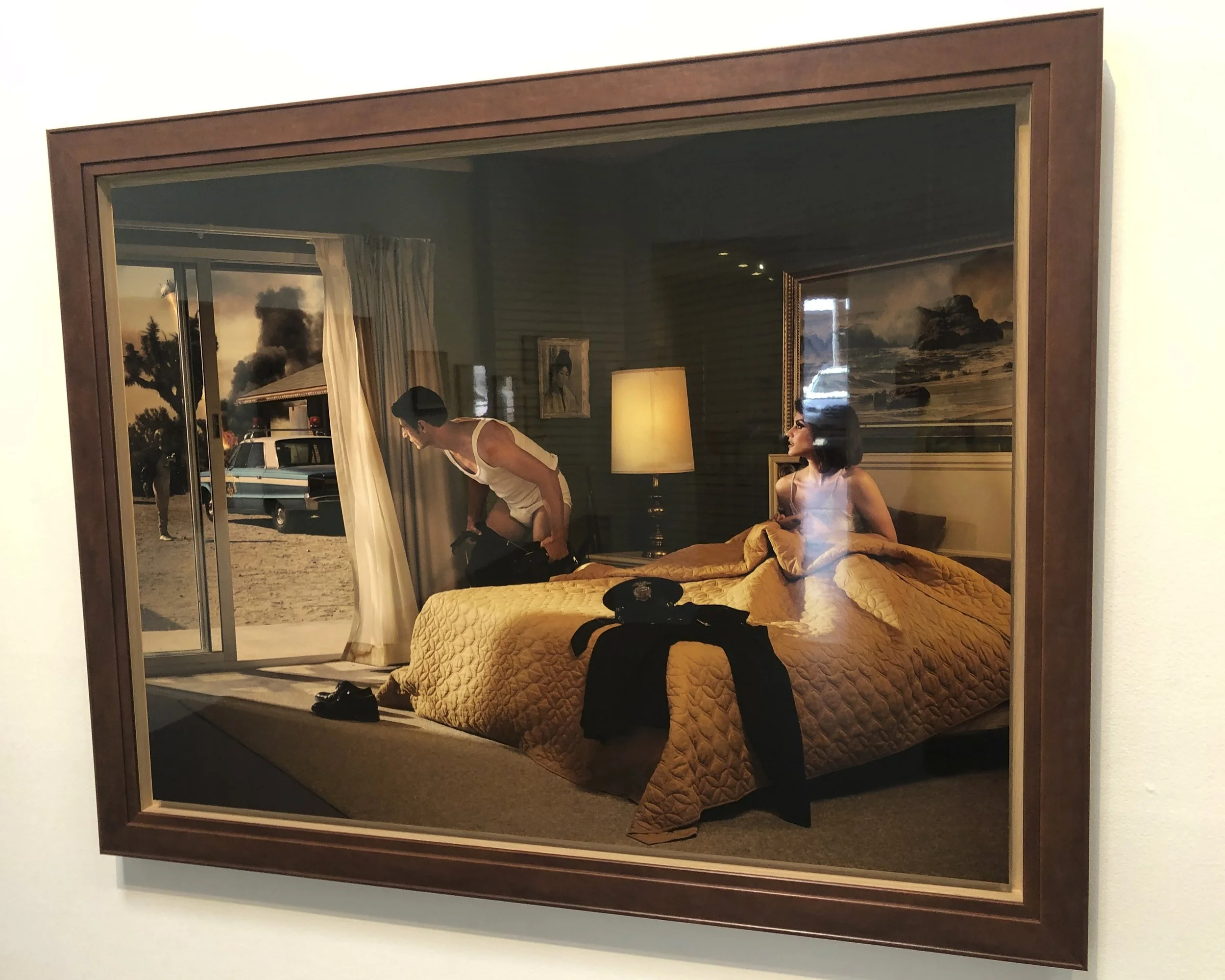
Galerie XII - Los Angeles. French photographer Sacha Goldberger’s first Los Angeles solo exhibition “Alien Love” is a lot of fun. His images are stunning, so well made, and the story line is hilarious. 1950’s Sci Fi feel with the clean look of modern image making. There is an accompanying DIY book of the Alien Love portfolio, which is interesting, but I took pass on it. The book printing is okay, but it doesn’t come close to the beautiful prints in the exhibition, so it wasn’t the same for me. It is a solid exhibition still which runs through September 3rd. Below are my two favorite photographs. I am sure my law enforcement background, my ties to Arizona and its Saguaros, and my appreciation of beautiful brunette women had something to do with these prints standing out for me.

View fullsize 1 IMG_6953.jpg
View fullsize 1 IMG_6952.jpg

Galerie XII was also showing Matthew Arnold’s “Longing for Amelia”. I was not familiar with Arnold or his work but found “Longing for Amelia” to be a tight exhibition with lots of unique details. I felt it had good value.

Rose Gallery had Life:Still by Godeleine De Rosamel which I would best describe as pottery-based sculpture. I thought it was interesting and fun, I enjoyed viewing it, but it doesn’t fit my collecting interests.

I absolutely loved some of the paintings up at Skidmore Contemporary Art. Jessica Brilli’s “Chrystler in Carport” brought me back to my mom’s blue Chevy station wagon I grew up in and Jessica’s “Morning of the Camping Trip” was equally beautiful. I love her style. Richard Baker’s “Sonoran Sunset” was also awesome. Reminded me of Ed Mell’s work, one of my favorite painters. Lia Skidmore has a solid eye for work and a nice space, I will definitely be back there again.

View fullsize Chrysler in Carport, 2022 - Jessica Brilli
View fullsize Morning of the Camping trip, 2022 - Jessica Brilli
View fullsize Sonoran Sunset, 2022 - Richard Baker

Peter Fetterman Gallery had his “Power of Photography” exhibition up to coincide with the release of his new book of the same title. I love the fact he chose a Max Yavno photograph for the book cover, I love Yavno’s work, and how he used a long lens to flatten out his subject matter, an interesting different perspective and wonderful prints. The same print is on the wall in Fetterman, and it is such a beautiful rich print. Fetterman always has classic prints up, always something good to see there. It should be noted that Peter also has a book signing and discussion scheduled at Arcana Books in Culver City on Saturday August 13th from 4:00 - 6:00 PM. Arcana is one of the best fine art photography bookstores in the country, their stock is amazing, great space, and knowledgeable staff. John Divola is also signing his new book “Scapes” at Arcana tomorrow, Sunday July 24th from 4:00-6:00 PM. See Map below for Arcana Books location:

 
In Galleries, Photography Tags Bergamot Station Arts Center, Santa Monica, Galerie XII, Sacha Goldberger, Alien Love, Matthew Arnold, Peter Fetterman, Power of Photography, Max Yavno, Arcana: Books on the Arts, John Divola, Richard Baker, Ed Mell, Godeleine De Rosamel, Skidmore Contemporary Art, Lia Skidmore, Jessica Brilli, Rose Gallery
Comment

PD-029 #33 5-02-92 Bill in front of his laundromat - Los Angeles, California

30 years ago today, I was at the LA Riots

May 2, 2022

As a documentary photographer, the fact that I was unable to photograph some of the most surreal things I ever witnessed will always bother me.

I was a Police Officer for the City of Chino in 1992 and at work when the LA Riots erupted.  Chino is forty miles East of downtown Los Angeles, just outside of Los Angeles County in San Bernardino County.  I remember watching Reginald Denny getting dragged from his truck and beaten on the TV in the watch commander’s office as our dispatchers took 911 calls from our citizens pleading for our officers to nbe sent to help stop the things they were witnessing on.  I was expecting that there would soon be a mutual aid request soon from LAPD and I started lobbying to go when that call came.  I knew Los Angeles better than most my peers and I wanted to get into this fray.  The rioting grew that night, but the mutual aid request never came.

I lived in Pasadena then and when I got home, I could smell the smoke from the fires in Los Angeles.  One buddy I grew up with was a Pasadena cop and he let me know Northwest Pasadena was rioting too and their department was on tactical alert.  It immediately reminded me of my father’s stories from the Pasadena Gambling House riot which occurred during the Watt’s Riots in 1965, just after he had joined Pasadena PD. 

I watched a lot of news before my next shift as rioting spread on April 30th.  I knew I wanted to get to Los Angeles but was torn because part of me wanted to go photograph it and the other part wanted to go as a police officer to deal with the looting and rioting.  I knew to go photograph on my own would be dangerous and logistically nearly impossible. 

Finally on May 1st Los Angeles sent out a mutual aid request to San Bernardino and Riverside Counties.  I was one of nine officers sent from Chino PD, we took three older police cars.  We were to the Los Alamitos National Guard base where we staged and waited for our assignment.  I remember we left in the afternoon and traffic on the 57 freeway was so heavy we had to drive down the center shoulder to get there.  Looking at the people we were passing most of them looked serious or nervous.  I remember people were worried the rioting would spread throughout Southern California.  I was focused on what awaited us in Los Angeles, we were not saying much, mostly listening to the Am news radio.  I was expecting to get into a lot of conflict, so I had the pregame type of focus.  I was thinking of what I had seen on the news, and I was trying to run as many of those scenarios through my mind as possible to prepare. 

We sat at Los Alamitos for over an hour then they told us they were cooking steak dinners for us before we went it.  The last thing I wanted was a military grade steak dinner, I just wanted to get to Los Angeles while things were still going on.  After dinner we were sent to the City of Inglewood in a task force of mostly officers and deputies from San Bernardino County agencies.  The only agency from our county that didn’t go with us was Ontario PD because they had been assigned to escort a shipment of ammunition to Compton PD shortly after they arrived at Los Alamitos.

It was evening when we finally started our drive up the 405 Freeway.  Our convoy of over 30 police cars, every unit with 3 to 4 cops wearing helmets, and support vehicles was pretty impressive looking, a strong show of force.  The San Bernadino Sheriff even sent his mobile communications center semi truck so our radios would still work outside of our normal range. As we got near the 110 Freeway, I could see plumes of smoke all around South-Central Los Angeles.  The columns had orange tints from the late afternoon sun, and the scene was almost apocalyptic.  I knew a full curfew was set to go into effect at sunset, or 8pm, and I was hoping to get deployed before that.  We got to Inglewood and staged in the parking lot of an eight-story hotel on Century Boulevard just off the freeway, today it is a Motel 6.  Once again, we all stood around and waited, now as the sun was setting and the curfew was going in to affect.  The Inglewood officials didn’t seem to know what to do with us.  By that point rioting in their city had calmed down.  Los Angeles and Compton were still rioting but Inglewood officials didn’t want to send us over to those areas in case Inglewood had more problems.  I also think a lot of people saw us come into the city and officials just liked our presence as a deterrent.

We were eventually sent to guard a gas station on the north side of Inglewood, I think it was on La Brea near Centinela.  The small mini mart portion of the Chevron had already been partially looted but I was able to find a map inside so we could figure out where we were (pre-cellphone era when gas stations sold maps).  With the curfew in place we hardly saw anyone out and about.  I could still hear gunshots occasionally, but everything sounded a couple blocks away, and no one was shooting at us.  A couple of us eventually talked our Sergeant into letting us scout the surrounding area.  Inglewood residents still had electricity so except for the looted businesses it looked normal. But once we went a few blocks East into Los Angeles where there was no power, so everything was pitch black. In Los Angeles we came across a market that was still burning, LA City Fire engines were on scene working it with CHP officers providing them security.  On one block we found a corner market that had burned to the ground, a pilot light for some appliance was still burning and that little two-inch flame was the only light we could see on the entire block.  We saw a few people moving around in the darkness but for the most part the streets were deserted in that area.

It was well after midnight when we returned to the hotel at the end of our shift.  Things were still disorganized.  The San Bernadino County Sheriff’s Department had allocated all the rooms at the hotel for their people, and no one had any idea where to put us.  We waited for a long while and I finally got fed up. I told my sergeant if he’d let me drive to a pay phone I would find us a hotel. He asked how and I said I would just come up with something, he agreed since there wasn’t another option.  The first hotel I could think of was the Bonaventure Hotel in downtown Los Angeles.  I knew they would be empty and assumed they would be happy to have Officers on site given everything that was happening.  I made the call, spoke with the manager, and he invited us come on over.  They comped us on everything and their only request was that we park our units up front so anyone coming to cause problems would see them. 

We decided to drive across Manchester Boulevard to the hotel in downtown LA.  I knew Manchester very well, having driven it hundreds of times going to Kings games at the Forum.  It was so surreal to see the area pitch black with so much damage and seemingly being the only ones out and about.  So many businesses were gone, and it seemed there was a burned-out car in the road every couple blocks.  We passed a couple armored vehicles parked on side streets then soon saw a pair of heads approaching from behind us.  We couldn’t tell who it was, so we moved to the right lane and were starting to prepare for trouble when we saw it was a convoy of 30 Los Angeles County Sheriff’s units with four deputies in each car.  Only the lead unit had headlights on every other unit behind was blacked out, we assumed they might have been out hunting for problems trying to appear as if there was just a solo vehicle. The sight of that LASD convoy passing us was so incredible, put the gravity of the situation in to perspective.

View fullsize PD-029 #16  5-02-92
View fullsize PD-029 #13  5-02-92
View fullsize PD-029 #15  5-02-92
View fullsize PD-029 #22  5-02-92
View fullsize PD-029 #29  5-02-92 - Murder victim's car
View fullsize PD-029 #36  5-02-92  Inglewood PD Unit

The next couple days we were assigned to guard the general area of Manchester and Crenshaw in Inglewood, it was mostly to show a presence and deter further unrest.  We were able to assist Inglewood PD with a few calls, a shots fired and a looting in progress, but those calls were uneventful.  It did allow us a chance to talk with the Inglewood officers about the first part of the rioting which was insane, I remember talking with Sergeant John Bell after clearing a Nix Check Cashing store which someone had reported being “re-looted”.  I knew who Bell was, he was somewhat of a legend, having survived some intense situations.  Bell told us that he was in three pursuits and two shootings on the first night of the riots.  He described driving up to the front of a liquor store he thought was just being looted only to discover it was an armed robbery in progress and having to engage the suspects.  Later that night I spoke with a couple more Inglewood officers in an unmarked unit on another call.  They said their primary assignment that night was to go to “shots fired” and “man with a gun” calls before other officers in marked units arrived.  Both officers had been in so many shootings the first two days of the riots the extra magazines on their belts were empty.  The department had apparently run out of duty ammo because officers had been in so many shootings.  They described the agency being in a “no hits no paper” mode because of how overwhelming things had been.  They said if someone shot at them, they would try to return fire and get out of the area as fast as possible then come back later with numbers and check to see if they had hit anyone.  I could tell how much stress they had been through with the looks on their faces.  One side note about Nix Check Cashing, which is a chain of check cashing storefronts still around today, while we were there a couple guys drove up and asked us if Nix was open.  We said they were closed because it had been looted.  The guys lamented that they needed to cash their welfare checks but couldn’t find anyplace open because they had all been looted or burned.  We suggested they drive out of the area, and they said they didn’t have enough gas because all the gas stations had also been looted and shut down.  This interaction highlighted the lack of thought with the rioting.  One other incredible thing I saw during the riots was the massive line of 3000 people at the main post office for South Central LA when people had to go down in person to get their welfare checks because all letter carrier service had been suspended because the area was too dangerous.

We patrolled around the neighborhoods some and interacted with people the best we could.  I consider a lot of Inglewood as middle class, definitely nicer than South Central LA, and most the residents are good people.  The neighborhoods were very well cared for, lots of older well-kept single-family homes.  The homes were in good repair, lawns were mowed, hedges trimmed, most with a decent car in the driveway, and almost everyone with security bars on the windows.  But it also seemed like every block had one house that was the local gang or crack house.  Trash in the yard, broken down car out front, and bullet holes in the stucco.  It still pisses me off to think of how many decent people were living behind bars because of the gangsters on their block, and how many more people today are subjected to crime.  It was blatant who was involved in the looting and rioting.  We stopped in front of one of those gangster houses and chatted with a guy putting a new car stereo in his ride.  The guy said he had just bought it but we all knew where it came from but there was no way to prove it.  All the stores had been closed for several days and he didn’t have a receipt.  We then drove the alley behind the house and found a pile of old furniture and an old TV, they were not even trying to hide the fact they had been out looting.  Most the people I spoke to were happy we were there and supported us.  About a quarter of the people were just pissed off.  Pissed off at how LAPD treated people they contacted but at the same time pissed off at the gangsters that committed the crime which created the law enforcement response.  They were also livid with the people who destroyed their neighborhood. The rest of the people, mostly the ones involved in crime and causing problems, just hated us and didn’t mind letting us know about it.

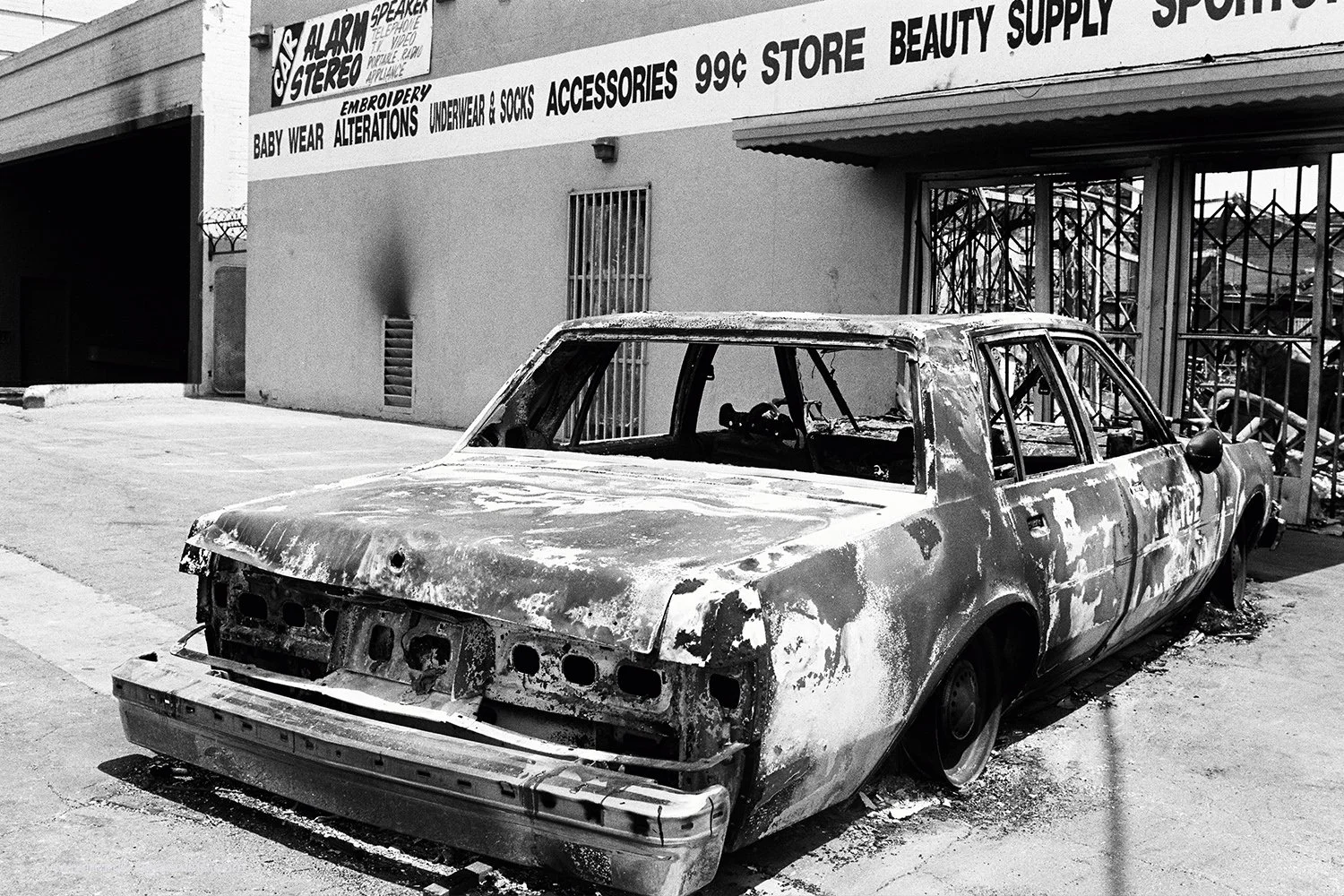
I was able to photograph some while I was there although I was limited in how much time I could spend doing it.  Somehow I lost one of my rolls of film, one that had images of the burned-out cars in the street, If I remember correctly from the area of Florence and Normandie, but I still have the images in my mind.  My portrait of “Bill”, who owned a laundromat, in front of burned-out business is one of my favorites.  He was such a gentleman, in talking to him I knew how much effort he put in to building his business and it made me mad they destroyed his business for something he had absolutely no responsibility for.  His faith was impressive and I assume he rebounded well. I have other photographs which document the devastation of the fires and looting.  I remember photographing a bank where the giant main steel support beam for the roof bent from the intensity of the fire being left to burn out, the only thing left inside the walls was the vault, it was insane to think how hot that fire must have been.

I knew at the time that I pretty much missed out things with the riots.  I had so many friends at other agencies who were in the middle of the fight as were a lot of press photographers at the time.  I was able to witness and document the aftermath still and have a good understanding of the atmosphere, but that was about it.

With the 30th Anniversary of the Los Angeles Riots this weekend I wanted to take a moment to share these photographs and the story of my experience.  I am fearful how history is being rewritten lately, and it is important we remember things as accurately as possible to prevent repeating previous mistakes or creating new problems.

PD-029 #07 5-02-92

In Photography, Civil Unrest Tags William Karl Valentine, Documentary Photography, LA Riots 1992, Los Angeles, LAPD, Riots
Comment

Harry Carey - HoHoKam Park - March 1983

40 years Photographing the Cactus League

April 8, 2022

2022 marked the 75th Anniversary of the Cactus League, Spring Training in Arizona, and the 40th Anniversary of my first trip to Arizona to watch, and photograph, Cactus League games.

In 1983 my buddy Steve DeWitt suggested we road trip to Arizona to go see some Cubs Spring Training games.  Two other friends also went along.  I think I drove us out there in my small Toyota truck, and I know we stayed at the Motel 6 in Scottsdale.  That “Six” was in even worse condition than you would expect from that motel chain, the pool was solid green, and the room was dated, so it was ideally suited for a low budget road trip by 20-year-old males. 

CL-094 #33 3-28-87

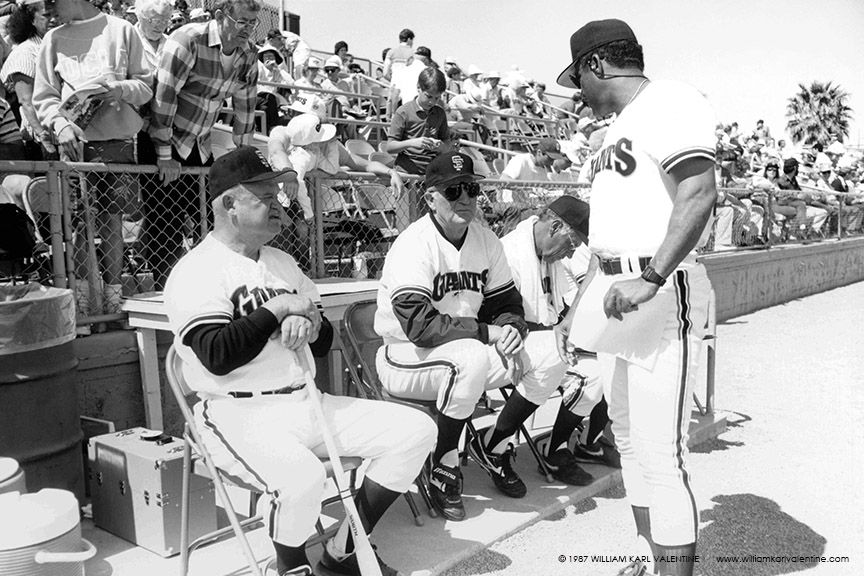
Don Zimmer, Manager Roger Craig, Bob Lills, and Jose Morales - Old Scottsdale Stadium

Spring Training then was nothing like it is today.  Back then the teams didn’t count on the games as revenue sources like they do today.  Teams seemed happy with whatever ticket sales they picked up to cover some of the training costs, it wasn’t a production like it is now.  Most tickets were $5, the stadiums were very simple, and they would even let you bring in your own coolers of beer.  When we went to see the Cubs at HoHoKam Park we sat right under the press box, behind home plate, and we could literally stand up on the bench seating and talk to the announcers who were eye level on the other side of their worktables (as you can see with the lead photograph of this post).  We sat there specifically to be close to the legendary announcer Harry Caray who was starting his second season calling Cubs games.  We infuriated long time Cubs radio broadcaster Lou Boudreau by asking him to get Harry’s attention for us. Lou was already in the Hall of Fame as a player by then and he hated the fact we were more interested in Harry than him.  Lou was also probably upset that we had passed a few Budweisers from our cooler to Harry by then too; he wasn’t supposed to drink during the game but then it was Harry. Harry was famous for leading the crowds in the singing of the 7th Inning Stretch, especially since joining the Cubs in Wrigley.  Harry was not supposed to lead the crowd during that spring training game, but everyone encouraged him to sing it and he did.  Afterword he leaned over towards our section and said “I remember the first time they asked me to sing the 7th inning stretch in Comiskey (The White Sox home park, Harry had called White Sox games for ten years before joining the Cubs and the White Sox started the tradition of Harry singing the stretch).  They asked me what “key” I wanted it in, and I told them the only “key” I’m familiar with is “whiskey”!”  Then he bellowed out laughing with the rest of us. Access to the players and personalities back then is what made Cactus League so special. It was an epic road trip at the start of my love for the Cactus League.

I transferred to Arizona State University in 1984 and spent each March I was in school going to as many Cactus League games as I could.  Being a photography major I started to photograph games as another school project, a portfolio that now documents 40 years.  Things were so relaxed then that I often would be able to put my 500 mm Mirror lens on a monopod and just walk out on to the field and photograph from the photography wells without anyone questioning me.  At Scottsdale Stadium when games were over-sold, they even let fans sit on the field in foul territory beyond the bullpen mounds.  It would never happen in today’s world but back then the fence for the stands was only about three feet tall and no one cared.  People respected the players, and no one was on a cellphone, so people paid attention to the game.  One day the Giants Assistant Director of Public Relations Dave Aust finally noticed me on the field and asked who I was and how I got there.  I told him I was a student at ASU documenting Cactus League games, and I didn’t really admit that I knew I wasn’t supposed to be on the field.  Dave got me off the field but told me to meet him at his office before the next game.  Dave was just starting out in his career, we talked, and I think he respected how hard it was to get established and he liked the idea of my project.  He issued me a photo credential for the rest of the season and for a couple years after that too.  Tempe Diablo Stadium was another favorite of mine when I was in school because they always left the service gate on the third base side unlocked so I never had to pay for games there.  A plus being a college student needing all the extra cash I had to buy film and paper.

When I was photographing Cactus League in the mid 1980’s there were only 8 teams that I remember. In the Phoenix area the Oakland A’s played at Phoenix Municipal, the Milwaukee Brewers were at Compadre Stadium in Chandler, The Chicago Cubs were at HoHoKam in Mesa, the Seattle Mariners at Tempe Diablo, and the Giants were at Scottsdale Stadium.  The San Diego Padres were in Yuma, Arizona, the Cleveland Indians were in Tucson, and the California Angels were still based in Palm Springs, California.  Today there are 16 teams in the Cactus League, playing in 10 state of the art Phoenix area facilities.  Scottsdale Stadium, originally built in 1956, was rebuild in 1992 and Tempe Diablo Stadium, built in 1969, are the only two remaining Cactus League parks from when I started (Phoenix Municipal still exists but it is now the home of ASU Baseball).  Modernization of the Cactus League really began in 1994 with the opening of the Peoria Sports Complex for the Seattle Mariners and San Diego Padres.  Peoria is still a great facility to watch baseball in, and probably has the friendliest staff. Most all the stadiums are surrounded by multiple training fields and training facilities now.  The newest stadium is Sloan Park, the Chicago Cubs home in Mesa, which opened in 2014.

I see Baseball as a Metaphor for American Society, that is one of the reasons I like photographing it so much.  Spring Training is baseball in its purest form.  You have the current players getting prepared for the season, aging stars trying to find one of those last roster spots, and young players chasing the dream to get to “The Show”.  It is a rebirth, signaling that the new season approaches.  It is casual experience for the fans, since all games don’t count, it is easy for spectators to relax and just enjoy being at a ballpark.  A popular component of every stadium now is lawn seating beyond the outfield fences. Players have more time to interact with fans and don’t have the demands of the regular season schedule.  It is unfortunately changing though, as is our society.  Safety netting at Camelback Ranch, the Dodgers and White Sox home stadium, now goes the entire length of the field so the interaction between fans and players is harder now.  I assume attorneys worried of liabilities championed changes like this, but then when I see how many people attend games now with the eyes glued to their cellphones, I guess I can understand the reasoning.  Pricing has also changed, and Spring Training is now as much of a business venture as the regular season is.  I am admittedly a romantic and I not usually a fan of change. My Cactus League portfolio has documented these changes fairly well, and because baseball is such an integral part of American society I think this portfolio also speaks to the changes in our society these past 40 years.

Even though Spring Training was cut short this year with the MLB lockout, I made it out to Phoenix last week to photograph a couple days of Cactus League games in honor of both anniversaries.  Included below in this blog are a selection of my photographs from the trip. I also authored this post honor of Major League Baseball’s Opening Day yesterday.

View fullsize CL DSC 0557  04-01-22
View fullsize CL DSC 0509  04-01-22
View fullsize CL DSC 1281  04-01-22
View fullsize CL DSC 00458  04-01-22
View fullsize CL DSC 00482  04-01-22
View fullsize CL DSC 00574  04-01-22
View fullsize CL DSC 0650  04-01-22
View fullsize CL DSC 1986  04-01-22
View fullsize CL DSC 00628  04-01-22
View fullsize CL DSC 01196  04-02-22
View fullsize CL DSC 01215  04-02-22
View fullsize CL DSC 2665  04-02-22
View fullsize CL DSC 3160  04-02-22
View fullsize CL DSC 01291  04-02-22
View fullsize CL DSC 1907  04-01-22
View fullsize CL DSC 1909  04-01-22
View fullsize CL DSC 1885  04-01-22
View fullsize CL DSC 2280  04-01-22
View fullsize CL DSC 00669  04-01-22
View fullsize CL DSC 2975  04-02-22
View fullsize CL DSC 1156  04-01-22
View fullsize CL DSC 1175  04-01-22
View fullsize CL DSC 1840  04-01-22
View fullsize CL DSC 2261  04-01-22
View fullsize CL DSC 2432  04-01-22
View fullsize CL DSC 2498  04-01-22
View fullsize CL DSC 01180  04-02-22
View fullsize CL DSC 00859  04-02-22
View fullsize CL DSC 01205  04-02-22
View fullsize CL DSC 2694  04-02-22
View fullsize CL DSC 3292  04-02-22
View fullsize CL DSC 2783  04-02-22
In Photography, Spring Training Baseball Tags Cactus League, Spring Training, Baseball, Documentary Photography, William Karl Valentine, Arizona State University, Arizona, Los Angeles Dodger, Los Angeles Angels, Cincinnati Reds, Seattle Mariners, San Francisco Giants, Milwaukee Brewers, Cleveland Indians, Tempe, Palm Springs, Tempe Diablo Stadium, Bobby Witt Jr, Mike Trout, Yazstremski, Harry Caray, Peoria Sports Complex, Camelback Ranch
Comment

Doug Rickard 1968-2021

February 21, 2022

I heard a week ago or so that California artist Doug Rickard had died last November 30th at the age of the age of 53.  My fear, and speculation, is he may have taken his own life, but I don’t know that for sure.  He was relatively young, there has been no cause of death given, and in reading his bio information he made no secret that he had struggled with some things in life.  I only mention this for anyone else out there who might be hurting and reads this post.  I know of a couple people who have their lives in the last couple years, we are living in some ugly times right now but there should always hope, and I encourage anyone who might be struggling to tell someone, to ask for help.

Rickard became known in the art world for his series A New American Picture which he began in 2008.  Using a Nikon D40 on a tripod, Rickard projected Google Street View images on to a large screen in his office then photographed them.  Over a three-year period, he made 10,000 to 15,000 exposures which he eventually edited down to 80 for the final product.  Aperture published the monograph of this work in 2012.

If I remember correctly, I first became aware of A New American Picture when I heard Rickard speak at the Medium Festival in 2014.  To be completely honest I didn’t like the images aesthetically and I still don’t.  In theory, his goal of documenting the areas of our country where opportunities to chase the American Dream are non-existent and impossible to achieve is a fantastic subject to be explored and documented.  I just didn’t like his approach, sitting in a safe office using the images captured by some poor Google driver who had to drive through some of the roughest cities in the country to capture those images.  Those drivers were the ones putting their asses on the line to get the images.  I can only imagine how many rocks and bottles (or worse) have been hurled at those drivers in those areas.  Another thing that bothered me was Rickard’s use of a low-end digital camera.  Not that the 6.1 MP Nikon D40 was a bad camera for what it was, there were just better models out by then and he was printing 21” x 33”.  I remember seeing a video of him working on the project and I was surprised he had two assistants helping him for something so simple.  I am old school, the process of photographing is actually going to those places myself to witness firsthand, to experience the situation then capture the images to accurately document my subject. 

But with all that said above, I am thankful for Doug Rickard’s work.  I am happy the photography world accepted his unique approach and that so many people have seen his images.  His body of work is very important.  I want diversity in images and new approaches to the medium.  I think Photography has had a habit of following trends, where a certain image style becomes popular, and that style dominates what is being shown.  The Internet has obviously impacted that, but I still see the trends in the galleries.  I wonder at times if my own work isn’t paying the price for past trends.  We have all seen the 1920-1970’s images from masters of documentary photography so much over the years that I think some recent documentary work gets ignored or discounted because gallerists and curators are looking for new product to share.  From a business perspective it makes perfect sense. 

While researching for this post I learned more about Doug Rickard, and I developed a greater appreciation for him.  I discovered Rickard was influenced by some of the photobooks that I love: American Photographs by Walker Evans, The Americans by Robert Frank, and Uncommon Places by Steven Shore.  He had a strong knowledge of the history of the medium and he seemed to respect those who came before him. I also discovered the primary reason for using Google Street View was because he had a demanding job in the software industry and couldn’t take enough time to travel to all the places he wanted to document, he realized Google Street View allowed him to explore more places than he ever could have traveled to.  In watching interviews of him online for this post I reevaluated my opinion and I understand better now that image quality didn’t matter to Rickard, in fact the poorer resolution was a desired look for his images. I also discovered Rickard’s influential website American Suburb X.  Seeing the content on the site, it was immediately apparent that Rickard had an outstanding understanding of the documentary photography world, showcasing many of my favorite image makers.  Looking at the site I think it may have been impacted by his passing and appears there wasn’t much activity on it over the last year which is unfortunate because much of the content on the site is outstanding.

I encourage you to follow some of the links in the post to get a better understanding of Doug Rickard’s work and its importance to the medium of Photography.

In Photographer Tags Doug Rickard, Aperture, A New American Picture, American Suburban X, Nikon, Documentary Photography, Documentary Films
Comment

Brianna Kupfer was stabbed to death inside her work on 1-13-22, the suspect was arrested on 1-19-22 in Pasadena several hours before I photographed this memorial at the murder scene.

Brianna Kupfer Murder Scene - 326 N. La Brea, Los Angeles

January 22, 2022

I remember standing over a guy once who had just been shot in his apartment.  There was a drive-by on the street out front and instead of taking cover he went to the bedroom window to look and caught what appeared to be a stray round meant for someone else.  He was a “Veterano” so I was somewhat surprised he did that, I expected he would know better.   We had arrived on scene right after it happened, and paramedics were close behind us. Medically there wasn’t anything I could do for him beside encourage him to keep fighting to stay alive.  His breathing was shallow, and he was not saying anything.  His color started to fade and by the time the paramedics transported him his skin was turning grey, I knew he was going to die, and he did soon after reaching the hospital.  I have seen a few murder victims die; most I guess were in shock because they were not saying much.  I have also seen someone who was shot and made it, he was scared and calling out for his mother as he was laying there on the ground.  Watching someone in the process of dying an unnatural death is surreal.  I’ve sensed some people giving in to their wounds and death’s call, while seeing others fighting with all they had to survive.  I have sensed fight, fear, regret, loneliness, and calm witnessing the dying process.

I went to the Croft House to photograph Brianna Kupfer’s memorial because I saw it as opportunity to document an incident which represents our society today, raging crime and the deterioration of safety in our communities.

What happened to Brianna showcases everything that has and is going wrong with the new approach to the American criminal justice system in a supposed “woke” society.  It is beyond unacceptable that Shawn Laval Smith, the murder suspect, was still roaming the streets after at least 11 previous arrests and his obvious mental health issues.  At a minimum he should have been in a mental health facility years ago, instead, somehow, he was most likely shipped to California from South Carolina so they could get rid of their problem quickly.  Based on all his criminal history Law Enforcement did their job, they arrested him and brought him before the courts. The system from there obviously did not do their part by putting Mr. Smith in some type of custody where he could not harm others.  Every day there are incidents of violent attacks on innocent people by unstable persons living on our streets.  This past week the victims included a nurse at a Los Angeles bus stop and an accounting consultant on a New York subway platform, plus who knows how many others. 

I feel my images from the Croft House accurately convey my feelings about Brianna’s murder and allow for thought and interpretation by other viewers.  I see them as powerful documents of what happened, even though they do not actually document the criminal act or crime scene. I hope these photographs allow some viewers the ability to consider the reality of such a horrific loss and contemplate society’s approach to public safety moving forward. I think there are many layers for the viewers to deal with in these images. 

When I photograph, I try and be respectful of the people within my frames and not exploitative. With an incident like this, I was looking for images with deeper meaning, not just a press image where I was looking for dramatic shot to illustrate a story before moving on. 

Here are some of my thoughts on specific images:

The wide-angle view of the entire store worked well. The lead image in this blog captured how intimate this furniture store is by documenting its scale. I used a 14-24mm Nikon Aspherical lens for this since the sidewalk is so narrow and news vans were parked all in front of Croft House. For me I see the outside of the building with all the big windows as a location I would never expect a violent crime to occur. The wide-angle lens also captured the volume of flowers well. In the image above the young man walking past the wanted poster of Smith symbolizes much of society for me. Something horrific happened here, I want everyone to take notice and be enraged about it, but this man appears to be walking by as if he is oblivious to that fact. I imagine him saying to himself: “Oh well something bad happened here, thankfully it wasn’t me, bad things happen all the time, just accept it, I have things to do, it’s nothing I have to deal with.”. Obviously, I don’t know this young man’s thoughts, nor do I know if he has already walked by here multiple times and has already stopped to experience the moment. His presence in the frame, although a documented fact, is really only symbolic of life going on and people passing by. I also think his attire helps with the documentation of the area and the people who live here.

This image is intense for me. The arrangement is so beautiful, as was Brianna Kupfer, the flowers are representative of her. The interior of the store is organized and clean. There is order in the display and the designs of the pieces are awesome, the space looks cool, normally I would love to check out. But then there is the reality that order was shattered by the blade of the murderer’s knife. The reflection of the news van and the wanted poster in the window tell the horrific truth. Having seen the coverage of the murder on television I know the suspect had walked right where I was now standing to make this photograph. Perhaps he peered into this same window before he entered Croft House. He interacted with Brianna in such a way that she became so scared of him she texted a friend about him, he then savagely murdered Brianna, before comely walking out the back door of the store and North up the ally. The most chilling part is the rear door of the store is so clearly visible in this image and positioned just to the left of the wanted flyer for the suspect. This image brings to my mind the terror Brianna must have endured at the end of her life, how alone she must have felt.

I assume this image above is pretty obvious for most viewers. Televised news is so influential today. Here I have the production crew for the live shot, masks documenting the period, and mobile equipment which reminds the viewer that the crew is only on scene temporarily before moving on to the next story. Society’s focus on this event will quickly fade, and then I think of her family who will carry the scars of this loss forever. I am angered with the thought that victims, and their families are not the focus today. The slight view of the memorial in the background wanted poster giving context to their story. The reporters practiced speaking their copy while the crews checked their lighting and camera angles. They were doing their jobs, they were not being disrespectful, but the reality was obvious this wasn’t personal for them, it was just another tough story, it probably has to be that way in their business. Maybe this image also represents public desensitization to crime.

View fullsize web CA DSC_0109 01 19 2022 - Kupfer Murder on La Brea c.jpg
View fullsize web CA DSC_0130 01 19 2022 - Angie Crouch - Kupfer Murder on La Brea c.jpg
View fullsize web CA DSC_4582 01 19 2022 - Kupfer Murder on La Brea c.jpg

A few more images of the news crews, I specifically liked the woman casually walking by NBC’s Angie Crouch as she prepared for her segment, again symbolic of the acceptance of the reality of our society today.

I personally have no respect for District Attorney Gascon so when I found this sign here when I arrived, I was happy someone else had made this statement. It is good that there is an element of anger along with celebrating the Brianna’s life and mourning her loss. The old metal security gate is also an important element in all these images, adds to the layers.

The powerful element in this image is subtle but strong. Just before I photographed it someone came up and asked a couple questions about the murder. He seemed like he didn’t want to believe such a violent act could have happened there, I assume he lived in that Hancock Park neighborhood. He read the wanted poster, then put his hands up to the glass so he could get a better view of the store’s interior. It was obvious he was trying to comprehend what had happened, I assume he felt compassion for the victim and quite possibly fear for his own well-being. It would have been a great photograph of him peering in the window, but I didn’t take it. I guess I wanted to let him have his moment to himself. The smudges on the window are a good representation of everyone who had stopped and peered inside. I am sure many were fearful they would see a bloody crime scene but at the same time they were too curious to not look. From that point I can imagine people thinking thank God that wasn’t me or my daughter.

View fullsize web CA DSC_0106 01 19 2022 - Kupfer Murder on La Brea.jpg
View fullsize web CA DSC_0108 01 19 2022 - Kupfer Murder on La Brea c.jpg

I liked the image of the vigil flyer; it is a simple document that gains value with the Christian candles. The note in the right-side image stood out to me. It isn’t the typical card you write on when you send flowers. It’s a page ripped from a small personal notebook. I don’t know any facts about who wrote this, but I can envision someone who stopped to view the memorial feeling the emotion of the loss and having a need to do something to share with others how they felt. For me the note is so genuine and personal, I love it, especially with the shapes and forms of the image, the beautiful, delicate flowers, and their contrast to the iron security gate. More layers of interpretation with this image than are initially obvious.

This may be the most powerful of my images that day, even though it was such an obvious image. I was lucky to be there when the sunlight was at a perfect angle to illuminate Brianna’s portrait and the wanted flyers taped to the window. The light also gave me interesting hard shadows in the store with an interesting element of a reflection of a security fence in the top of the frame; for me those elements allude to the darkness of the crime. Again, the staging of the portrait reminds me how unexpected it was to have a homicide occur at a location like Croft House. I don’t know who photographed the actual portrait, it is a solid portrait which I assumed captured Brianna’s personality. I felt a little weird photographing someone else’s photograph but with all the other elements in my frame I knew it was totally appropriate.

Hopefully I will find fewer things like this to photograph in the future and that I will never have to fully comprehend the pain Brianna Kupfer’s family is experiencing now. I will keep documenting my world because that is how I experience life and I trust these images will also have an impact on everyone who views them.

In Photography, Street Photography Tags Croft House, Brianna Kupfer, 326 N. La Brea, Los Angeles, California, 187 PC, Murder, Crime Scene, Gascon, Shawn Laval Smith, Documentary Photography, Photography, Street Photography, Crime Scene Photography
Comment

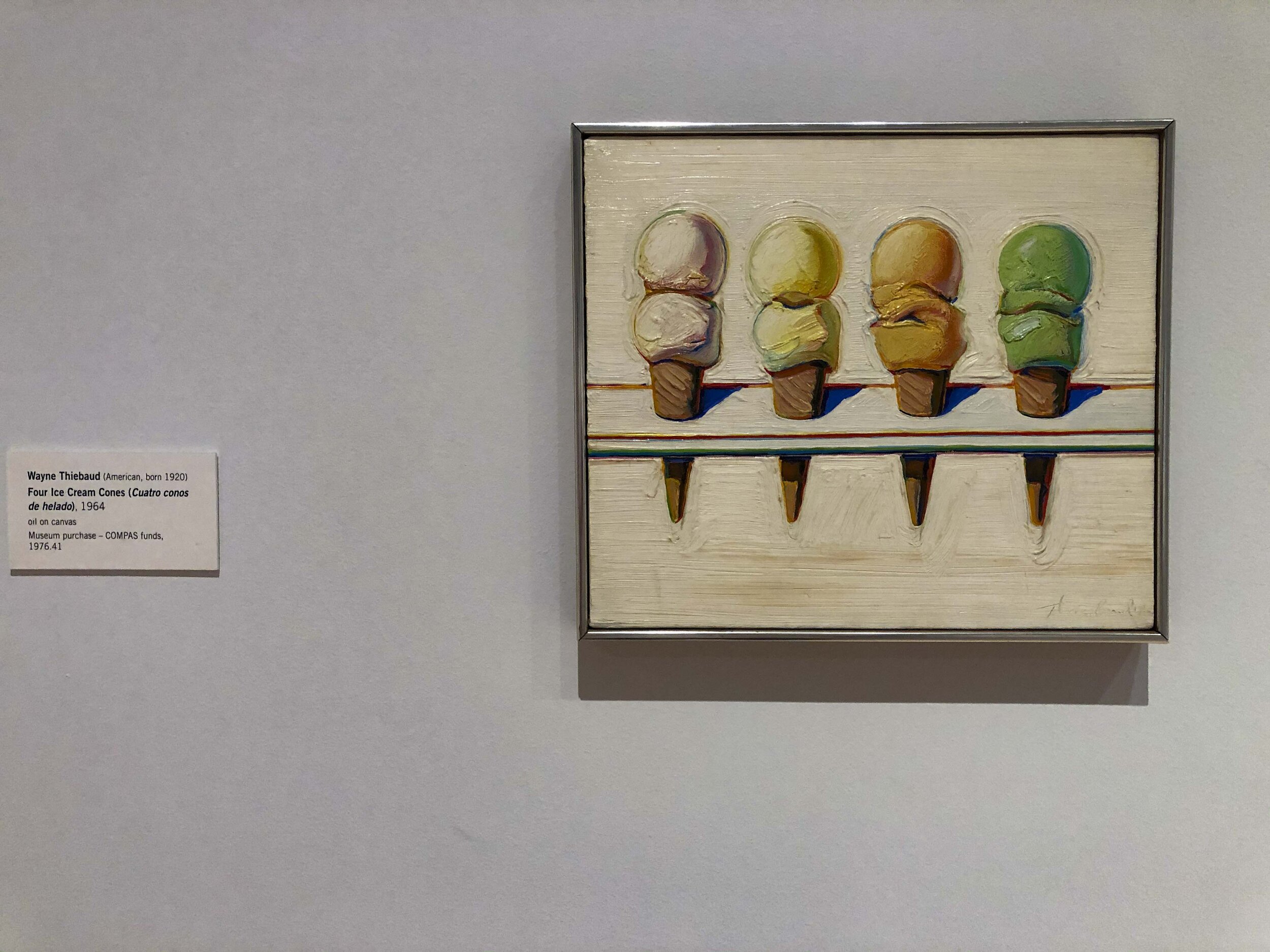
Wayne Thiebaud 1920 -1921

December 27, 2021

Three years ago, I authored a blog post about Wayne Thiebaud’s work that was exhibited at the opening of the Shrem Museum at UC Davis. Wayne is one of my favorite painters, I love his style of how he combined colors to create contrast. Wayne passed away two days ago on Christmas at 101. Obviously, God must have also loved Wayne’s paintings to give him such a long life with so many accomplishments.

I know with myself, and I think it is true with many artists or creative persons, that it is not always easy to produce work. I see the world as a photographer, constantly framing images in my mind, and I go out and photograph often, but it is sometime a battle to keep up with postproduction work and getting images out to be seen. When I see an artist like Thiebaud, his paintings so incredible but, I also have much respect for the energy put in to creating a volume of work, putting it out there, and his case teaching and mentoring other artists. Whenever we lose someone great like Thiebaud I try and use that moment to reflect on live, be thankful for their impact, and use the moment to keep my own momentum going.

Here are some links to articles I found about Thiebaud’s passing:

New York Magazine

Sacramento Bee

Los Angeles Times

NPR

Shrem Museum - UC Davis

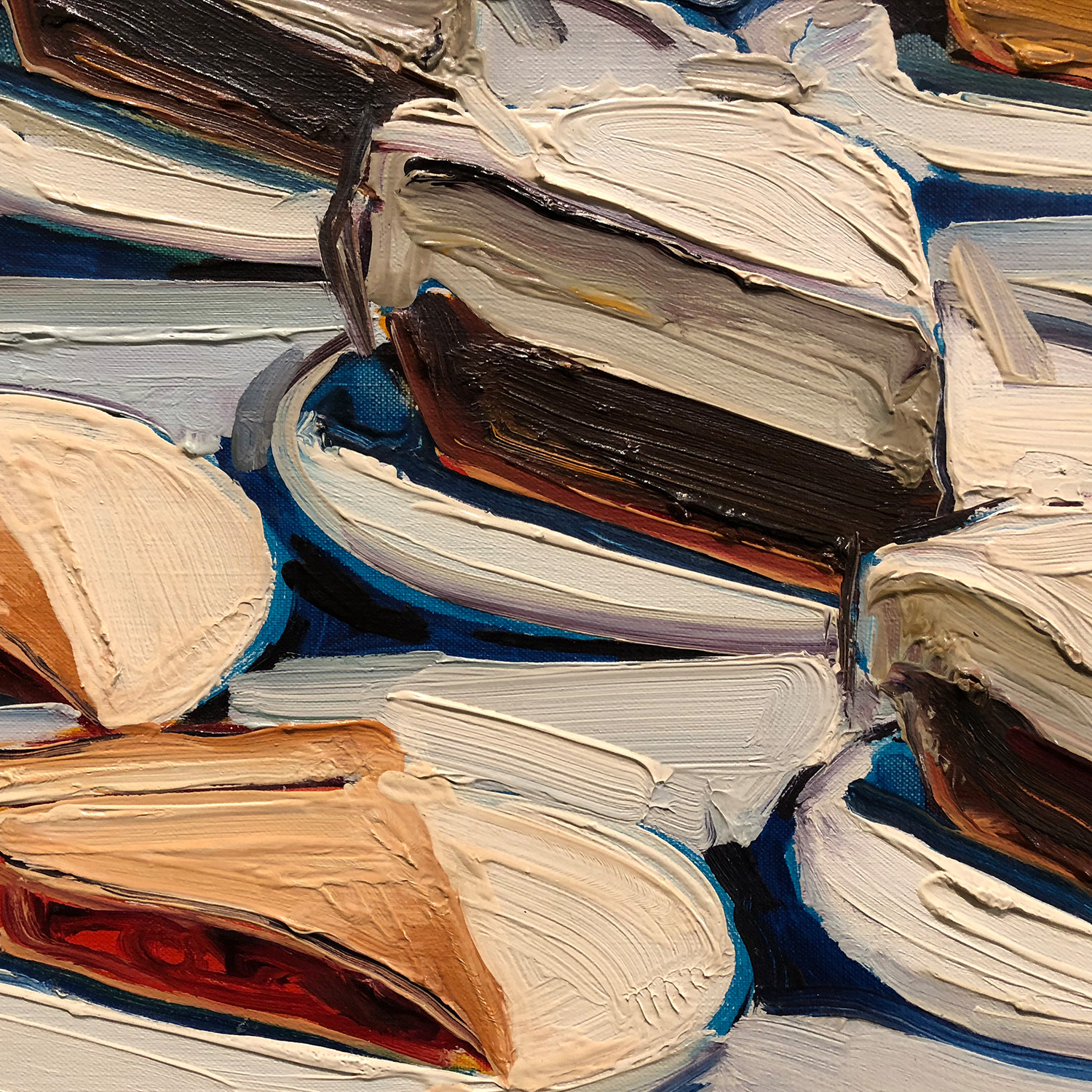
Detail - Wayne Thiebaud painting

In Artist Tags NPR, Wayne Thiebaud, UC Davis, Shrem Museum, Los Angeles Times, Sacramento Bee
Comment

Grand Central Terminal

New York Photographs - January 2019

November 13, 2021

I just uploaded over 30 photographs from January 17th 2019 to my New York portfolio on my website.  This blog post is to announce that and mention a few of the images which are standing out to me.

I was in Connecticut for a week and took the train in to New York City photograph that day.  The light was good that day with no clouds.  The windchill had the temperature down to about 18 degrees which did not feel that cold to me. My Nikon D500 though didn’t like the cold and shut down, luckily, I usually carry multiple cameras on trips like this do I was fine. 

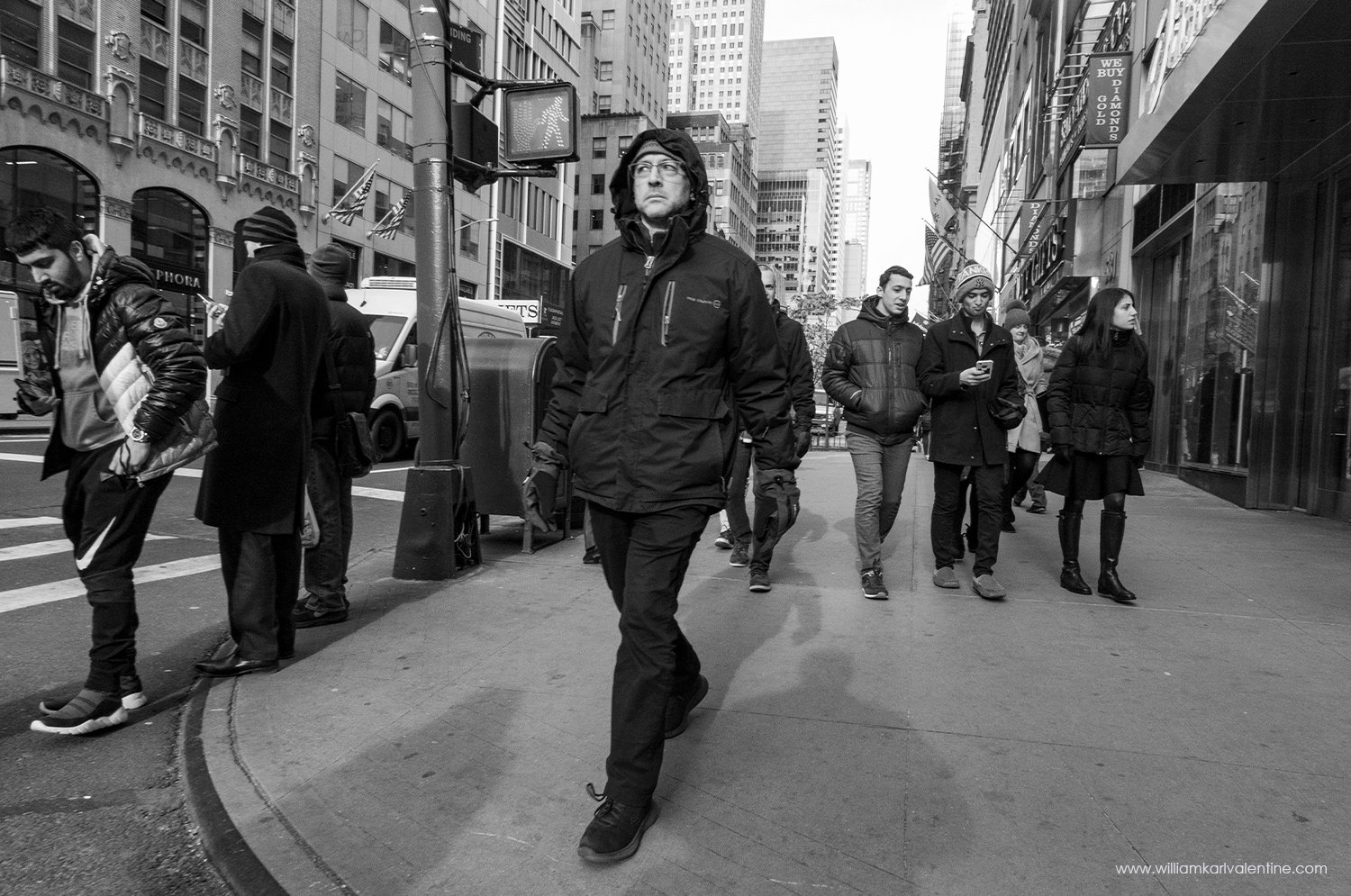
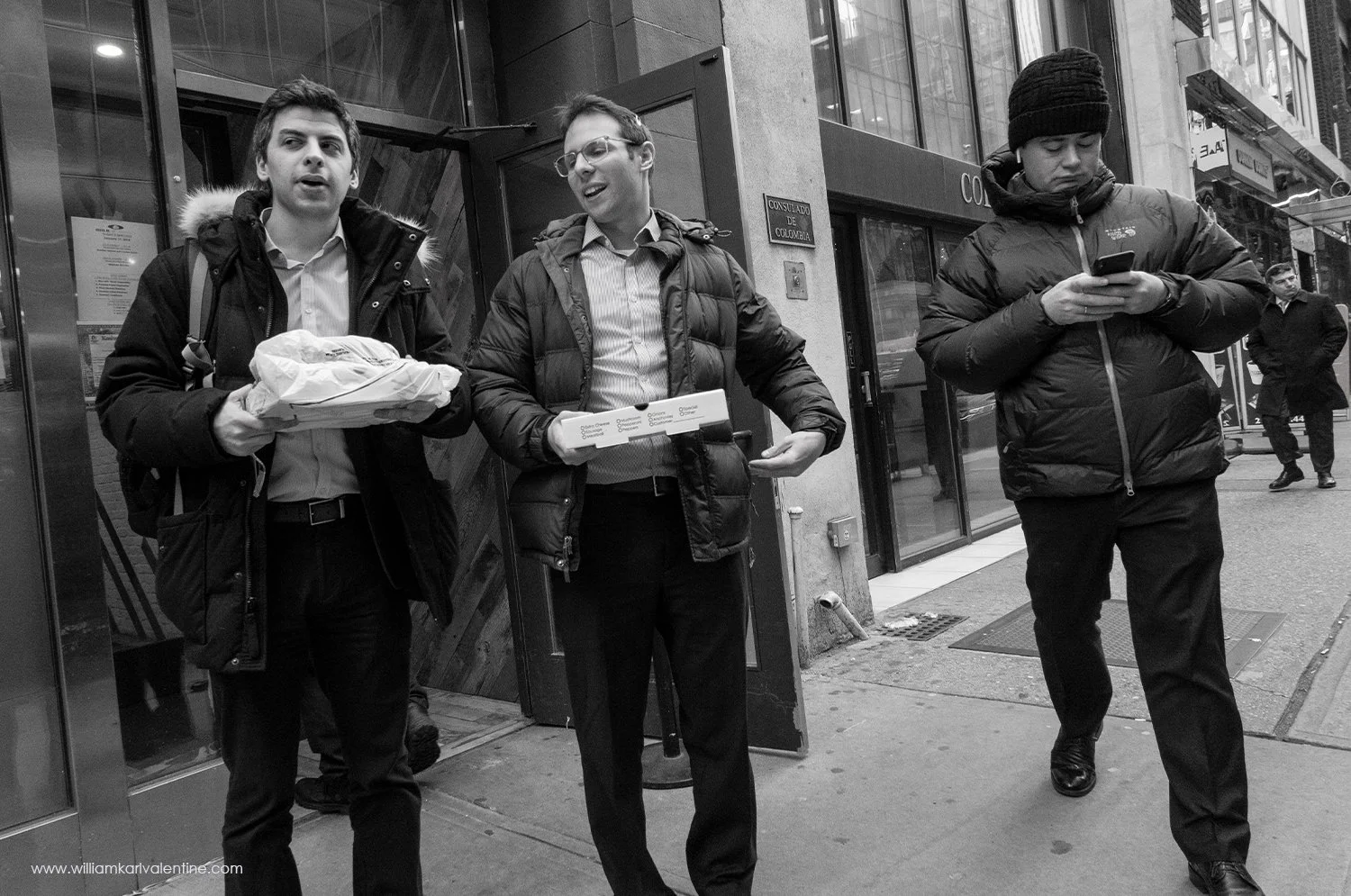
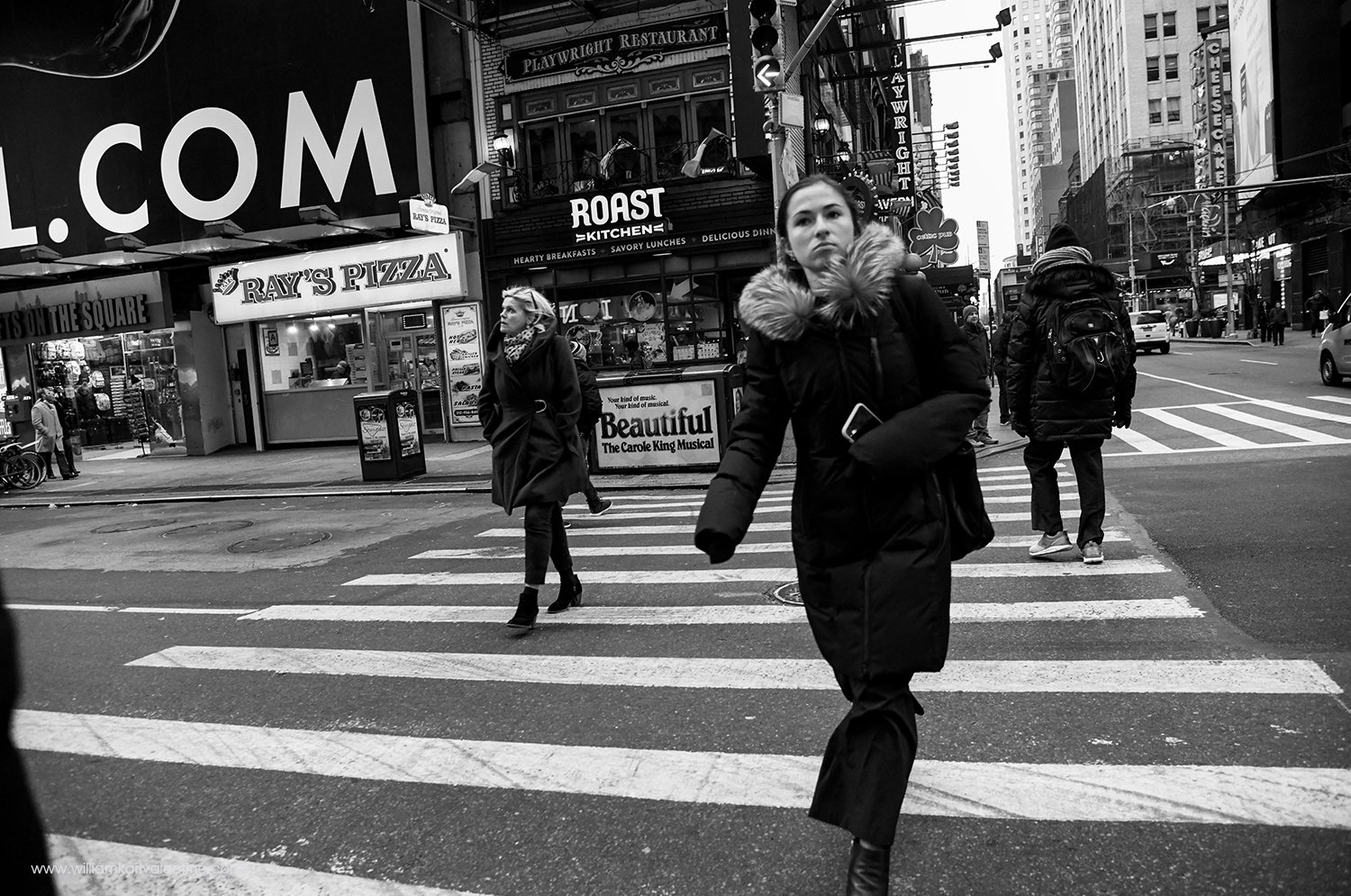
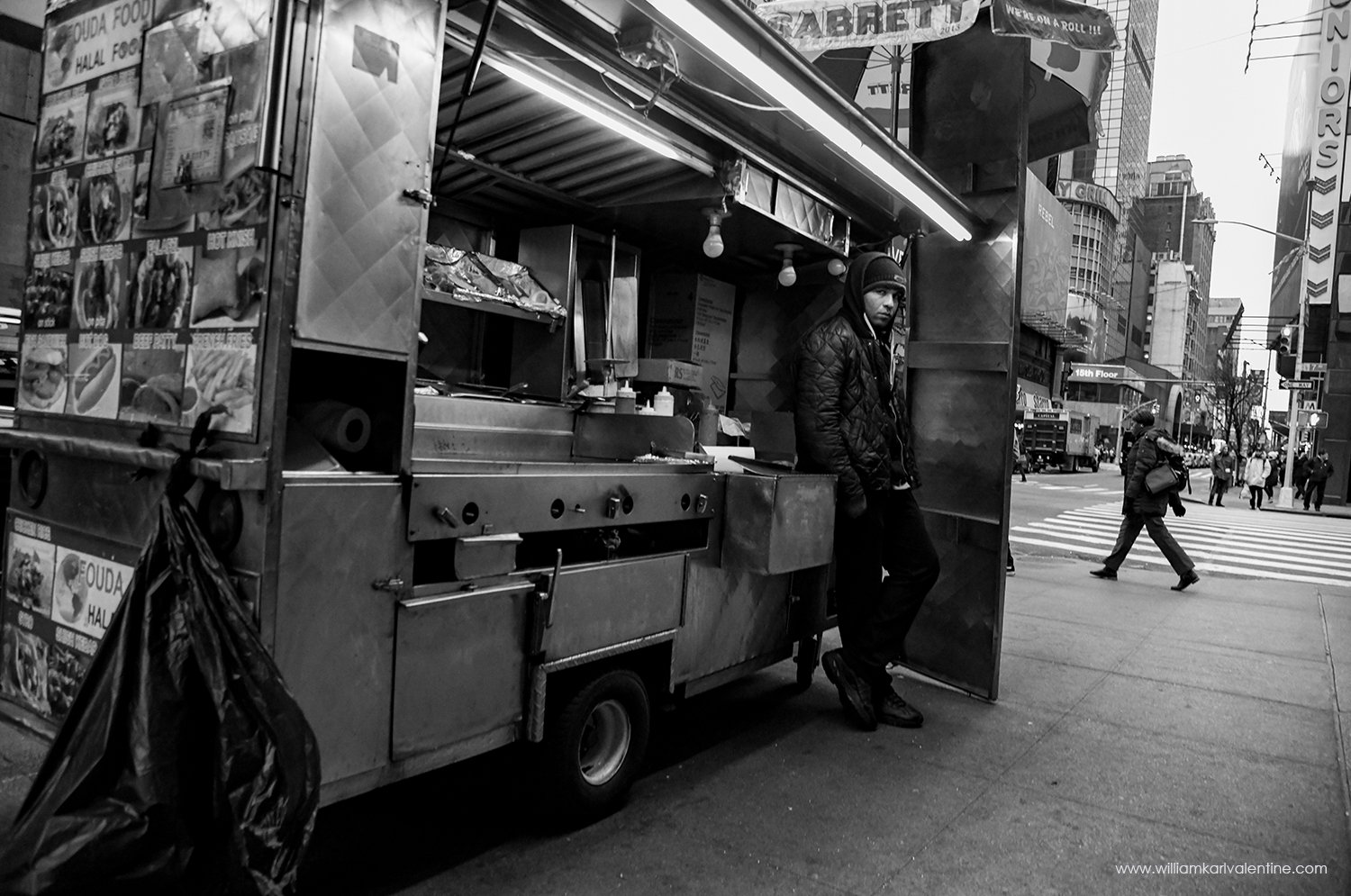
I am hopeful this blog post and update to my New York Portfolio with give view some insights to how I photograph.  So often when I am in New York I will pick a few museums or galleries (Howard Greenburg in the Fuller Building is a favorite) I want to see that day and map out a straight-line route to start from.  From there I walk and usually only stop to make camera adjustments or review images.  Back in the day I would stop to change film and make notations on the canister but even with a Leica if needed I could walk and change film at the same time.  Walking five miles in a day happens often, depends on the stops and what I come across.  It is rare I stay in one location too long; the city moves and so I to as well.  I also try and blend into the scene as I photograph so moving with the flow helps accomplish that.  Moving also reduces becoming a victim since I am usually alone when I photograph.  I am mindful of the sun when choosing my routes and which side of the street I am on.  Back in the day T-Max 400 film at f/8 and 1/500th was probably my most common setting and I used a Sekonic hand meter.  Today I am often on shutter priority at 1/800th.  I appreciate the ability digital images give me to proof instantly, especially in tough lighting conditions.

View fullsize web+NY+DSC+00402++1-17-2019+COR.jpg
View fullsize web NY DSC 00449  1-17-2019.jpg
View fullsize web NY DSC 00506  1-17-2019.jpg
View fullsize web NY DSC 00494  1-17-2019.jpg

I am drawn to these images above because there is a perceived sense of tension between the people in the images. Our world today is full of tension, and the weight of those tensions have been relentless on us for years. Relationships between people, and individuals to society are not as good as they should be today.

This grouping of Warhol paintings at the Whitney is probably the most epic grouping of art pieces I have ever seen in a museum.  The grouping sums up so much about our world and life for me.  Senior Curator Donna De Salvo, Senior Curatorial Assistant Christie Mitchell, and Curatorial Research Associate Mark Loiacono organized the exhibition, so I assume one or all of them deserve credit for it.  When I saw the person with the support dog and the other man facing the cross in front of Warhol’s work, I had my image. I know I have written about it before but I will say it again, the Warhol retrospective was amazing, incredible how much work they gathered for it and the presentation in the space was perfect.

I know some people might think it is odd for me to photograph in galleries and museums where other art is on the walls.  I often find myself with the desire to photograph as a means to experience something.  I like to document moments and retain memories; the camera allows me to do that.  Over time I have often found the juxtaposition viewers have with the artwork on the walls cab create new images of value.  Plus, I am always aware of potential images, it is just how I see the world.

View fullsize web NY DSC 00552  1-17-2019.jpg
View fullsize web NY DSC 00459  1-17-2019.jpg
View fullsize web NY DSC 1722 1-17-2019.jpg
View fullsize web NY DSC 00694  1-17-2019.jpg

When I first went to photograph in New York in 1988 one of the things I was drawn to were the banks of payphones throughout the city and how many people congregated there. Over the years we have seen pay phones fade away as cell phones have made them obsolete.  That transition changed the images I was finding in the city.  Before many people I photographed walked with their heads up, looking straight ahead to avoid interaction.  Now people seem to use their cell phones for this.  Their phones give them a false sense of protection and a means to distance themselves from others.  I now look for images specifically with people and their cellphones when I photograph, I think those images can make strong statements about the world we live in today.

I like the graphic element of this image above and the style of these two women who I assume are mother and daughter.  This image can be unpacked so many ways depending on the viewer.  Some may see it as a statement about wealth and privilege in the world today.  I see it as a documentation of the mother daughter relationship and how it evolves while also staying the same in many ways.  I envision the daughter loving ice cream and getting excited every time her mom took her for some when she was young.  They probably have a special bond with all the times they have gotten ice cream over the years.  I imagine this is an especially strong bond considering the day I photographed them it was well below freezing outside and that they are sharing the same scoop.  In comparing the fashion and style of both I can also imagine that the mom has groomed her daughter to be a mirror image of her.  Obviously, I am presenting a fair amount of speculation and interpretation of the image but don’t we all do some amount with every image we see.  The girl being on her phone adds to the image as does the fact she apparently has seen me photographing them and my blurred reflection is visible on the granite wall.  Those last two facts bring some self-portrait elements into the image.  The Rolex store background is another important component of the image too obviously. 

New York is Mecca for Street Photographers.  I know Winogrand hated the term “Street Photography”, adamantly pointing out he was photographing people not the streets.  I also know many images I see today which are described to be “Street Photography” are not.  I think there are quite a few photographers out there that are enamored by the title of being a Street Photographer so they call any of their contrasty and saturated images street photography because it makes them hip.  I have recently seen drone photographs and ocean photographs listed as Street Photography…No

I identify as a documentary photographer, it is the most accurate description of my work because I have so many varied portfolios, documentation is the prominent element in all my work.  Stylistically when I photograph in cities, my work is Street Photography.  I am moving amongst people looking to capture split second moments of interaction which can have deeper meaning when examined as an image.  Street Photography is a process.  My movement through the people walking in the opposite direction while I try to blend into the crowd.  There is interaction in being there but usually I do not want that to influence my images.

When I am in New York photographing I look for my own images, I am not trying to mimic the work of icons.  But I do feel a unique energy from the city and knowing the legendary photographers who have also walked those streets with a camera. Some of my favorite photographers are:  Garry Winogrand, Bruce Davidson, Tod Papageorge, Helen Levitt, Joel Meyerowitz, Jill Freedman, Lee Friedlander, Danny Lyon, and Wee Gee.  I also like Bruce Gilden’s work but I could never photograph in his style too much confrontation for me but that is what sets his images apart. 

In Photographer, Street Photography Tags New York, Street Photography, Documentary Photography, Garry Winogrand, Jill Freedman, Tod Papageorge, Lee Friedlander, Photography, William Karl Valentine
Comment

Screen Shot of KQED article

Photographer Ted Pushinsky

November 13, 2021

While working on another post today I came across the work of documentary photographer Ted Pushinsky which I was not familiar with before. It caused me to take a detour and explore some of his images. I enjoyed his photographs and related well to most of his subject matter. The fact he photographed with Garry Winogrand on the street and photographed Andre the Giant in the ring definitely makes me a fan.

This is a quick post to give some links to his work so others can also discover his work.

It started with this Mother Jones article on Garry Winogrand with a Pushinsky photograph of Winogrand on the street photographing.

From there I went to his website which is a little rough in design but showed the range of his work.

I also found this KQED article which is memorialized his passing in 2018.

In Photographer, Photography Tags Ted Pushinsky, KQED, Mother Jones
Comment
Lensculture Screenshot.jpg

Lensculture Street 2021

September 30, 2021

One of the images I submitted to the 2021 Lensculture Street Photography Awards was recently selected by the editors to be featured in the Street Photography Awards 2021 Competition Gallery. This on-line gallery is visible to everyone who visits the Lensculture’s website. Lensculture describes their Competition Gallery as a highly curated group of images selected by their editors to showcase some of the best submissions in the competition.

I am thankful that the above image was featured in this on-line gallery and would encourage you to visit the link above to see all the other great images that the editors have chosen to showcase. This image is standing out as one of my top images from last year. Sarah Kennel, Curator of Photography at the High Museum, also selected the photograph for a group exhibition in Alabama which just concluded this week.

In Galleries, Photography Tags Sarah Kennel, High Museum, lensculture, lensculture street photography, Documentary Photography, Street Photography
Comment
Exhibition image.jpg

Atlanta Airport Exhibition 2021

September 27, 2021

I am proud to announce that I have two photographs in the Atlanta Photography Group’s annual Airport Show which opens this Thursday at the Hartsfield-Jackson Atlanta International Airport.

Juror Amy Miller selected 30 photographs to exhibit in the central atrium of the airport.  Hartsfield-Jackson Atlanta International Airport is the world’s busiest airport with an average of 260,000 visitors a day.  In 2019 Atlanta had 53.485,000 total visitors, the next closest airport was LAX at 42,880,000.  The exhibition will also be featured in the Atlanta Celebrates Photography Festival Guide because the festival will be occurring during the same time. The 2021 Airport Show is scheduled to be up September 30th to January 19th 2022.

My two included photographs are from different series.  One image is one of my all-time favorites and a prominent photograph from my Santa Anita book.  The photograph documents a fixated crowd watching a simulcast race, from another racetrack, on a large television monitor. 

Simulcast Race - Santa Anita Racetrack - Arcadia California - October 14th 1990 SA-137 #08

The second photograph is from last year and part of my new portfolio documenting the experience of the pandemic and all that has happened since it began.  I love the irony of this image, and as soon as I saw the rainbow that day, I knew the most logical way to frame it for the times would be having the rainbow end in a trash can.

The Reality of 2020 -Newport Beach - California - April 10th 2020 NB DSC_9483

The Reality of 2020 -Newport Beach - California - April 10th 2020 NB DSC_9483

I think both images will work well in this space and unthemed exhibition.  These photographs can be experienced while walking past them and each image can provide a deeper experience for those who have a moment to stop and spend time viewing it.

In Horse Racing, Galleries Tags Atlanta, Atlanta Photography Group, 2021 Airport Exhibition, William Karl Valentine, Just Another Day on Main Street, Santa Anita Racetrack, Airport Show 2021, Atlanta Celebrates Photography Festival
Comment
P.C.622 Gallery  - The Old Pasadena Police Station at 142 North Arroyo Parkway

P.C.622 Gallery - The Old Pasadena Police Station at 142 North Arroyo Parkway

The P.C. 622 Gallery

September 27, 2021

California Penal Code Section 622 states the following: Every person, not the owner thereof, who willfully injures, disfigures, or destroys any monument, work of art, or useful or ornamental improvement within the limits of any village, town, or city, or any shade tree or ornamental plant growing therein, whether situated upon private ground or on any street, sidewalk, or public park or place, is guilty of a misdemeanor.

The first time I exhibited any of my photographs was in April 1985 at the Northlight Downstairs student gallery at Arizona State University. it was a small space near the darkrooms but it had lots of traffic and great visibility with my peer group. It also gave me my first experience editing and sequencing an exhibition. I exhibited some early images from my Pasadena Police Department series , which to this day is still my strongest body of work.

I began photographing the Officers of the Pasadena Police Department during Spring Break in 1985 as a class project while studying at Arizona State University. My father was a well-respected Reserve Police Officer, and he arranged the opportunity. I rode with Sergeant Tom Oldfield the first night who was one of my dad’s close friends. Being a Sergeant, Tom had the ability to respond to any interesting call to try and get me as much action to photograph as he could. The most eventful thing was a woman named Tina Hart who committed suicide in the middle of a street by shooting herself.  The rest of the week I rode with individual officers and photographed whatever incidents they were involved in.  When my professor, Tamarra Kaida saw my early images she realized how good the series was and encouraged me to continue photographing the department beyond the class assignment. Another professor, Bill Jenkins (best known for curating the important New Topographics exhibition) also liked the early images in this series.  Bill gave me some outstanding advice when he suggested I start using a wide-angle lens to photograph this series.  Initially I had used a 50mm lens and in some instances, I had stood back from incidents to stay out of the way.  Bill explained that using a wide-angle lens would force me to get closer to my subjects and make the images more powerful.  The combination of putting on a 35mm lens and gaining more trust from the officers I was photographing to my images to another level.  Using wide angel lenses has helped me capture most of my best images.

During the first few weeks of the summer of 1985, I started to develop good rapport with most all the officers. I knew how to stay out of the way and not let my photographing interfere with their job even though I was usually making exposures at night in low light conditions using a large off camera flash. I would make prints for the officers, and everyone liked seeing photographs of themselves working. Early in the summer of 1985, I become a Level 3 Technical Reserve Police Officer, which allowed me to volunteer in Police Department’s own photo lab most days before going on ride a longs with officers at night to photograph. It was an ideal situation because it gave me darkroom access while I was away from ASU.

One day I noticed a large empty bulletin board in the main hallway of the Police Station. The area had lots of foot traffic, department personnel as well as public visitors. I recognized the bulletin board could be a decent gallery space to showcase my photographs. I figured my photographs would be good for department morale as well as having a public relations benefit for public visitors. I asked for permission to turn the bulletin board into a gallery and it got approved. The photograph above it from the first group of prints I exhibited. I tried to change out images on a regular basis to keep interest.

I named the space the P.C. 622 Gallery to discourage any of the officers from adding comments to the prints or vandalizing them. Being around the officers I knew how much banter and teasing went on. Lockers were routinely written on highlighting recent exploits or mistakes and I knew officers started doing similar things to my photographs I would lose the space. I searched the Penal Code for sections which would cover that and discovered P.C. 622 which specifically covered destroying or defacing artwork. For the year plus the gallery was up we only had one instance where a print was written on and that was when the group of prints were not changed out for three months during a spring semester. I came across the above photograph of the gallery this week while organizing files and decide to share the story of the gallery.  I also think this post also pairs well with my post on the opening of the exhibition at the Atlanta Airport Exhibition space this week, I, like most photographers, always enjoy seeing my photographs exhibited in traditional gallery and museum spaces, But I also love showing my images and prints in non-traditional spaces that have high traffic volume.  There is always value in having images seen and experienced by others, especially in print form.

In Photography, Galleries Tags William Karl Valentine, Pasadena Police Department, Pasadena, Photography, black and white photography, Documentary Photography
Comment
CA DSC_1779 07-31-21 WKV Web.jpg

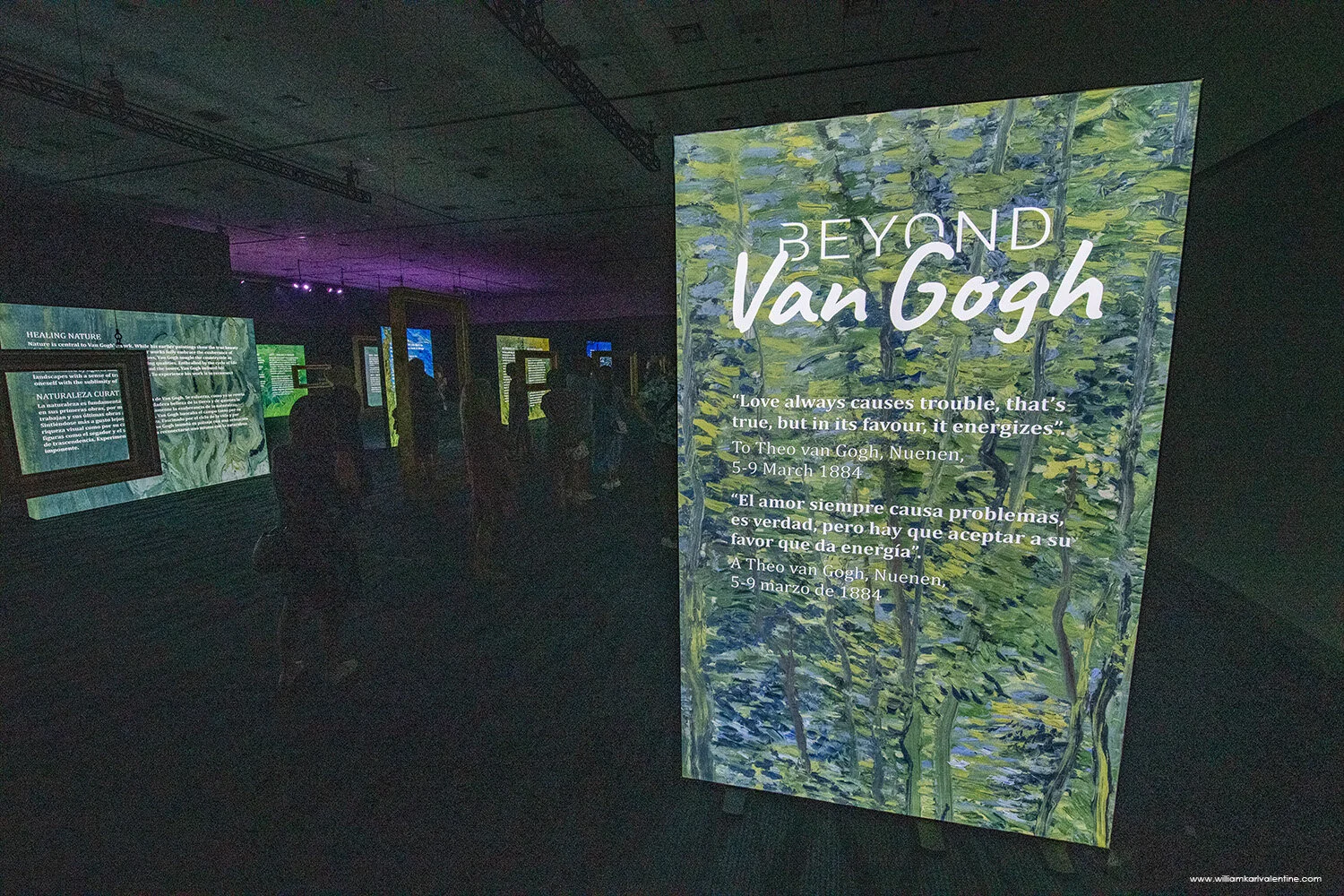
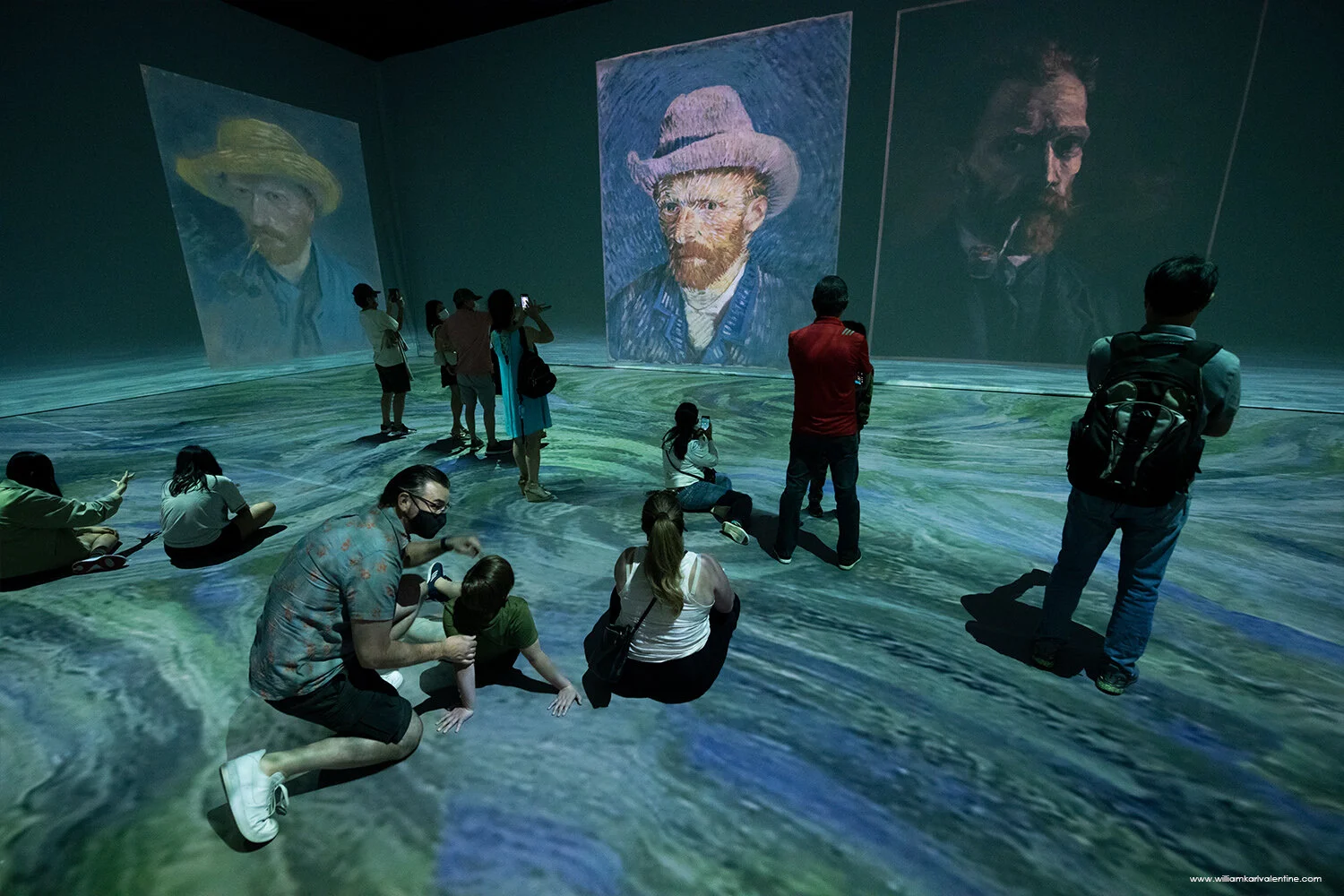
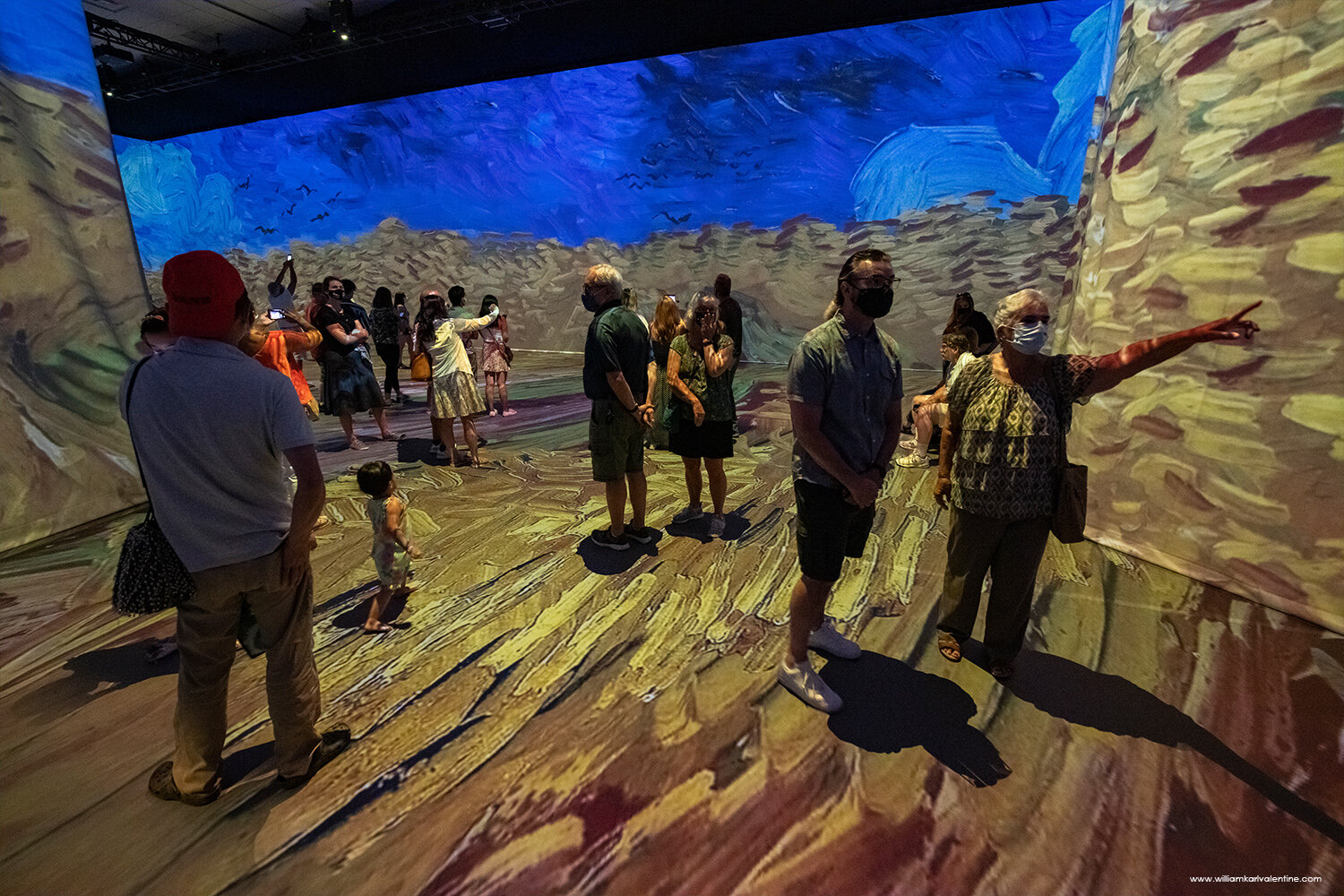
Immersive Van Gogh

August 10, 2021

On July 31st I saw the Immersive Van Gogh Exhibit when it was in Anaheim, California.  The creators claim the exhibit has been seen by over 2 million visitors in Paris and had a sold-out run in Toronto and was headed to a “super-secret location in the heart of LA next!”

The Immersive Van Gogh website described the experience as this:

“Lose yourself in 500,000 cubic feet of monumental projections animating Vincent van Gogh’s oeuvre. Wander through entrancing, moving images that highlight brushstrokes, detail, and color – truly illuminating the mind of the genius.

 You will be immersed in Van Gogh’s works – from his sunny landscapes and night scenes to his portraits and still life paintings. The installation includes the Mangeurs de pommes de terre (The Potato Eaters, 1885), the Nuit étoilée (Starry Night, 1889), Les Tournesols (Sunflowers, 1888), and La Chambre à coucher (The Bedroom, 1889), and so much more.

 Astonishing in scale and breathtakingly imaginative, you will experience Van Gogh’s art in a completely new and unforgettable way.

 The exhibit is designed and conceived by Massimiliano Siccardi, with soundtrack by Luca Longobardi, who both pioneered immersive digital art experiences in France.”

View fullsize CA DSC_1712 07-31-21 WKV Web.jpg
View fullsize CA DSC_1718 07-31-21 WKV Web.jpg
View fullsize CA DSC_1719 07-31-21 WKV Web.jpg
View fullsize CA DSC_1726 07-31-21 WKV Web.jpg
View fullsize CA DSC_1730 07-31-21 WKV Web.jpg
View fullsize CA DSC_1733 07-31-21 WKV Web.jpg
View fullsize CA DSC_1734 07-31-21 WKV Web.jpg
View fullsize CA DSC_1736 07-31-21 WKV Web.jpg
View fullsize CA DSC_1737 07-31-21 WKV Web.jpg
View fullsize CA DSC_1741 07-31-21 WKV Web.jpg
View fullsize CA DSC_1744 07-31-21 WKV Web.jpg
View fullsize CA DSC_1751 07-31-21 WKV Web.jpg
View fullsize CA DSC_1763 07-31-21 WKV Web.jpg
View fullsize CA DSC_1765 07-31-21 WKV Web.jpg
View fullsize CA DSC_1767 07-31-21 WKV Web.jpg
View fullsize CA DSC_1771 07-31-21 WKV Web.jpg
View fullsize CA DSC_1777 07-31-21 WKV Web.jpg
View fullsize CA DSC_1783 07-31-21 WKV Web.jpg
View fullsize CA DSC_1784 07-31-21 WKV Web.jpg
View fullsize CA DSC_1794 07-31-21 WKV Web.jpg
View fullsize CA DSC_1807 07-31-21 WKV Web.jpg
View fullsize CA DSC_1826 07-31-21 WKV Web.jpg
View fullsize CA DSC_1811 07-31-21   WKV Web.jpg
View fullsize CA DSC_1818 07-31-21   WKV Web.jpg

I have seen Van Gogh’s “Starry Night” at the Museum of Modern Art and more of his paintings at several different museums over the years. You cannot compare the experience of seeing a painting in person, examining the texture of the brush strokes, the combinations of color which create contrast and dimension, seeing the scale the artist chose to an event like this. So often when I see a painting, I sense the presence of the artist. The painting itself and how it was crafted is a document that tells us more about the artist than the subject matter of the artwork. You can’t compare the two experiences.  But I will admit there was value in Immersive Van Gogh. I learned some things about the painter I did not know, and it was interesting to see his work reinterpreted in the manner. I also recognize that many of the patrons probably haven’t seen much of Van Gogh’s work in person and for them this was a good means to get more people exposed to his work. It was an enjoyable experience, especially because I was able to photograph it. I love photographing people in museums and galleries interacting with work, always find it interesting. One thing to note the commercials I saw for this made it appear you moved from room to room experiencing something different in each room, that is not the case. You enter one room and walk past some monitors with text describing Van Gogh and his work. The you enter a larger room where the Immersive experience is. The experience is a loop presentation of Van Gogh’s work that last 45 minutes. You enter the room at any point in the loop and leave whenever you are ready.

I wonder what Vincent would think about the “Immersive experience” and the revenue is has generated for its creators.  Hopefully he would just be pleased that more people gained an appreciation of his work.

View fullsize CA DSC_1836 07-31-21 WKV Web.jpg
View fullsize CA DSC_01939 07-31-21 WKV Web.jpg
View fullsize CA DSC_01943 07-31-21 WKV Web.jpg

Marketing was interesting, wonder who had the idea about the plus toy Van Gogh and why it has both ears still….pre-”Incident” I guess. All images © 2021 WILLIAM KARL VALENTINE

In Museums Tags Museum of Modern Art, Van Gogh, Starry Night, Sunflowers, California, painting, Vincent Van Gogh
Comment
PPD-134 #21  (8/7/86) 525 Rio Grande, "Buy Bust" operation for Rock Cocaine sale

PPD-134 #21 (8/7/86) 525 Rio Grande, "Buy Bust" operation for Rock Cocaine sale

Recent Discoveries on the Web - Unauthorized Image Use

July 12, 2021

I make it a habit to Google search my name from time to time to see what is out there, especially everytime I see a traffic spike to my web site. Here are a couple interesting recent finds which occureed in 2020.

The first images were used in a paper titled “White/Black: A tale of two epidemics Historical Trauma and Addiction in the Black Community” by JOSEPH PHIPPS, BA & IAN MCLOONE, LPCC, LADC (ST. PAUL, MN SEPTEMBER 11, 2020) who are students at The University of Minnesota.

The paper is professional although I do not agree with every opinion the authors have. I will say they have good taste in images and I loved the pairing of my images with photographs by Mary Ellen Mark and Eugene Richards. Also props to them for a photo credit linking back to my website. Normally I would expect someone using my photographs to reach out to me before doing so, especially since I have a tab for “Licensing” on my header, but given the nature of their project I think I understand why they didn’t take the time to do that.

PPD-031 #31A  (7/6/85) Officer Gary Capuano with subject giving Denver Blood's gang signs.

PPD-031 #31A (7/6/85) Officer Gary Capuano with subject giving Denver Blood's gang signs.

The second image used was this one above in a blog post titled Valentine Bloods. After reading the blog I have no idea how the image really ties in to the post other that a Valentine was the photographer and the subjects were a couple of Denver Lane Bloods. To be completely truthful I couldn’t figure out anything in that blog post. Jihan Pink was good enough to again give me an image credit and for that I am thankful. Absolutely no idea how Jennifer Esposito figured in to that blog post either, but at least I could see some tie in with Melissa del la Cruz’s “Bloody Valentine” book covers. Sadly this blog post will be the only time I will ever be linked to Jennifer Esposito.

I get licensing requests somewhat often, lately mostly for use in documentary film projects. If there is ever any a question as to whether you can use an image, please refer to the licensing page on my site and reach out to me. I retain the copyright on all my photographs, and I always consider the integrity of the image compared to how it will be used when reviewing a licensing request.

In Photographer, Copyright Tags William Karl Valentine, Pasadena Police Department, Jennifer Esposito, Melissa del la Cruz, Bloody Valentine, Mary Ellen Mark, Eugene Richards
Comment

“Just Another Day on Main Street - Los Angeles” CA -DSC 5976 6-2-20 © 2020 William Karl Valentine

Stonehenge Gallery 2021 Photo Exhibition

July 8, 2021

I am happy to announce that the above photograph was chosen to be in the Society of Arts and Crafts (SAC's) & Stonehenge Gallery 2021 Photo Exhibition in Montgomery, Alabama.

I am especially honored that selection was made by Sarah Kennel, the curator of photography at the High Museum in Atlanta, who juried this exhibition.

For anyone near Montgomery the in-person opening reception is on Saturday, July 10, at 5:30 p.m. CDT at Stonehenge Gallery in Montgomery, Alabama. The gallery is located at 401 Cloverdale Road in Montgomery.

For those unable to attend the live event, a concurrent livestream feed from the gallery will be on “The Nine” Facebook page starting at 5:30 p.m. CDT with an awards ceremony will begin at 6 p.m. Find “The Nine” on Facebook using this link:

https://www.facebook.com/The-Nine-108793704604391

Sarah Kennel, will also present a juror’s talk about the exhibit on Sunday, July 11, at 10:30 a.m. CDT, at the Georgine Clarke Alabama Artists Gallery. The gallery is located on the first floor of the RSA Tower in downtown Montgomery, 201 Monroe Street. There is plenty of on-street parking and no need to feed the parking meters on Sunday.

The juror’s talk will be recorded, and the video will be posted to The Nine YouTube channel.

After the exhibit at Stonehenge Gallery closes on Thursday, July 29, the exhibition will then move the International Arts Center, Huo Bao Zhu Gallery, at Troy University. The second exhibition will open on Monday, August 9 and close on Friday September 24th. The International Arts Center, Huo Bao Zhu Gallery, is located at 158 International Drive (formerly Luther Drive) at Troy University, in Troy Alabama.

About the Photograph: “Just Another Day on Main Street”

On June 2nd, 2020 I set out to photograph some of damage from the George Floyd protests/rioting which had gone on in Southern California the night before and hopefully document some of the protests rumored to be happening that day. My son drove so I could photograph from his truck and we could cover more areas. We started in Westwood, and I found lots of boarded up business and an emptiness that made for solid images. As we drove East on Wilshire, we encountered a march in Beverly Hills which we had no idea about beforehand. The march was organized and, on the sidewalk, so I was able to photograph from the passenger seat as we drove along side of it. In Hollywood we found lots of damaged businesses then stumbled in to the middle of a massive protest march, while we were out on foot, for an hour as the marchers moved through side streets trying to avoid being stopped by law enforcement before they could close a major intersection. From there we drove to Los Angeles City Hall where I had planned to meet up with a friend who is an LAPD Sergeant who was assigned to guard City Hall. Other than a vehicle pursuit which drove past while we were there, things were calm at City Hall. While standing on Main Street talking, the girls in the photograph caught my eye as they approached. I quickly realized the potential of the National Guard soldier and the Armored vehicle in the background and made the exposure when I tought everything lined up well. The pedestrian with the LA hat was a nice bonus and I think the red of the bike tires really enhance the message of the image. As with most my work I am looking for a good document of the event while also having elements in the frame that contrast one another to encourage the viewer to think deeper. I finished the day photographing a drive in protest at Pasadena City Hall. All in all the day was one of the best days I have had photographing considering the number of quality images I captured and their potential long term significance. In the past I have avoided titling most of my images but there seems to be a greater expectation today with submissions for a title so I gave some thought for a title for this image. The irony of the contrast between girls on a bike and skateboard with a soldier and armored vehicle are obvious, the masks nailed the fact it was 2020. The contrast was so crazy that I wanted a title which also had an element of contrast. The “Just another day” part came to mind while looking at the image. At first I thought “Just another day in Los Angeles” but then I realized the street we were on is actually Main Street and knew the perfect title was “Just Another Day on Main Street - Los Angeles” ( CA -DSC 5976 6-2-20 are file numbers for referencing).

In Galleries Tags William Karl Valentine, Troy University, Montgomery, Alabama, Huo Bao Zhu Gallery, Sarah Kennel, George Clarke Alabama Artists Center, Stonehenge Gallery, High Museum, Photography curator
Comment

CCP's "Why Photography?" Video Presentation 6-24-21

June 27, 2021

I watched the on-line video event by the Center for Creative Photography’s titled “Why Photography” on Thursday.  The 45-minute presentation was a collection of video interviews where different people talked about why photography was important to them.  The group was varied, photographers, curators, collectors, and educators.  What I enjoyed most was hearing a diverse group of people describing why photographing was important to them and saying time and again to myself “me too” when they described why photography was important to them.  I have included the link to the presentation here and I will highlight some of the comments I really connected with below:  CCP “Why Photography” 6/24/21

Curator Susan Bright and Art Collector / Retired Dance Professor Douglas Nielsen were the first pair to discuss photography.

Nielsen spoke how he was often photographed while he was dancing and that he would tell photographers to “Catch me in the Act”.  He went on to say “Any photography that is interesting is catching someone doing something, not just sitting there”.  He continued, saying “Knowing Dance evaporates the second you see it I wanted proof I existed”, which photographs provided him.  Nielsen went on, “A photograph tries to defeat time, death.  It captures a second in time and its there.  But with Dance, its just gone”.

I completely understand his comments.  I respect portraiture photography, and it seems to be trending now in galleries and museums, but it rarely speaks to me.  I really began to understand photography when I started seeing the images by the great documentary photographers.  For me I love being able to capture a moment in time, and know that image is completely factually accurate for that 1/500th of a second.  As a child I loved to draw but I was frustrated because my pictures weren’t perfect.  Features were distorted, the perspective was slightly off, they just didn’t look exactly how I saw something.  Photography fixed that problem for me.  I am also a romantic and I am constantly wanting to preserve memories and freeze moments in time forever, the camera allows me to do that.

Nielsen made an interesting comment about his collection that I loved: “When I collected photography, it kind of collected me”.

I get it, in life we gravitated towards things which catch our interest and draw us in.  His statement is dead on.  I was fortunate to have dinner at the home of a prominent wealthy art collector a couple years ago.  The house was amazing on its own and everything I saw on the walls was museum grade, mostly paintings but also an installation piece, and some of Cindy Sherman’s prints.  As he gave me the tour of his collection he spoke about was why that piece of artwork was important to him, why he connected to it, and why he liked that artist’s work.  He never mentioned price or collectability, every work spoke to him and wife personally.  It was an incredible opportunity for me to get that insight.  I should also say it was a great night socially too, good people there.

Susan Bright spoke of her background and how when she was studying Art History in the late 1980’s to early 1990’s that photography was not considered “Art”.  She described when she was nearing the completion of her studies how she felt when she realized she had just spent three years only studying art by men.  She also told us she had not seen a Fine Art Photographic Print without glass in front of it until after she graduated.  She was shocked with how beautiful  a well-crafted print looked in person and wonderful the experience was.

I know exactly what Susan meant about the wonder in seeing a good print.  I was lucky to see fantastic prints when I was Arizona State University.  I was on the Northlight Gallery staff when we exhibited works by photographers like Mary Ellen Mark and William Christenberry.  After graduating I went to one of the first Photo LA events and I remember going over to a bin at one booth and being able to pick up a Weston print.  Holding it, examining, realizing Weston himself did the same with that print was powerful.  I believe a photographer has to spend time with really goof prints before they can fully understand the medium.  It is unfortunate that in today’s two second Instagram post view we are getting away from the concept taking our time to experience, and understand, a well-crafted print and good image.  I have been lucky to have seen as many good prints and exhibitions in person as I have, but I have also made an effort to do that including travelling to see the best exhibitions.

Bright stated, “I feel like Photography is the bastard child of the Arts, that’s why I like it”.  She went on saying when she was younger how much she enjoyed the images on album covers , and that when she went to museums she enjoyed the post cards in the gift shop more than the paintings on the wall because they were obtainable, she could collect them.

I understand her comments about photography being considered a second-class citizen in the art world, and I agree with her, and I see how that could attract her to the medium.  There is something special when you are involved in a less popular community.  The relationship you have with others in that community is often more unique, and usually a closer bond.  I feel those bonds when I am at a racetrack or an ice hockey rink.  Everyone there has a common interest in something that many people do not fully understand.  I tend to be more of an individual when it comes to photography, I truly enjoy community interaction, but the act of photographing and seeing the world is very personal and usually a solo activity.  The process of photographing is my “Why Photography”.  Being a photographer is how I experience life.

University of Arizona President Dr. Robert Robbins spoke next and said something I definitely agree with: “Photography opens questions, teaches us history, and keeps our memories.  It shows us the beauty of the world and of the universe, it shows us what we know and what we have left to discover”.

Dr. Meg Jackson Fox, The CCP’s Associate Curator for Public Programs introduced Valerie Trouet who is a University of Arizona professor in Tree Ring Research who spoke about the use of photography in relation to the study of science.  Trouet talked of the importance of “Repeat Photography” to identify changes in landscapes over time and mentioned the importance of photography being able to document and retain evidence related to scientific research.  A good reason for “Why Photography”, the same should be said for forensic photography.

I don’t ever recall hearing the term “Repeat Photography” before but I well aware of this type of work.  I know Mark Klett from my ASU days and know his Rephotographic Survey Project well.  Good for me to learn a new term.

Photograph Conservator Peter Mustardo was next up.  For his “Why Photography” he said he was drawn to how photography is ambiguous. He pointed out how photography is everywhere and most everyone has the ability to photograph.  He also noted photography’s ability to create a “preserved moment” within the passage of time.

I think it would be valuable to take a moment and focus again on the definitions of Ambiguous – “open to more than one interpretation; having a double meaning.” And “unclear or inexact because a choice between alternatives has not been made.”.   I love that characteristic of photography.  I think back to my days at ASU in Bill Jay’s class and how he was able to really demonstrate how different images have different values depending on the viewer and the  relationship the viewer has with that image and its subject matter.  With most of my street photography or city based images I usually title the work as “Untitiled” , except for a file number, because I don’t want to influence the viewer’s experience beyond having them contemplating the elements I have included in to the frame.  I know what I see and what I am trying to convey but I think it is important for the viewer to have the ability to come to their own conclusion based on their experience and perception.

Mustardo’s inference that everyone is a photographer reminds me of my favorite Photography quote, which was by László Moholy-Nagy’s in 1926: “The illiterate of the future will be those who can not photograph”.  That quote always amazes me, his foresight was dead on. We all live in a selfie and Instagram world today.

The next part of the presentation had shorter individual segments with more individual insight.  CCP Senior Registrar Megan Clancy commented how she enjoys how photography can freeze a moment in time, that split second, allowing us the ability to see something important.  CCP Chief Curator Rebecca Senf shared how she enjoys specializing in a relatively new medium with such a wonderfully short history to explore.  I think her point was its easier for a historian to have a more complete knowledge of the medium since it is only 182 years old unlike most all the other artforms.  Joan Lifton spoke of the creative process and shared a Dorothea Lange quote about her photographic process: “How do we organize the chaos of our individual experience in to a narrative that carries a collective meaning?”  This quote inspired me to look up more Lange quotes, I found a nice list on John Paul Caponigro’s site which are worth the read.

W.Eugene Smith’s widow, Aileen Smith, had a conversation with photographer, and educator, Aaron Turner next. She told how W. Eugene Smith always wanted his work to be as close to the truth as possible and how he was dedicated to have integrity in his images.  She pointed out how almost every experience is subjective not objective and I very much agree with her.  Aileen went on to say “We are subjective beings, we have subjective eyes, its not unfair, a person is subjective, that’s it”.  She also said the goal of journalism for W. Eugene Smith was to convey the reality of other people.  Aileen then recalled how people would ask W. Eugene Smith if he was an Artist or a Journalist and that he would reply “No, its just one and the same for me, to be a good journalist, and to really convey it, it has to be art”. 

I truly enjoyed the passion Aaron Turner conveyed for the medium of photography.  He spoke of love of the process of photography, especially the darkroom. He then said “I see in pictures. The act of walking around and envisioning what I see.”

I absolutely understand what Aaron meant because I am exactly the same way.  To be in a darkroom, and printing is a spiritual experience for me, I am at home in  my darkroom.  When I walk or drive around doing normal activities, I find that my eyes are constantly looking for items, grouping them, framing them, and considering what would make an interesting photograph.  I am so conditioned to look for images in the world, and have been doing it for so long, that I can not turn it off.  It is how I experience the world.  Especially as documentary photographer who photographs on the street so much, I am constantly hunting for imagery.

I will wrap this up by saying I am thankful for programs like this from the Center for Creative Photography.  When I was at Arizona State University, I was in such an amazing photo environment every day, I miss that.  But that was college, you have the experience, it is your base, and from there you go out and do what you studied (hopefully). Presentations like this one I shared allow me to get refocused on my photography and experience that education environment again.  To be good at your craft you have to know the history of your medium and stay up to date with the current trends, never skip a chance to learn or grow.

In Art Collection, Photography, Photography Collector Tags Center for Creative Photography, Arizona State University, The University of Arizona, Becky Senf, W. Eugene Smith, Aaron Turner, Aileen Smith, Peter Mustardo, Photojournalism, Journalism, Meg Jackson Fox, Valerie Trouet, Tree Ring Research, Repeat Photography, Susan Bright, Douglas Nielsen, Megan Clancy, Emily Una Weirich, Joan Lifton, Dorthea Lange
Comment
Historian Lucy Worsley with a Kodak Box Brownie from her documentary on photographing the royal family

Historian Lucy Worsley with a Kodak Box Brownie from her documentary on photographing the royal family

Lucy Worsley's Royal Photo Album

May 12, 2021

“A king, or a queen, is less mighty than the power of a camera.”

Lucy Worsley


First and foremost, I need to say I am not in to all the current television series about the British Royals or Victorian life, so that is not the reason for authoring this post.  I decided to author this post because of the solid job Lucy Worsely did showcasing how important photography has been for the British monarchy since the beginning of the medium.

1839 is generally considered to be the year photography began.  Louis Dagueere announced his Daguerreotyope process in France and William Henry Fox Talbot announced his calotype negative and salt print process in England.   Nicéphore Niépce also needs to be recognized for his work in the mid 1820’s capturing and fixing images with a camera, although those photographs took hours and days to expose.

Photography, including videos & film, is arguably the most powerful tool for communicating.  Images can be understood universally, nothing needs to be translated, a person does not even need to literate to experience a photograph.

The saying “A photograph is worth a thousand words” is so true.  But I think it is important that we need to recognize a photograph that documents 1/400th of a second of time in history has limitations.  It often does not tell the whole story and can be taken out of context as can video clips.  We are experiencing this daily now as everything seems to be livestreamed or documented by someone.  As a quick sidenote I looked up the saying above for the history and found that in March 1911 the Syracuse Post-Standard attributed Tess Flanders as the first to say “Use a picture. It’s worth a thousand words”.  Tess was at banquet to discuss journalism and publicity at the time.

I have long been aware of photographic portraits of Queen Victoria; she most likely was photographed more than anyone else in her period.  I had not given any real thought to the fact she was using photography as a means of communicating to her people.  Lucy Worsley highlighted this fact in her PBS episode Royal Photo Album.  Lucy showed how Victoria changed how her portraits were done to reflect her life.  Emotionless face with black garments following the death of her beloved Prince Albert and the decade of morning then realizing she needed to be more personable to reengage people after that.  It was fascinating how the royal family used photography early on to maintain their public image by documenting their lives, then how photography began to damage their family brand when the royals were no longer able to control the images and subject matter.  Scandals were captured and exposed to the world.

I had no idea that Queen Alexandra was such a prolific photographer, obtaining a Kodak Box Brownie soon after it was released to the market.  Because of her access she made incredibly intimate photographs of the royal family and I had no idea she published a hugely popular book of her photographs.  Alexandra highlights the fact photography was accessible to women photographers since the beginning.  I also believe the medium has progressed since then to be the most inclusive artform.

This documentary also highlighted the work of Anwar Hussein, a long time official royal photographer, and some of Cecil Beaton’s images including how he created Queen Elizabeth’s official coronation portrait.

I happened to see this 2020 documentary this morning by accident while changing channels.  It is on PBS, if you have a membership, you can access it online, otherwise I would encourage you to check TV listings for the next airing.  For anyone with an interest in the history of photography, the history of the royal family, or the impact imagery has on our world it is well worth the time to watch this program.

Queen Alexandra with one her of cameras

Queen Alexandra with one her of cameras

In Documentary Films, Photography Tags Queen Elizabeth, Lucy Worsley, PBS, Anwar Hussein, Cecil Beaton, Queen Alexandra, Royal Photography, Documentary Films, Documentary Photography, Kodak
Comment
Phoenix Art Museum

Phoenix Art Museum

Phoenix Art Museum - Ansel Adams - Performing the Print

April 22, 2021

At the end of March I saw a social media post from Beck Senf , the Norton Family Curator of Photography for the Phoenix Art Museum, about the Ansel Adams “Performing the Print” exhibition at the Phoenix Art Museum.  She encouraged people to see the exhibition and said it was coming to an end soon.  Because of this I got in the truck and headed East on the 10 freeway, from California, to check it out. Okay, I better give a disclaimer here, we were already heading out to see some Cactus League games but I still made a point to get over to the Phoenix Art Museum to see the exhibition after seeing her reminder.

I remember well seeing an exhibition of Ansel Adams prints at the Friends of Photography in San Francisco years ago and being so intrigued by his different printing styles over time. Seeing his prints in person is always a great reminder of what a good print should look like. I don’t recall if the Friends of Photography had as much text explanation next to the prints as they included in the Phoenix exhibition. I thought the accompanying text at the Phoenix Art Museum exhibition was outstanding.  It clearly and concisely described how the prints differed and it was written in a way that everyone could learn something from it.  From a casual museum patron to a photographer with darkroom expertise.  Unfortunately, the exhibition closed earlier this month and had been interrupted by the pandemic lockdown, but luckily I was able to see it and share the experience here.

There are better resources than me regarding the differences in Adam’s printing styles so I think it is best to just show a few photographs of the exhibition here to highlight what the exhibition was like.

View fullsize webIMG_5725.JPG
View fullsize webIMG_5726 3.JPG
View fullsize webIMG_5732.JPG
View fullsize webIMG_5733.JPG
View fullsize webIMG_5735.JPG
View fullsize webIMG_5740.JPG
View fullsize webIMG_5755.JPG
View fullsize webIMG_5757.JPG
View fullsize webIMG_5760.JPG
View fullsize webIMG_5744.JPG
View fullsize webIMG_5752.JPG
View fullsize webIMG_5742.JPG

The Phoenix Art Museum is itself a work of art, one of the best museum spaces I have ever seen.  I would go there to see the building even if there weren’t any exhibitions up, the design and space is just that interesting.  Below are a few examples of the space. Plus, you have to love any museum that has Wayne Thiebaud’s paintings in their collection. If you live in Phoenix join the museum and if you are just visiting make sure to get over to see the Phoenix Art Museum, you will not be disappointed.

View fullsize webIMG_5687.JPG
View fullsize webIMG_5691.JPG
View fullsize webIMG_5764.JPG
View fullsize webIMG_5741.JPG
View fullsize webIMG_5692.JPG
View fullsize webIMG_5695.JPG
View fullsize webIMG_5697.JPG
View fullsize webIMG_5700.JPG
View fullsize webIMG_5698.JPG
View fullsize webIMG_5711.JPG
View fullsize webIMG_5710.JPG
View fullsize webIMG_5719.JPG

One other

In Museums, Galleries Tags Ansel Adams, Phoenix Art Museum, Doris and John Norton Gallery, Center for Creative Photography, Becky Senf, Arizona, Phoenix, Photography, Performing the Print, Wayne Thiebaud, Vaughn Spann, Raymon Saunders, Danielle Hacche, @phxart, #AnselAdamsPhxArt
Comment
Ponyhenge  -  Lincoln, Massachusetts                                                                                                      March 6th, 2021

Ponyhenge - Lincoln, Massachusetts March 6th, 2021

PONYHENGE

March 20, 2021

Ponyhenge - Lincoln, Massachusetts a final home for rocking horses and a memorial for those gone too soon

Read More
In Photography Tags Ponyhenge, Lincoln, Massachusetts, William Karl Valentine, Roadside, America, Documentary Photography, Rocking Horse, ponies
1 Comment
← Newer Posts Older Posts →
Blog Index

Instagram

https://www.instagram.com/williamkarlvalentine/


Twitter

@Valentinephotog


Powered by Squarespace