• PORTFOLIOS
  • Prints
  • Licensing
  • Books
  • About
  • CONTACT
  • Blog
  • Instagram
  • TECH INFO
  • LINKS
Menu

William Karl Valentine

  • PORTFOLIOS
  • Prints
  • Licensing
  • Books
  • About
  • CONTACT
  • Blog
  • Instagram
  • TECH INFO
  • LINKS

Exhibition Announcement - Ruins & Remnants - Opening May 2nd, 2025

March 23, 2025

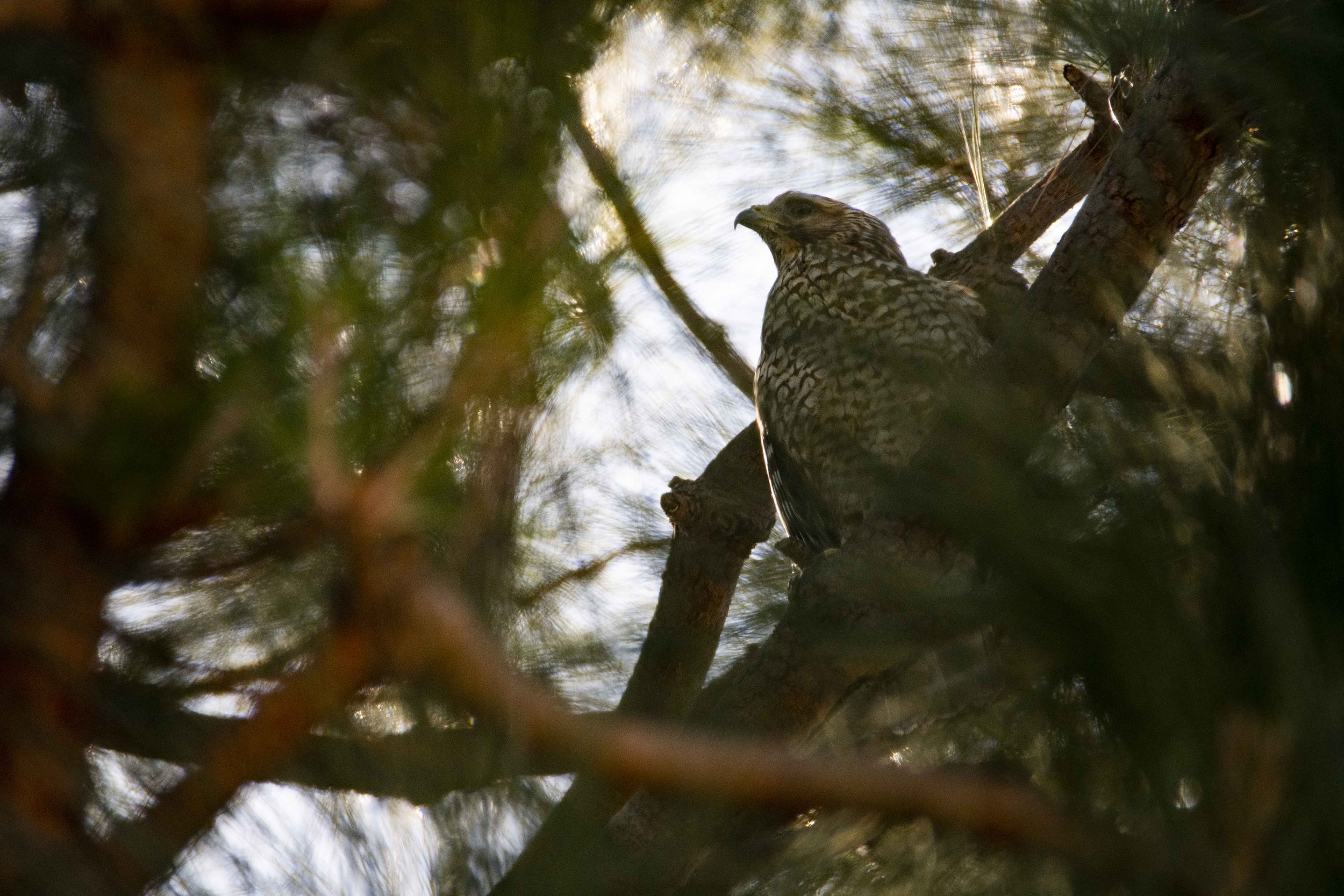
I am very proud to announce that Juror Aline Smithson selected my photograph shown above for inclusion in the Ruins and Remnants exhibition opening May 2nd at Photo Place Gallery in Middlebury, Vermont. This is my second opportunity to exhibit work at Photo Place Gallery, and I am also pleased that my image was selected as the Banner Images for the exhibition and received an Honorable Mention from the juror. Aline is an accomplished photographer and the founder of LENSCRATCH, an amazing on-line fine art photography daily publication.

This will be the first print exhibited from my Eaton Fire Portfolio which documents the destruction and ongoing rebuilding from the January 7th, 2025 fire that destroyed much of Altadena, California and took at least 17 lives. I am also thankful that a portion of the submission fees were subsequently donated back to Southern California Wildfire Relief Funds. My image was made on February 18th and documents the front archway of the Altadena Community Church which is basically all that survived the devastating wildfire.

Photo Place Gallery is a wonderful space which provides outstanding exposure for photographers as well as the medium of Photography. Gallery Director Zach Hoffman has brought in an incredible list of top curators for their exhibition calls which brings value just in the submission process alone.

Link to the Ruins & Remnants exhibition - all images and details

Below are the recognized works in the exhibition and the links to those photographers’ websites. I encourage you to visit their sites to become familiar with their work:

Leslie Gleim Kip Harris

Dmytro Kupriyan Patrick Pfister William Karl Valentine

View fullsize IMG_4885.jpg
View fullsize IMG_4884.jpg
View fullsize IMG_4883.jpg
View fullsize IMG_4882.jpg
View fullsize IMG_4881.jpg
In Galleries, Photographer, Photography, Photography Exhibitions Tags Ruins & Remnants, Aline Smithson, Photo Place Gallery, William Karl Valentine, Leslie Gleim, Kip Harris, Parker Pfister, Dmytro Kupriyan
Comment

Don Norgood’s Photograph of Pasadena PD Motor Officer Tom Young on Green Street East of Orange Grove.

Appeared in Life Magazine on July 19th, 1969 - Originally published in the Pasadena Star News

LOWDOWN / SHOWDOWN Ed Norgood’s Photo of Pasadena PD Motor Officer Tom Young

January 19, 2025

Last November I was really focused on my hometown of Pasadena. I am up there a couple times a week to see my mom and check on things as it is but in November, I photographed the Doo Dah Parade again for the first time in a while and then the Pasadena Polic Department Alumni group on Facebook shared the above photograph which I remember really well from my childhood. I decided to research the image and write blog post about it. I at first thought long time Pasadena Star News Photographer Walt Mancini captured the image but after figuring out which issue of Life it appeared in, and actually purchasing a copy of it, I learned it was Ed Norgood’s photograph. Ed was another well-known Pasadena press photographer. I started writing this a month ago then all hell broke loose so I am just know trying to get caught up. As photographers I think there is value in looking at other photographer’s work. Most often that is involves examining images to understand the medium better, but in this case, I think seeing the life path that photography gave to Ed is also a valuable lesson.

Pasadena has been home to a number of good photographers, especially a number of good Press Photographers like John Lloyd, Walt Mancini, and Ed Norgood who captured the image above. For a press photographer I think Pasadena was ideal at the end of the last century because the Star News, the local paper, had great circulation, there were plenty of unique events to cover in Pasadena with the Rose Parade, Rose Bowl game, Super Bowls. Other prominent places like The Huntington Library, JPL, and Cal Tech are in Pasadena plus they got to cover events in Los Angeles because it was so close. It was the best of all worlds for a press photographer because you often had small town pace but then big-time action (and back then a paycheck). The pace allowed Ed Norgood the opportunity to see this image, photograph it, and get it published - eventually having it published in Life Magazine.

There have been other photographers come out of Pasadena like Adam Clark Vroman and myself (sorry I couldn’t resist) plus Pasadena City College had an outstanding photography program when I was there with people like Walt Girdner, “Uncle Walt”, who taught me my first photography class. I was lucky to be born and raised in the area.

The General

Often with a great image we lose sight of the people in them or at least their own story beyond the one image. Tom Young was a legendary officer at Pasadena, not only because he was a beast of a man but just because how well he controlled situations on the street. His nickname was the General and everyone loved working with him. The number of great comments about him on the Facebook post were amazing to read. I remember my dad showing me the photograph when I was a little kid and being proud that his friend, and someone from Pasadena PD, had been featured in Lide Magazine.

Interview by: Scott Swanson

Below is an interesting interview I found of Ed from the really small-town paper where he retired. I think it is an outstanding piece and gives insight in to why photographers photograph. The link is below, and I also copied and pasted the whole story because it had problems loading for me a couple of times.

The New Era - November 28, 2007

Edwin Norgord didn’t grow up intending to be a news photographer.

He actually intended to be an agricultural inspector in the citrus orchards of Southern California in the early 1950s.

But when that didn’t work out for him, he decided to take a photography class and ended up working for a Pasadena newspaper for 35 years, during which he shot movie stars, presidents, sports heroes and a lot of everyday human-interest photos, which were some of his favorites.

“The reason I love newspaper photography is because I dealt with people in all walks of life – the good, the ugly, the rich, the poor,” said Norgord, who will be 78 next month. “I’ve seen football players cry – just the emotion of people, trying to capture it on film.”

He did it well enough that he was recognized by his colleagues as the California Press Photographer of the Year in 1970.

Norgord was born and raised in Pasadena, Calif., about 10 miles northeast of Los Angeles, one of a family of seven children. He attended Marshall High School and John Muir Junior College during World War II before joining the Air Force in 1948 and serving in Japan during the Korean War.

After he was discharged in 1949, he enrolled in the Voorhis Unit of the California Polytechnic School in San Dimas, about 20 miles east of Pasadena. The college was all-male, so he and his buddies would cruise to other, all-female, campuses for social interaction.

“We had to go to the girls college in LaVerne (a few miles to the east) if we wanted to gallivant,” Norgord recalled. “When I got discharged, I bought a brand new car, a 1950 Chevy, and all the other college boys wanted to ride around in my car because it had skirts and pipes. That was my downfall because we were driving around to different girls schools and I wasn’t keeping up on my studies.”

Norgord said he also discovered that majoring in agriculture wasn’t for him.

“I couldn’t dissect leaves very well,” he said.

Transferring to Pasadena City College, he took a photography course and started chumming around with a friend, Elton Sewell, who was a photographer for the Pasadena Independent, a local tabloid newspaper.

“He got me started, really,” Norgord said. “He lent me a camera to use. I started to take pictures for the Independent – human interest, weather, accident photos.”

The editors liked his stuff and when an opening came up, they hired him to work weekends as a part-timer. He started working for the Independent full-time in 1954.

He said he particularly enjoyed working for Fred Runyon, the editor.

“He was the nicest guy you’d want to meet,” Norgord said. “A super, wonderful guy.

“One time when I was in the darkroom, I had taken a picture of my father-in-law taking a sliver out of his granddaughter’s hand. I walked into the house and saw him about ready to take the sliver out.

“I said ‘Hold it!’ and I ran out and got my Speedgraphic camera. They were under a desk lamp, so I took the bulb out and plugged a flashbulb into the lamp using this converter I had. Then I told them to go ahead and take sliver out. By the time I put the (film) slide back in, and got another negative in, he had the sliver out and the moment was past.

“I was in the darkroom printing this up, when my editor walked in and saw the print. I thought he was going to raise hell because I was doing this on company time. He said, ‘I’m going to fire you, Eddie, if you don’t enter this in a national contest.’ I did and got second place.

“He let reporters do whatever they wanted as long as they got job done.”

Norgord said he really enjoyed working with the reporters at the Independent, whom he said were “wonderful people.”

There was a lot of camaraderie and cooperation between public officials and the press, he said.

“In those days, if we all hung out in the press room at the police department, if there was a fire alarm, all of us photographers – from the L.A. Times, the Examiner, the Independent, the Herald Express, would jump in one car and follow the police car through red lights. They really worked with us in those days.

“Firefighters would urge us to go up the ladder to shoot a picture from the roof. They were very, very cooperative then.

“When one of the photographers was drunk, we’d shoot a holder for them.”

The job was enjoyable because it had challenge and he enjoyed working with people.

The whole idea of taking pictures is to try to illustrate a story, Norgord said, noting that the ability to spot situations with photo potential is key. One time, he said, he was supposed to shoot a photo to illustrate the start of spring.

“I went out and found a flower growing out of a spring sticking out of the ground in a vacant lot. You’re looking for things like that. It feels so great to go in and put a print like that on (the editor’s) desk.”

Norgord said he shot “lots of movie stars” including Bob Hope, Frank Sinatra and Gene Autry. He visited stars’ homes in Pasadena as well.

He also shot several presidents, but he particularly remembers one, Richard Nixon.

“I was really impressed by his brilliance, his speaking ability,” Norgord said. “He had an incredible memory. But I was jinxed by him.”

The first time he shot Nixon was at a hotel in Arcadia, near Pasadena. The president walked by, entering the hotel, and as Norgord was taking a photo, his Speedgraphic flash fell off and landed on Nixon’s foot.

Then, a few years later, he was at Nixon’s alma mater, Whittier College, about 15 miles south of Pasadena. Air had gotten into one of his flashbulbs, but as he reached into his bag to grab a bulb. he didn’t notice that the indicator dot on the bulb had turned pink, an indicator that the bulb was defective.

“I took a photo of him and Pat on the football field as he was giving a talk and my flash exploded and made a loud noise, flame shot out, and it sent glass all over him and Pat,” Norgord said. “I was so embarrassed by that. If it had been today, I would have been shot before I could explain.”

The last time Norgord photographed Nixon was at the Ambassador Hotel in Los Angeles. He and reporter Lou Spear went to Nixon’s room and after they were searched by a Secret Service agent, they entered the room where Nixon was sitting in a swivel chair.

“He swiveled around and looked at me and pointed his finger at me. ‘I know you, I know you,’ he said.

“I said, ‘Sir, do you want me to leave?’

“He said, ‘No, come on in.’

Norgord wanted to shoot the photo with available light but he had to avoid shooting a profile of Nixon’s nose, by the president’s request.

“He is one president who uses hand language. He speaks with his hands,” Norgord said. “I got some tremendous shots of him. When I went back, they were on deadline. They ran a one-column mug with no hands or anything. That upset me a little bit.”

One of his more exciting experiences was during a forest fire that he covered soon after starting with the Independent. He drove into the mountains north of Pasadena and found a camp full of firefighters who were sleeping after working on the fire line.

“I was taking pictures when the fire captain told me I had to leave because they were evacuating because the fire was coming toward them,” Norgord said.

As he left, he made a wrong turn on the dirt road and drove for miles on a road that was too narrow to turn the car around. Suddenly, embers started raining down on him and the car began overheating because the air temperature was about 115 degrees due to the advancing flames. Norgord was also almost out of gas.

Finally, he came upon a highway patrolman who was blocking the road.

“He said, ‘I thought the road was burned out back there,'” Norgord recalled. “I couldn’t talk because my throat was so dry.”

The police officer let him through and he made it to a nearby ranger station where he was able to beg a couple of gallons of gas. He also got a ride on a water tender to the fire.

“I ended up getting some of best fire photos of my career there,” he said. “They ran in our paper and in a magazine called ‘Stag.'”

The assignments he “dreaded” were “high-society” shots.

But, he said, even they sometimes turned out to be less than onerous.

“The people who had the money didn’t have to prove it,” Norgord said, relating a story of the time he was on an assignment in which he and a “society lady” drove up a long, brick driveway.

When they got to the mansion at the top, the woman went into the house and Norgord started talking with a man who was pruning roses nearby.

“When we left, the lady said, ‘Ed, do you know who that was?'”

Norgord said he assumed it was a gardener. Turns out, he said, it was the vice-president of Standard Oil.

Sometimes, he said, news photos didn’t come easily even when they were easy to get to.

That happened on June 6, 1968 after Robert F. Kennedy was shot by Sirhan Sirhan in the kitchen of the Ambassador Hotel. Sirhan’s mother worked at a local Roman Catholic church and Norgord went to try to get a photo of her.

“I went to the church where his mother worked and the priest asked me what I was doing there,” he remembered. “I said, ‘I’d like to take a picture of Mrs. Sirhan Sirhan if you haven’t told her yet.’

“He said, ‘We haven’t told her yet but we don’t want you to take a picture when she finds out. ‘

“I said, ‘I respect your wishes, but this is not local news, this isn’t even national news. This is an international story. I’d like to record this for history.’

“The priest said, ‘You know, you’re right.’ He said he’d let me take one picture when they told her.

“Sometimes you have to talk your way into news photos.”

Norgord worked at the Independent until the Knight-Ridder company bought the newspaper in 1988 and merged it with the Star-News. He was 58 and he decided to retire.

He and his wife moved to Mono Village, a resort outside Bridgeport in the eastern Sierras. He worked at the boat dock and in the grocery store and stopped taking photos for a while, he said.

“I loved my work while I was at the newspaper, but I had to get out,” he said, adding that his departure was hastened by a change in management.

After a divorce from his first wife, Norgord married a “long-time acquaintance” and they moved to Sweet Home in 1992.

“I loved the country, the outdoors and I wanted to get away from the big city,” he said.

His wife, Sherry, works for the Linn-Co Credit Union.

“She’s quite a bit younger than I,” Norgord said. “That’s what keeps me young.”

Now that he’s retired, he still has an interest in photography. He’s been drafted as the official photographer at the Evangelical Church and he’s still a member of the Los Angeles Press Photographer’s Association, so he enjoys seeing the work of photographers he knows who are still in the business.

The technology has changed drastically since he stopped taking news photos – news photographers have switched to digital and the darkrooms at most newspapers are obsolete.

“I have a digital camera now,” he said. “I’m still learning about it. Today I’m so blessed to have a self-focused, automatic camera now because my eyes are bad.

“Photography has gone a long way – It’s a lot easier to cope with than back in my day, especially with a Speedgraphic.

Photography was fun, mainly because of the people he worked with, he said.

“To me, it was a God-given great job that I had,” Norgord said. “I worked with wonderful people. Most people don’t have a job that they enjoy that much. I got an awful lot of prestige in my job. It was quite a reward to open up the paper and see your work in it. “

Photographer Ed Norgood (featured photograph for this blog post is visible behind him.

View fullsize Web1 CA DSC_6215_ 11292024  _1.jpg
View fullsize Web1 CA DSC_6217_ 11292024  .jpg

Technology today is in many ways wonderous. First I was able to be reminded about this image I remember from my childhood by a Facebook post on the Pasadena PD’s alumni group’s page that I am a member of. From there I was able to research the Life issue more, find multiple vendors across America selling copies, and I was able to order one in very good condition to add to my photography collection. Finally, from there I was able to search the web for more information the photographer Ed Norgood. I found a needle in the haystack by locating the above article from 17 years ago (almost to the day) by a small-town paper in Oregon where Ed had retired. Those are all the cool things. But the pace of today’s world has pretty much killed, or permanently changed, all the big print media like picture magazines and major newspapers. I grew up with the Pasadena Star News, it somehow still survives but it is a shell of what it once was. Multiple small papers have been condensed into it, so it covers a massive era in less depth and the staff is a fraction of what it once was. I touched on this with my Doo Dah Parade blog post that will follow this post. Old magazines and newspapers are amazing documents well beyond the individual story you are referencing back to today. these publications allow us to have a more complete picture of the moments in time they documented and that is something we are losing now with or instant gratification look and swipe world of digesting information. Another thing we are losing is in this era you knew your news source and over time you could develop a trust of, or a distrust, of your source because it was mostly consistent. Today we see so much information from so many different sources many of which we have no idea how reliable they are. It is truly a double edge sword that I fear will do more damage than good over time unless there are fresh ideas on how to improve how we vet today’s sources. This is going to get especially had soon because of all the AI content that is and will be generated in the coming days.

Below are six images from the same Life issue that I found interesting. 55 years ago they were reporting on Presidents and global warming which we are still talking about but look at the products being advertised! The country was aware of women’s rights but related it to cigarettes which now have limited advertising and less users. Every cellphone now produces better video quality that Kodak’s movie camera. Then finally we are now moving to electric and hybrid vehicles instead of this gas hog Continental Mark III (which is amazingly gorgeous beast).

View fullsize Web1 CA DSC_6229_ 11292024  .jpg
View fullsize Web1 CA DSC_6227_ 11292024  .jpg
View fullsize Web1 CA DSC_6219_ 11292024  .jpg
View fullsize Web1 CA DSC_6223_ 11292024  .jpg
View fullsize Web1 CA DSC_6225_ 11292024  .jpg
View fullsize Web1 CA DSC_6231_ 11292024  .jpg
In Photographer Tags Ed Norgood, Pasadena Star News, Pasadena Police Department, Life, Life Magazine, Scott Swanson, The New Era, Photography, Press Photography, Photographer, Walt Mancini, Walt Girdner
Comment

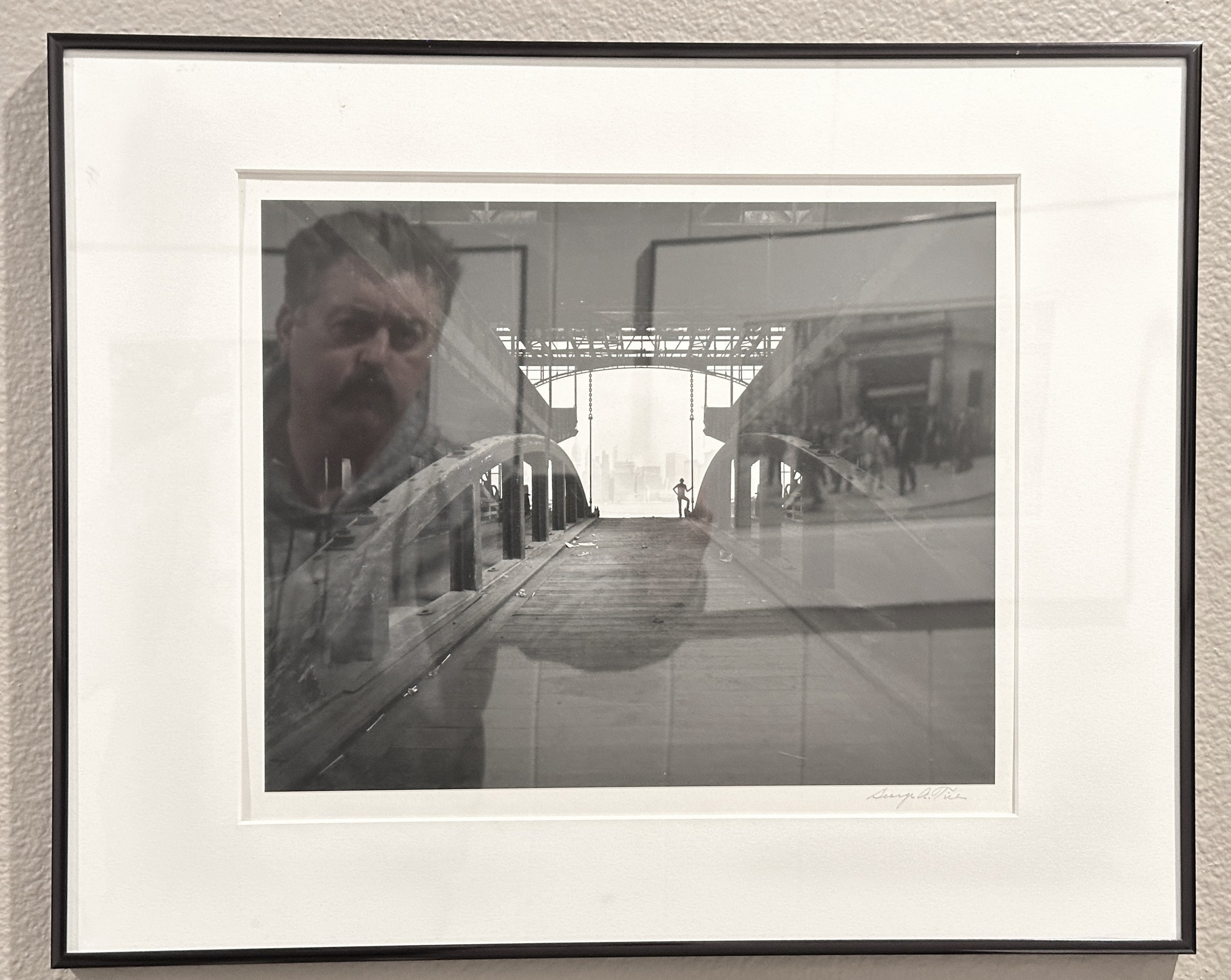
George A. Tice - Photographer October 13, 1938 – January 16, 2025

January 19, 2025

I have a limited number of other photographer’s work in my collection, something I should probably be better about. One print I do have is the above George Tice print Ferry Slip, Jersey City, NJ 1979. I purchased it over 25 years ago, can’t remember the cost, it was reasonable because he produced large editions, but I added it because I loved the composition and tonality of the print plus I also like New York City a lot. The number one rule in buying any work of art is you have to enjoy it, its never solely about investing.

Sadly, George A. Tice passed away on January 16th at 86 and I just heard about it.

George A. Tice - Country Road Landcaster PA 1961 - One of his most well-known images.

Gallery Gadcollection has an excellent webpage dedicated to Tice including an embedded video interview of him from 2019 where interestingly the last of six questions they aske him is about when he meets God. The page details most of Tice’s highlights and nice because it is so clear and concise. I also loved the fact that Tice chose a print of Ferry Slip to be in the video right behind him which suggests that is one of his favorite images too. There is also an interesting image on this page that Tice captured in 1959 of an explosion on the USS Wasp while he was in the Navy. He was no more than 21 years old at the time and I find this image incredible because it immediately reminded me of the Steerage by Stieglitz.

Tice’s work is in numerous permanent collections and for me it is sad every time our medium loses another icon. I am thankful for the work he left us with.

In Photographer Tags George A. Tice, Documentary Photography, Photography, Photographer, obituary
Comment

"Photoganda" - the attempt to censor Evan Vucci's iconic photograph

July 19, 2024

I saw the term “Photoganda” for the first time yesterday and when I heard what it was referring to, I felt compelled to write about it here on my blog.  “Photoganda” is related to an apparent upswing of support Donald Trump has gained after Saturday’s failed assassination attempt in Butler, Pennsylvania. It specifically identifies the powerful images from the event by photographers Evan Vucci and Doug Mills as the reason for the upswing.  From what I can find Axios used the term “Photoganda” three days ago when they wrote an article about the photographers who documented the incident (It is a short but good read). Axios reported that unidentified photo editor(s) were calling for media outlets to stop sharing the images of a defiant and wounded Trump because they felt the images are giving Trump an unfair advantage in the Presidential campaign right now. From there other new outlets starting using the term. The term is very attention getting but problematic in concept. If there are certain individuals trying to devalue the importance of the photographs from the assassination attempt for the benefit of their own political interests, and they actually coined the term “Photoganda” then I have a serious problem with them. It is a dangerous term especially as we are entering an era of more AI imagery where people may already be starting to question the authenticity of documentary images.

When I heard of the assassination attempt, I immediately turned on the TV and most channels were showing the same 3 minutes of tape just before the shooting until Trump was driven off.  Being a photographer with several decades of law enforcement experience I focused on lots of different details in the video.  First the security tactics and response but then I noticed the two photographers who moved forward immediately after the volley of shots to document the incident.  Early on I thought about authoring a post about the photographers based on their movement during the event and when I saw the images they captured I wanted to showcase them as photographers because it was obvious that these images would become iconic and most likely Pulitzer worthy.  Those photographers received immediate media recognition so the need for post became less of an issue. Then the “Photoganda” dialogue yesterday motivated me to pick up the pace to author this post.

I’ll address the newly created term “Photoganda” first.  It obviously refers to Propaganda which is defined as: Information, especially of a biased or misleading nature, used to promote or publicize a particular political cause or point of view.  Everyone agrees that Evan Vucci’s photograph of Trump with blood running down his cheek, raising his fist, with the flag in the background is factually correct; There are no claims of AI elements or manipulation. Most people also realize the image is a huge gift to the Trump campaign.  The image instantly became iconic and no matter what your political beliefs are I think everyone can agree that Vucci and the other photographer were in the right place, at the right time to document something historical, but none of the photographers in Pennsylvania crafted images with the intent of creating propaganda.  Even if they wanted to, they didn’t have time; they couldn’t prepare their shot (excuse the term) because none of them knew what they were about to witness, and they had limitations on their positions where they could photograph from, plus they all captured the same events just from different vantage points.  If you look back to World War II there are plenty of great examples of Propaganda, the evil Nazi Joseph Goebbels was a master propagandist who comprehended the power of images, especially newsreels, to manipulate public opinion. US General Douglas MacArthur was aware of the power images had too, producing news reels of him returning to the Philippines and preferring photographers to photograph him from a low vantage point to visually increase his stature.  We can also examine Joe Rosenthal’s photograph of the flag raising on Mount Suribachi on Iwo Jima, which at different points in history has been accused of being carefully crafted, or possibly staged. Rosenthal earned a Pulitzer for the image which has become an unofficial second logo of the United States Marine Corps and is recognized worldwide still to this day.  I heard TV commentator Jesse Watters have a humorous take on the “Photoganda” issue when he said “They take the photographs, we disseminate them, the public consumes it. If you don’t want to be part of the process, make pottery and sell it by the side of the road”. The images we are seeing in the media of the attempted assassination of Trump are just outstanding press or photojournalistic photographs. Sure, they could eventually be used in a propaganda form, most likely an unlicensed item, but as they are being shared now, they are not propaganda.

Donal Trump after failed assassination attempt. Photograph by Evan Vucci - AP Chief Photographer in Washington DC

Evan Vucci is AP’s Chief Photographer in Washington DC, and he captured the above image of a bloodied Trump the flag in the background (In the video of the incident I believe Evan is wearing a plaid shirt and a baseball hat).  I assume he will win another Pulitzer for this image.  New York Times Photographer Doug Mills, who was wearing a grey sun hat in the videos is another Pulitzer Prize winning photographer that captured some incredible images including the one below.  Both these two photographers were moving about immediately after the shooting positioning themselves to get their images.  Doug was directly below Trump photographing when the Bullet struck Trump’s ear.  Doug told CBS News he made a burst exposure with his Sony camera and that one of the frames captured the bullet.  He mentioned his camera was capable of 30 frames per second, so I assume the camera body was an Alpha 1, unfortunately he didn’t state what his shutter speed was for the exposure.  I would expect his shutter speed was over 1/800th of a second so if the bullet was travelling around 2000 feet per second at that point the length of the line in his image would be consistent with how far the bullet traveled while the exposure was being made.  It is an incredible capture one that Harold Edgerton would be jealous of.  Doug said an FBI Forensic Specialist inspected the RAW image file and confirmed it documented the bullet in flight immediately after it had struck Trump.  In watching the CBS interview of Doug Mills he spoke about former New York Times Photographer Ron Edmonds who photographed the attempted assassination of Ronald Reagan in 1981.  Doug said they worked together for 15 years and that he had talked with Ron several times about photographing the Reagan event.  Ron told Doug in situations like that “to go forward don’t go backwards” to get the best images.  Ron was also a Pulitzer Prize winning photographer and he unfortunately passed away last month.

Donald Trump as gunshots are fired at his campaign rally in Butler, Pennsylvania, on July 13, 2024. This photo appears to show a bullet in the air near Trump. DOUG MILLS/THE NEW YORK TIMES

As I talked about above the motivation for this post was the creation of the term “Photoganda” and the suggestion that some people with political agendas were trying to censor outstanding press images solely because those photographs were not beneficial to their political goals.  Censorship is a violation of the 1st Amendment of the Constitution, and it angers me when anyone tries preventing someone else from expressing themselves, in this case especially since these photographers were just sharing factually correct images of an historic event.  Another thing I want to mention is I hope Evan and Doug are somehow able to receive some compensation from all the people who I know are all marketing their images in a variety of products.  Copyright is also an important thing, unfortunately with so many people using Evan’s image already it will be a big task to track down every one of them.  I know both photographers were on a paid assignment but hopefully they can monetize their images beyond their salary that day because I am sure their images are generating thousands of dollars for others. I also want to share Evan’s quote after capturing such an iconic image: “I haven't had a chance to really think about any of that stuff. But apparently, the photo is pretty viral.”

Anna Moneymaker’s photograph Donald Trump after he was shot.

There were other photographers at the rally as well. Anna Moneymaker from Getty captured the incredible photograph of Trump on the ground after being shot through the legs of a Secret Service Agent who is shielding him. In an incident with an adrenaline spike like this, I suspect many photographers would have missed that image; their cameras probably would have focused on the agent’s rear end not Trump. She captured a hard image, in a dangerous environment. Gene J. Puskar who is a Pittsburgh based AP photographer also captured some solid images. Unfortunately for all the photographers who captured great images out that day, the world is most likely only remember the big three images by Vucci, Mills, and Moneymaker images.

We live in a world of reels and video content now, and a biproduct of that I think is often a short attention span for content.  We have so much video and still image content from this event, but I love the fact people are focused on the still image.  The still image allows the viewer to exam and reflect at our own pace and we need to be reminded of that fact.  The capability of today’s cameras to capture detail is incredible.  We have never been able to dissect an historic event like this with so many highly detailed images of the event.  When I saw the photographs of Trump after he was shot there was no question to the location and extent of his injury, I am still in awe of the detail in the images.

I mentioned above how Ron Edmonds had told Doug Mills to go forward in critical incidents and it reminded me of some of the best advice I ever received studying at Arizona State University. When one of my professors, Bill Jenkins, saw the first few rolls of my Pasadena PD series he gave me similar advice when he suggested I change from a 50mm lens to a wide-angle lens to force myself to get closer to my subject matter. The suggestion was outstanding, and I have used it with most of photographs since. There is an edge you get being in close that takes most photographs to another level. Tactically, from a law enforcement perspective, I was taught early on that often the best way to handle a threat if you are out in the open is to go right at it instead of retreating. I worked with a number of Vietnam veterans in my career including a Green Beret and a Seal, both had incredible insight on how to survive. Obviously a completely different objective but an interesting parallel.

Finally, from a law enforcement perspective I saw some good things that officers and agents did and some bad things.  From the protection perspective it was inexcusable to allow the suspect to have gained access to the roof location, and then for the counter sniper team to allow the suspect to fire, especially multiple rounds.  After being shot Donald Trump should not have stopped to raise his fist in defiance because it exposed himself it there were multiple threats beside the first sniper.  Maybe Trump had gone in to shock by that point, if so it was a strong reaction on his part, but the security detail should have covered him and whisked him to the car.  Luckily for Evan that didn’t happen, and he captured the image he did.  I will leave it there because there are so many other people scrutinizing what happened there and my primary focus here is on photographs.  I am concerned that more press photographers will be able to document similarly chaotic events in the coming months, I hope they won’t have those opportunities, because I know we all need a break from the tension of the last eight years.

 Related Articles

AP - Images altered to make them look like Secret Service Agents were smiling after the assassination attempt.

Evan Vucci's Trump Image Is a Legendary American Photograph - The Atlantic

In pictures: Trump injured in shooting at Pennsylvania rally | CNN Politics

Time Magazine interview of Evan Vucci

In Civil Unrest, Photography, Photographer Tags Photoganda, Evan Vucci, Doug Mills, Ron Edmunds, Trump assassination attempt, Press Photography, Photojournalism, Photography, A, American History, Sony Alpha 1
1 Comment

CHI DSC_6274_ 03-26-2024 - Laureen V. Connelly with her Cook County Assessor’s Office Certificate of Retirement plaque documenting 25 years of service.

Chicago Photographs - March 2024

June 21, 2024

Both of my kids played travel ice hockey growing up. It was time consuming and expensive, but it was some of the best times of our lives. A nice biproduct of them playing was I got back to the East Coast a lot and was able to photograph and see lots of amazing exhibitions. My daughter now lives in Chicago after getting her master’s degree from Northwestern and she started playing hockey again last year with joining a women’s league. When her team qualified for the payoffs, she told me that I needed to come back to see her play again. The last time I had been in Chicago was March of 2020 when I was driving across country with her brother trying to outrun the pandemic shutdown of the country. I acknowledged I was long overdue to visit so I agreed to a long weekend. The playoffs were up near Madison, Wisconsin but I was able to bookend days around the tournament to get three days to photograph in Chicago, museum hop, and eat at my favorite restaurants.

Chicago has been my favorite city to visit since I first went there in 1987 to photograph Wrigley Field, before they installed the light. I have been to Chicago at least twenty-five now. Chicago became our go to vacation spot, it was an easy flight, there was lots to do, and we just liked the city. Chicago had everything a big city should have but there is a Midwest atmosphere which is just nice. It is an amazing sports town, the museums are amazing, and the city has the best steaks of anywhere in the world.

Photographing on the street in Chicago is amazing I always find good images there. Like in New York there are usually lots of people walking about the city and there is plenty of interaction which usually adds layers of meaning to an image. I have also found that most of the time I have been in Chicago the quality of light in Chicago has been outstanding, which is not the case other places. I think part of it has to do with the way the streets are laid out, there is more room between the buildings there than most cities. I think part of that is by design since architectural design is so important in the city and there may have been a conscious plan to allow some buildings to have room around them to be showcased. The Chicago River and lake front also allow more light to fall in the city. The beauty of the architecture in Chicago is also lends itself to more interesting backgrounds of images. I also think the way some of the buildings are constructed that they improve the bounce light. The city also has that Midwest atmosphere most places which is nice. Michigan Avenue is a wide street with wide sidewalks and planter boxes; the street was designed for shoppers and heavy pedestrian traffic. With Michigan Avenue’s sidewalks being so wide not only does that allow more light into the area but it also has always given me room to maneuver and get in position to frame my images better than anywhere else. I have become so familiar and comfortable with the city I always do well with a camera there.

It was amazing on this trip in March how quickly I was back in the zone while photographing on the street. At times it felt like images were coming to me and I wasn’t having to search as hard as I do in Los Angeles sometimes. I especially found that interesting because I spent more time on this trip than ever before photographing South of the river, especially around Daly Square where I don’t usually go.

My Chicago portfolio is special to me, and I envision having an impact on others in book form and as part of a permanent collection. The Chicago Historical Society already has some of my photographs in their collection and hopefully I can find more homes in the city for my work soon.

This trip also inspired me to start digitizing more Chicago negatives and I have added some of those recently scanned images to my Chicago Portfolio here on my website.

Below are some of the images from my March 2024 trip:

View fullsize CHI DSC 6514  3-26-24
CHI DSC 6514 3-26-24
View fullsize CHI DSC 6263  3-26-24
CHI DSC 6263 3-26-24
View fullsize CHI DSC 3359  3-22-24
CHI DSC 3359 3-22-24
View fullsize CHI DSC 3410  3-22-24
CHI DSC 3410 3-22-24
View fullsize CHI DSC 03958  3-25-24
CHI DSC 03958 3-25-24
View fullsize CHI DSC 6257 3-26-24
CHI DSC 6257 3-26-24
View fullsize CHI DSC 04315  3-25-24
CHI DSC 04315 3-25-24
View fullsize CHI DSC 3234  3-22-24
CHI DSC 3234 3-22-24
View fullsize CHI DSC 3159  3-22-24
CHI DSC 3159 3-22-24
View fullsize CHI DSC 6181  3-26-24
CHI DSC 6181 3-26-24
In Artist, Photographer, Photography, Street Photography Tags Chicago, The Art Institute of Chicago, William Karl Valentine
Comment

CHI DSC 3029 3-22-24 “Untitled” (Wells & Wacher, Chicago)

Chicago Photograph brings back memories of 25 years ago

June 21, 2024

When I got back from Chicago in March and started going through all my images I came across this photograph above. At first glance I saw how the elements in the frame were interesting, and I understood how I was drawn to make the exposure. But when I zoomed in, I immediately realized that the little girl in the stroller looked so similar to my daughter Alyssa at that age and that reminded me how often we used to take her to Chicago for vacations. The little girl in the stroller is so alert to the world around her just like Alyssa was at that age. I am assuming it was seeing the stuffed animal in the girl’s arm that really made the connection. The girl is clutching it in such a protective way, you know how special the toy is for her. My daughter was exactly the same way, and that period of innocence was so wonderful. The image brought to mind how much a parent tries and protect their children when they are young and also how in today’s society I still worry about my adult children’s safety as crime and world tensions rise. Viewing this image became an incredibly intense experience rather quickly as I realized everything I just mentioned, and I was not expecting that. The experience motivated me to revisit my negatives and see what images I had of Alyssa when we would take her Chicago when she was young. Below is one of my Chicago photographs from 25 years ago when Alyssa two years old.

CHI-171 #29 5-03-99 - Alyssa Valentine at the Hancock Tower

I don’t know if there is too much more to say about these images or the recent experience. I don’t want to make it into something more than it is, but I thought there was value in sharing how I felt with people interested in my work or just interested a photographer’s process. I think it not only gives insight to the fact I am an admitted romantic, but it also highlights how a photograph can evoke strong emotions from the image maker even when that was not the original intent. I know everyone brings their own experiences with them when they view an image and that people often have different responses to images based on their own prior experiences. I also want to point out that images can become more important overtime and develop new layers of meaning particularly if public opinion of the subject matter changes or if the subject matter documents change in and of itself. Viewers opinions can also change over time as they have different experiences with the same image. These are all some of the reasons why I don’t delete image files or purge old negatives.

In Artist, Street Photography, Photographer, Photography Tags Looking at Photographs, Chicago, Street Photography, Power of Photography, Photography, Photographer, Daughters, Alyssa Valentine
Comment

CHI DSC_6274_ 03-26-2024 - Laureen V. Connelly with her Cook County Assessor’s Office Certificate of Retirement plaque documenting 25 years of service.

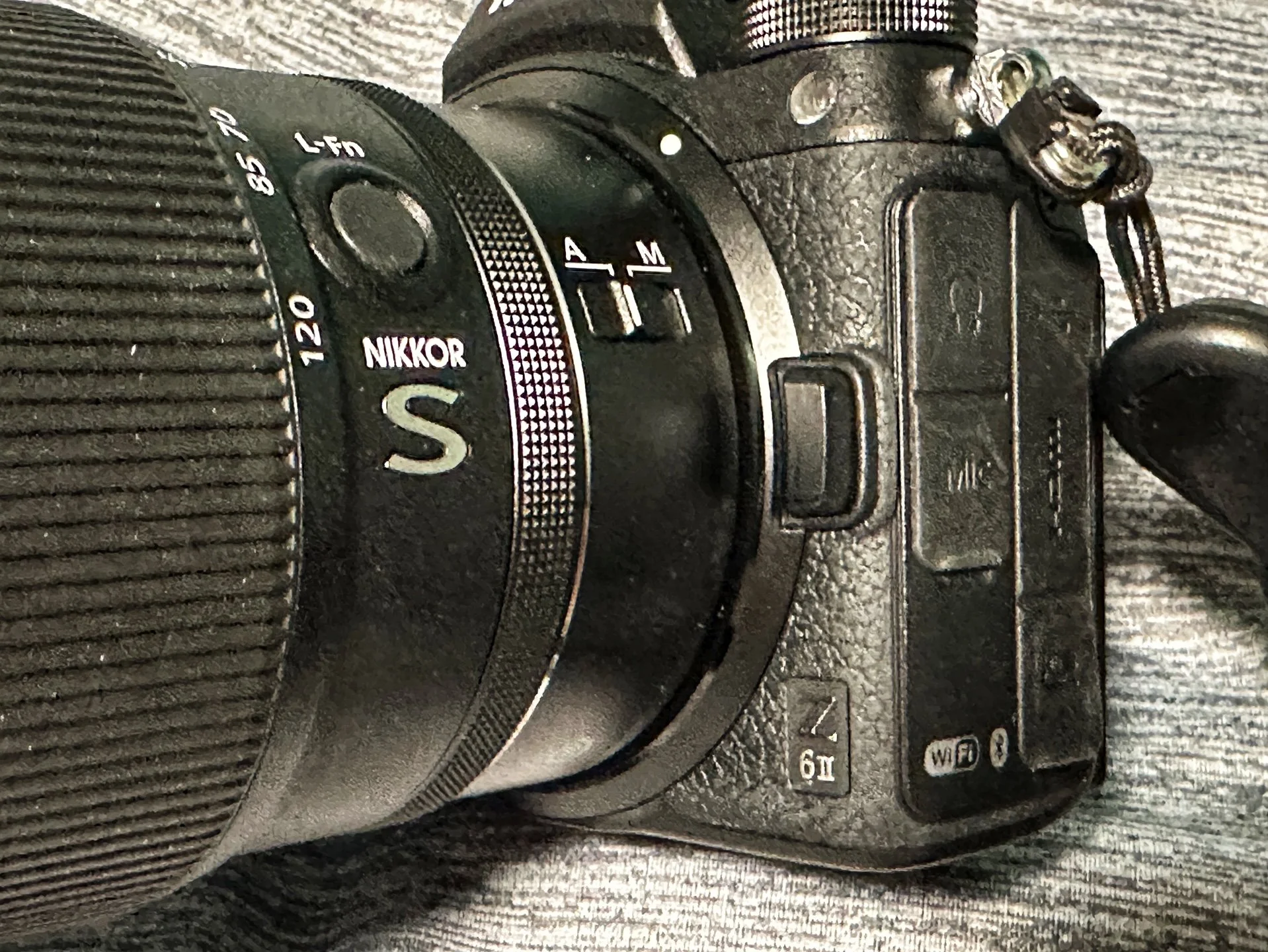
Nikon Z6ii with a 24-120mm lens - Ms Connelly with her Retirement plaque

June 21, 2024

This photograph is another one from my Chicago trip that took on more so much more meaning once I got home and started going through the editing process. I am sure the faces, the contrast, and the forms all drew my intention when I made this exposure. I almost overlooked it until I zoomed in on the plaque that the woman was carrying and realized it was tack sharp and I could read what it said. The plaque is from the Cook County Assessor’s Office and was recognizing her retirement after 25 years of service, I could also read her name, Laureen V. Connelly. Being a block away from the Cook County Building I assume that this woman was coming from her old office where she had just had a retirement lunch, or reception, and they presented her with this plaque. I have no idea who the woman with here is, but I would guess it might be a daughter or even a former coworker that is a close friend.

With the information in the image, and some reasonable assumptions this image now has become pretty powerful. Laureen and the woman with her look rather solemn, like there might be a lot of reflection and thought going on. I can envision Laureen having the realization of the change in her life might be pretty intense. I assume she had a cubicle type job where she pushed a lot of paper and with it being the Assessor’s Office some of the citizens she interacted with daily might not have been in the best moods. But I can also imagine she took pride in her work and liked some of her coworkers. Change is not always easy and after 25 years to walk out of the office for the last time with just a pension and a basic plaque might be a little tough. The person with Laureen seems to be there in a supportive role. We can all imagine our own scenario of details with this image, and it doesn’t matter who is the most accurate. What is important here is the fact this person spent 25 years doing a job and is walking away with a basic plaque. Does this plaque really sum up her career? It lends the viewer to reflect on their own career and the real impact it is having on themself, on others, and society. This image allows the viewer to run with it. For me when I saw this, I reflected back on my law enforcement career and how it didn’t end on my terms because of an injury. The sudden change was not easy and luckily for me I had my family and my photography career to fill some of the void.

Between the two version I think the black and white image works best because I find the colors in the frame don’t add anything to the image and the monochrome version seems to be more appropriate for my interpretation of the mood. I just wanted to share both versions here so every viewer could have their own experience with the image.

This image is also a great example of how sharp the Nikkor 24-120mm Z lens is and how well it works with a Nikon Z6ii camera body; the autofocus capability is outstanding. UPDATE!!! Nikon Z6iii is out, and Preorders are being accepted at Samys Camera, with expected June 25th availability.

CHI DSC_6274_ 03-26-2024 - Black and White version

In Street Photography, Photographer, Photography, Camera Equipment Tags William Karl Valentine, Chicago, Nikon Z6 ii, 24-120 mm Nikkor Z lens, Street Photography
Comment

© 2024 William Karl Valentine - Fatal Collision, Chino, California (CPD DSC 1344 1-9-24) Nikon Z6ii with a 24-120mm Lens. ISO 16,000 f/4 1/320 at 24mm

The Best Camera for Low Light Photography - Nikon Z6ii / Nikon Z6 iii rumors

June 2, 2024

My photographs documenting the Pasadena Police Department in the 1980’s are some of my best-known images. I spent over a thousand hours riding in police cars documenting the officers working for that portfolio. I started off photographing with a Nikon F and finished up with a couple Nikon FM2 bodies. I used Kodak Plus-X film mostly, and later on I used some T-Max 400. Since I was photographing mostly at night, I used a Sunpak 522 Thyristor off camera flash which paired up great. The exposures were good, and the high contrast of the flash added to the images. Throughout my law enforcement career when I photographed at night, I had to use a flash although I did experiment pushing Kodak T-Max 3200 to an ISO of 25,000 one night. I actually got images using just streetlights, but they were very grainy.

A couple years ago I was asked to come back out and start documenting the Chino Police Department, where I had worked for 20 years, and I immediately agreed. I had been looking for an opportunity to photograph law enforcement in today’s world to compare the new images with my work from the 1980’s. I started off using a Nikon D850 with a flash and I tried photographing some without a flash since today’s sensors are so improved. I wasn’t getting great exposures in low light with the D850, the grain was too much, and the camera struggled with focusing. The D850 can produce some beautiful images in perfect conditions, but I have never loved the camera, especially the auto focus. I eventually went and talked to my friends at Samy’s Camera in Pasadena, some of them I have known for 40 years, and I asked which cameras performed best in low light conditions. I expected they would suggest a Sony A7IV or A1 or A9. Sony’s are amazing cameras and I had rented several different models recently when I was considering switching over to their brand. I liked the Sony’s I rented but none were perfect. Several of my contacts told me the Nikon Z6ii as the best low light still camera on the market. They explained that the smaller, 24 MB, full frame sensor handled noise better than most the 45MB sensors. I had no interest in the original release of Nikon Z series camera bodies because they did not have an SD card slot option and I was skeptical that the new lens mount adaptor would work well with my older lenses. I had recently read that Nikon had their Z line to now have SD card slot options and my friends explained how well the lens mount adapter was designed. I had wrongly expected that the adaptor would change the focal length of my older lenses, but learned the adaptor doesn’t because the sensor in the mirrorless Z series cameras had been moved forward to accommodate the adapter while maintaining the original focal length of the older lenses and the new lenses are designed with the new sensor position in mind (the lack of a mirror allowed this design to work).

View fullsize Attachment-1 (44).jpeg
View fullsize Attachment-1 (43).jpeg

Everything sounded right so I bought a Nikon Z6ii as a kit with the 24-120mm f/4 lens, along with an adaptor for my older lenses. The camera performance has been outstanding, and the 24-120mm lens is one of the sharpest lenses I have ever owned. I am not going to get into a detailed tech review here because there are other people that do tech reviews for a living and have access to everything to compare. Links to some of those sites are listed at the bottom of this blog post. What I will talk about is how the camera is performing me.

In low light conditions, the images I am getting with the Z6ii are amazing. I took the camera to Chicago in March for a weekend as my primary camera and the images were great. I specifically went to photograph my daughter play in an ice hockey tournament and this lens and camera combination were the best I have every used in a rink before. I also took the adapter and an F mount 100-400mm lens and that worked well. The adapter handled the auto focus well and ergonomically was good. I ended up using the camera more for my street photography than I expected. Lately I have been using a Sony RX100 VII for my street photography because I use it from the hip and most people don’t realize I am photographing. In Chicago I started using the Z6ii some for my street images and I was getting better images with that the Sony, so I went with it. Most days were overcast so the light wasn’t fantastic but that was fine for the Z6ii. The auto focus was solid, and the lens was so sharp I got detail like I never have before. Here are a few examples of the camera from Chicago:

View fullsize f/4 1/500  ISO 900
f/4 1/500 ISO 900
View fullsize f/4.5 1/1000  ISO 400 @ 24mm
f/4.5 1/1000 ISO 400 @ 24mm
View fullsize f/4 1/800  ISO 2200 @100MM
f/4 1/800 ISO 2200 @100MM
View fullsize f/5.6 1/800  ISO 5000 @400mm
f/5.6 1/800 ISO 5000 @400mm
View fullsize f/4 1/250  ISO 16000
f/4 1/250 ISO 16000
View fullsize f/4 1/400 ISO 16000
f/4 1/400 ISO 16000

The experiences in Chicago inspired me to photograph on the street more with a Z body. I need to also share with you that earlier this year, after having success with the Z6ii, and after becoming more and more frustrated with the focus ability of my D850, I bought a Z8. The Nikon Z8 is one of the most incredible cameras I have ever owned, and I am just scratching the surface with learning all it is capable of. The sensor captures outstanding images and the camera focusing is such a huge upgrade. I also got a 24-120mm lens for the Z8 which pairs perfectly. In recent months I have also added the following Z lenses: a 26mm, a 40mm, and a 105mm macro. All three of these fixed length lenses are super sharp. I bought the 105mm, which is capable of a 1:1 magnification like the old 60mm F mount Nikkor lens, primarily to do copy stand work of my old negatives so I can digitize the images (I have a process where I upload image files in Bridge to crop, open them in Photoshop to Invert the image, then return to Bridge to finetune it). I bought the 26mm and 40mm as walk around lenses and incase I wanted to take the camera into certain venues with camera restrictions. Both those lenses are sharp, super-fast, and lightweight. The 40mm is a little hard to use walking through crowds but the extra length has been great in certain situations. The 26mm is ideal for walking on the street and photographing from the hip, I have been able to use it somewhat like a range finder, and it is so small people don’t notice it. It also has a great balance when photographing with one hand a waist level. The 40mm and 26mm lenses are also very reasonably priced.

Example Images with Technical Information:

View fullsize f/4 1/1000  ISO 16000 @120mm
f/4 1/1000 ISO 16000 @120mm
View fullsize f/7.1 1/1000  ISO 8000 @104mm
f/7.1 1/1000 ISO 8000 @104mm
View fullsize f/4 1/1000  ISO 5600 @30mm
f/4 1/1000 ISO 5600 @30mm
View fullsize f/4 1/250  ISO 16000  @50mm
f/4 1/250 ISO 16000 @50mm
View fullsize f/4 1/320  ISO 16000  @24mm
f/4 1/320 ISO 16000 @24mm
View fullsize f/4 1/25000  ISO 4500 @120mm
f/4 1/25000 ISO 4500 @120mm
View fullsize f/5 1/320  ISO 16000  40mm
f/5 1/320 ISO 16000 40mm
View fullsize f/4 1/320  ISO 8000  26mm
f/4 1/320 ISO 8000 26mm
View fullsize f/3.2 1/1000  ISO 500   40mm
f/3.2 1/1000 ISO 500 40mm
View fullsize f/4 1/200  ISO 16000  @24mm
f/4 1/200 ISO 16000 @24mm
View fullsize f/5.6 1/250  ISO 12800  @78mm
f/5.6 1/250 ISO 12800 @78mm
View fullsize f/4 1/125  ISO 16000  @120mm
f/4 1/125 ISO 16000 @120mm

Camera lens and strap options for Street Photography

View fullsize Nikkor Z 40mm and 26mm lenses
Nikkor Z 40mm and 26mm lenses
View fullsize Z6ii with 24-120mm compared to 26mm lens
Z6ii with 24-120mm compared to 26mm lens
View fullsize Nikon Z6ii with the 26mm f/2.8
Nikon Z6ii with the 26mm f/2.8

I know it is late notice, but Nikon has all their Z camera bodies and lenses on sale through the end of this week. Camera bodies are discounted about 25% and lenses are about 20%. My daughter purchased a Z6ii with a 24-120mm lens, and the 26mm lens online from Nikon last week for approximately $2,400. She found an online coupon that coupled with Nikon’s Z discounts, and she utilized Nikon’s two-year interest free purchase plan (I purchased my Z8 with their 0% interest plan as well). Nikon is being very aggressive in the market now so I would expect the sales to continue or be brought back with some frequency this year.

I have a Peak Camera strap system on my Z6ii. I love the design of the locking disc. It makes it easy to go from a traditional camera strap position to a solo wrist strap position. The wrist strap pairs great when the 26mm lens is on for street images.

View fullsize Attachment-1 (38).jpeg
View fullsize Attachment-1 (42).jpeg

There are lots of amazing cameras and lenses on the market today, I have always used Nikon, I have friends that swear by Canon, and I know lots of people have gone all in with Sony. Because of all the variables I don’t think it is possible to have a camera that does every task perfectly, especially since cameras are now as much about video as still images. But I am convinced that right now the Z6ii is the best camera for photographing in low light conditions. I researched it online, talked to people with expertise, tested several different bodies and nothing came close to the Z6ii in low light. I am sure technology with continue to evolve and there will be better cameras in the future, but right now the Z6ii is my suggestion. (I also want to acknowledge that many cellphones like the iPhone 14 & 15 also create amazing low light images but obviously don’t have the same capabilities of real camera body)

Nikon Z6iii - Now Pre-Ordering $2,496.95 Delivery estimated 6/25/24

As I was wrapping up this post, I checked Nikon Rumors and saw there was talk that Nikon might be announcing a Z6iii in a couple weeks which could explain all the recent sales. Well, it has been announced and I wanted to update this. Samy’s has a great video review of the camera already on their order page for the camera. Link below.

The Z6iii has been announced and pre-orders are now being taken by Samys and B&H

Links to Reviews:

DP Review December 15, 2020

DP Review on You Tube December 2020

Nikon Website Z6ii

SLR Lounge 2021

In Street Photography, Photography, Photographer, Camera Equipment Tags Nikon Z6 ii, low light photography, Mirrorless Cameras, Nikon Z6iii, Nikon Z8, Samys camera
Comment
View fullsize Attachment-1 (30).jpeg
View fullsize Attachment-1 (31).jpeg

Controversy over Garry Winogrand's Photograph of a couple at the Central Park Zoo

March 9, 2024

In authoring a blog post on the book Winogrand Color I came across a review of the book online by New York Times writer Arthur Lubow. I think it was a really accurate review about the images in the book. The only thing I didn’t agree with that Lubow wrote were part of his comments on the very famous Winogrand photograph on the left above. Lubow wrote “Even less successful is the color version of one of his most famous photographs, “Central Park Zoo, New York City” (1967), which shows a Black man and blonde woman, seemingly affluent, each carrying a fully clad chimpanzee. It is a biting and unsettling comment on the era’s prevailing slurs about interracial marriage. In the color image, probably taken an instant later, the man is looking at the camera, the woman’s expression has changed, and the impact is diffused by the photographer’s own obscuring shadow and a distracting crowd of passers-by.” As I stated in my other blog post I saw the Winogrand documentary film, “All Things are Photographable” where Papageorge discussed this image and shared his own photograph of Winogrand with the couple. Tod Papageorge explained he was with Garry Winogrand that day and he disputed the assumption that Winogrand was making a statement about interracial relationships with this photograph. Tod and Garry were close friends and I think Tod would have understanding of Garry’s beliefs and opinions. I researched this subject matter further and found an in-depth article, with photograph illustrations, that Papageorge had authored about the photograph for Transatlantica in 2014 on MoMA’s website.

I know I have shared this information in the body of another blog post, but I think the subject is important enough to highlight in a separate post specifically dealing with the perceived controversy with this image because it applies to other works by other people. It is wrong to apply current day feelings or cultural standards with things from the past. I am not saying we need to condone outdated beliefs or past behavior that would be wrong in our world today. I am saying things needs to be evaluated with perspective of the time of the event and without any attempt to cancel it because of the current values and opinions of a segment of society. Here is a good non-photo example of my point:

My son is a graduate of Choate Rosemary Hall, a well-known prep school in Connecticut. On one of my many visits back there I got to sit in on his English class during the events of a “parents’ weekend”. My son’s teacher was Ed McCatty who is an outstanding educator, now retired. McCatty, who is black, had the class reading Mark Twain’s 1884 classic book “The Adventures of Huckleberry Finn” at the time. In the classroom, with all these other parents visiting, McCatty called on a student to read the book out loud and the student became nervous because of the book uses the “N-word” a fair amount to describe Huck’s friend Jim who was a fugitive slave. Finally, McCatty took over reading and projected Twain’s words eloquently. Parents squirmed uncomfortably as McCatty read “that word” again and again. I had already met Ed on a previous visit, he was one of the faculty residents in my son’s dorm, I knew where he was going with the reading, so I sat back and enjoyed seeing a number of parents getting completely stressed over words written in the 19th century. McCatty eventually explained how it was important to interpret Twain’s writing based on the time it was written. He pointed out that even though Huck was using the term for Jim that it wasn’t being used in a derogatory manner for the time, and the fact that Twain wrote about a young white youth befriending a black fugitive slave it showed Twain had a progressive viewpoint. McCatty took the topic further, using examples in his own life, and ended up giving everyone a lesson that day which went far beyond literature.

Interpretations of images (and other things) can change quickly, we don’t need a hundred plus years to pass for feelings to change. The best example of this with my own work is this photograph below which is in the permanent collection at the Center for Creative Photography.

PPD-177 #23 March 1987 - William Karl Valentine

Officer Ware and Craddolph at search warrant related to a narcotics sales investigation.

When I displayed this photograph in the first couple decades after making the exposure most every viewer was compassionate for the child being raised in dangerous conditions and anger towards the parents for putting the child in the situation. Some people went on to acknowledge gratefulness for law enforcement for trying to protect the child and do something about the drug epidemic of the times. These are accurate opinions about what my image is about. But in the last decade plus a portion of our society has altered its perspective on law enforcement and I have been confronted about this image. I had an anonymous Instagram viewer question my ethics for taking the photograph when the woman was unable to defend herself. In 2020 the photograph was in a simple exhibition in Pasadena and several people demanded to have it taken down because they found it offensive, so that image was pulled from the wall by staff. I am fine with someone not liking my work or disagreeing with my interpretation of the world, but to censor me is outlandish. The First Amendment gives me as much right to express myself opinion as anyone else in this country. The fact that some people thing their feeling give them the authority to remove that right is infuriating. Most photographs are an accurate account of a fraction of a second of time, how we interpret them is another thing.

One final thing I want to get back to, the majority of Arthur Lubow’s opinion on Winogran’s color photograph of the couple at the Central Park Zoo is spot on. The image is not as good as the famous black and white image and for all the reasons Lubow points out in his description of the image. Lubow obviously knows how to look at photographs. The positioning of the subjects in the frame and Winogrand’s shadow make the color image way less impactful. If Winogrand had been using a digital camera, which obviously did not exist then, and decided to share this famous image in color I think it may have been impactful, but I can see how the bright colors could have been distracting from what was going on in the frame. I know in my own work sometimes bright colors in a color image distract the viewer from the shapes, forms, layers of meaning, and textures in the image which drew my eye. That was a big consideration I had with my Santa Anita book, I didn’t want the viewer to focus on the bright colors of the silks, the horses, and the grass, I wanted them to see the details and layers of information that came out in a black and white image. It is natural that our eyes are drawn to bright colors and when color is removed a photographer can direct the focus in an image. There are times that colors matter and for that I am thankful for the digital age where the decision can be made after the shutter was released. Knowing how many rolls of film that Winogrand exposed I can only imagine how many hard drives he would have filled and the thousands of more images he would have made.

In Photographer, Photography, Street Photography Tags Ed McCatty, Choate, Choate Rosemary Hall, Garry Winogrand, Tod Papageorge, Documentary Photography, Photographer, William Karl Valentine, Pasadena Police Department, censorship, The Center for Creative Photography
1 Comment

Ave Pildas visit in Santa Monica

February 19, 2024

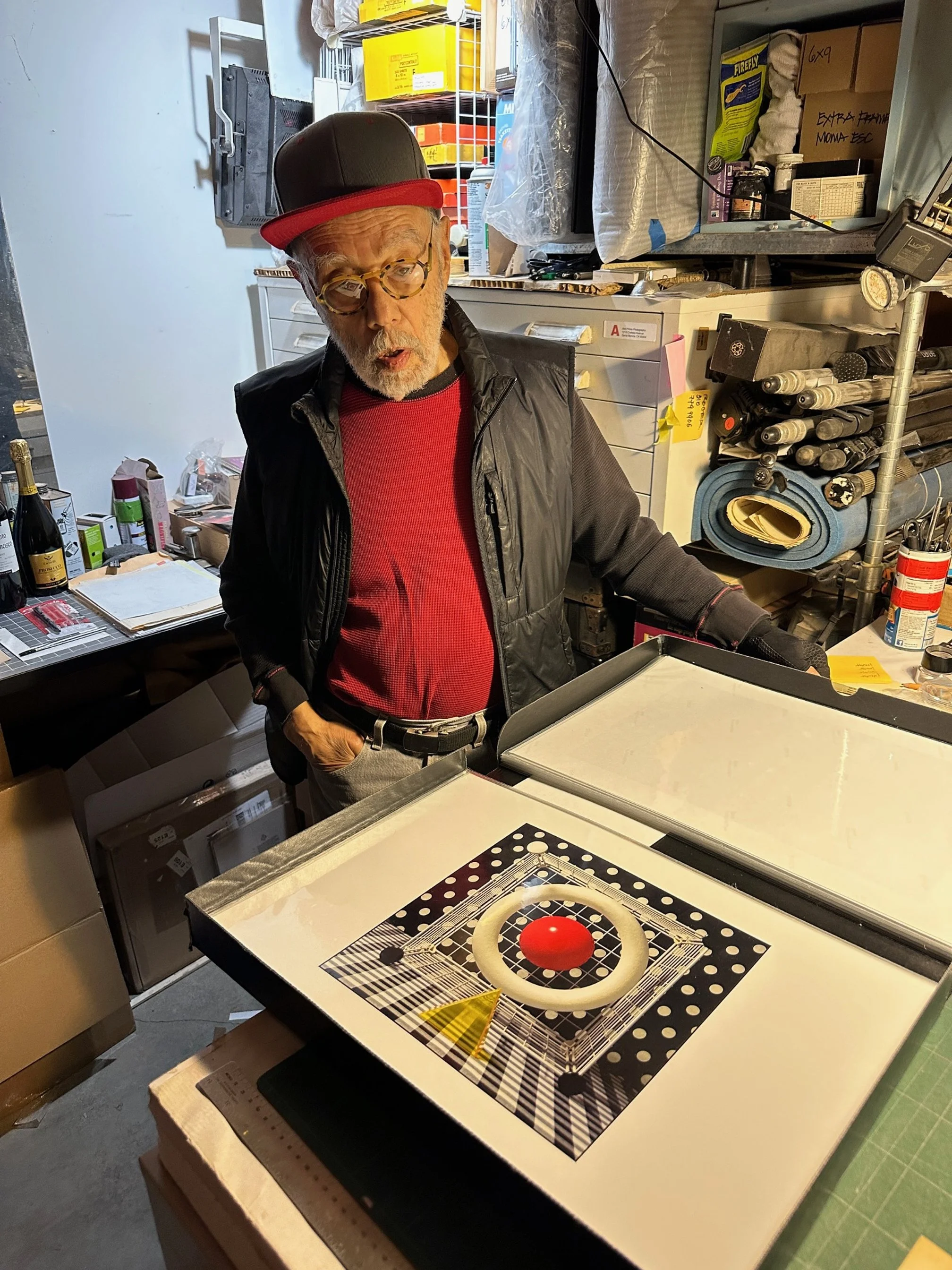
I was finally able to get up to Ave Pildas’s home, and studio, in Santa Monica a few weeks ago for a long overdue visit to talk about photography and some potential collaborations we are considering.

Ave designed their house and the garage (studio space) he shares with his wife Phyllis Green. It is an incredible property, perfect for a creative couple. Hopefully one day Ave does a documentary film or some reels where he showcases his space, I know a lot of people would enjoy seeing it as I did.

It was good for me to compare Ave’s studio and workspace to my own. For people who are not creative an artist’s world is a hard thing to understand, especially how artists organize things to allow for free-flowing creativity (in my case it is how I navigate my clutter). Ave’s studio design is a unique space well designed for him and Phyllis. While we were upstairs in his office looking at prints and talking, Phyllis was on her side utilizing her large worktables to create a three-dimensional project involving hats. It was fantastic how the space was both separate and connected at the same time.

Ave shared prints from his Circles Squares and Triangles portfolio and explained that photographing three-dimensional items in his studio to create images was how he kept being creative through the lockdown part of the pandemic.

Ave also gave me copies of his Nude(s) and Circles Squares and Triangles books. I have several other titles from his Small Books titles which I first discovered at Arcana Books in Culver City. These small self-published projects are fantastic. He uses El Sereno Graphics in Los Angeles to print them, and they are some of the nicest looking books I have seen in this size and unit cost. I had wanted to get this post done last week to showcase the photograph the image “Valentine” below from his Nude(s) book for Valentine’s Day, but unfortunately, I am way behind on things right now.

I encourage everyone to check out Ave’s books and his work. I am jealous of the volume of material he has photographed in his lifetime and the fact he is still out there travelling the world looking for new images. I am really enjoying our friendship and I will continue showcasing his work whenever I can.

View fullsize Attachment-1 (16).jpeg
View fullsize Attachment-1 (21).jpeg
View fullsize Attachment-1 (17).jpeg
View fullsize Attachment-1 (19).jpeg
View fullsize Attachment-1 (18).jpeg
View fullsize Attachment-1 (20).jpeg
In Artist, Photographer Tags Ave Pildas, @avepildas, El Sereno Graphics, Art Books
Comment

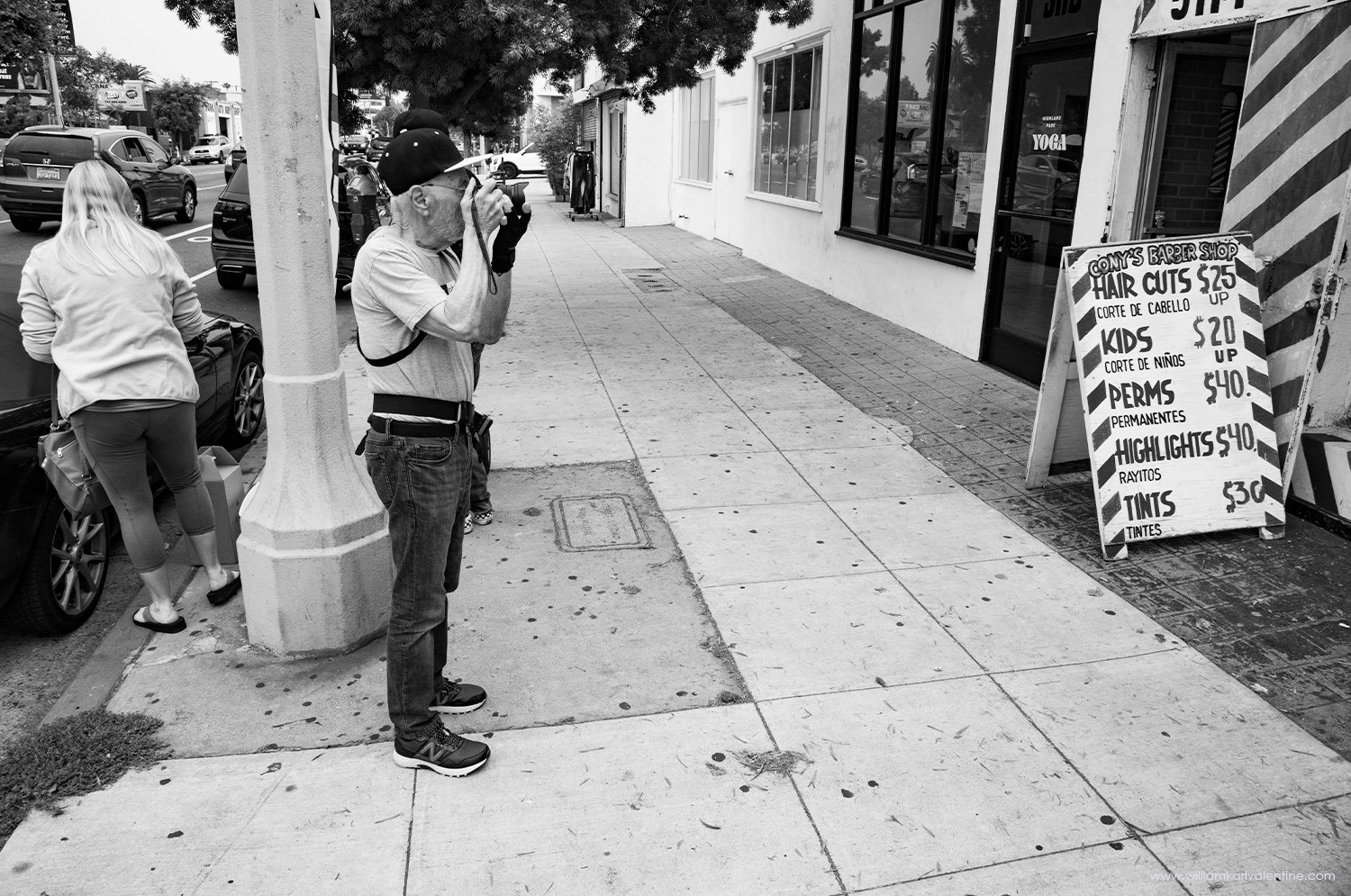
Me and Ave on York Boulevard

Photographing with Ave Pildas - September 22, 2023

October 8, 2023

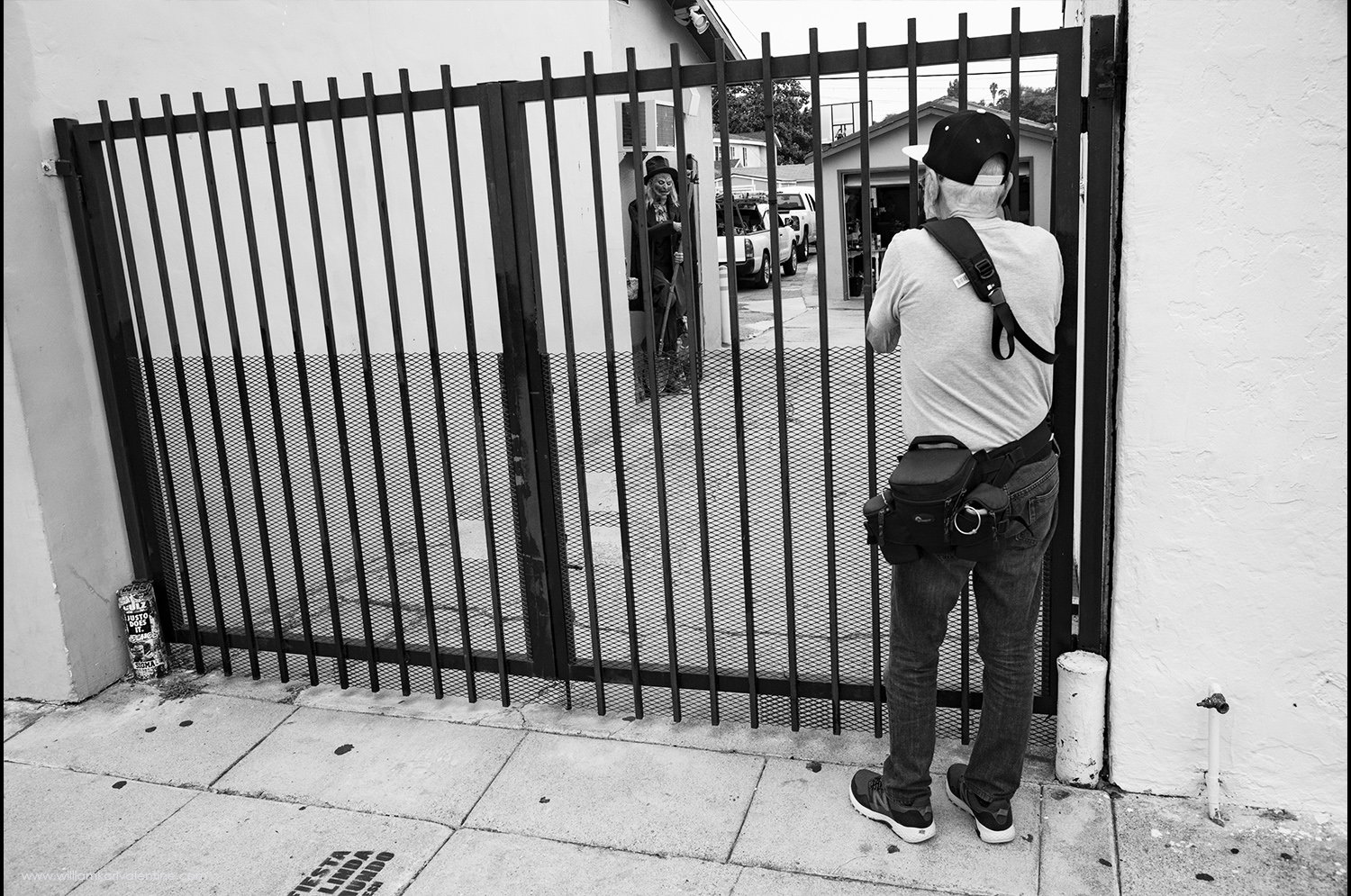
On Friday September 22nd I spent the afternoon photographing and hanging out with legendary Los Angeles street photographer Ave Pildas. 

I discovered Ave’s work, when I found a copy of his book Street People at Arcana Books in Culver City five years ago.  I liked his work so much I bought a copy of the book. I authored a blog post about Street People and how his photograph “Cop Salute” really stood out to me.  I loved the fact Ave was apparently self-publishing small edition books, promoting his work, making his own opportunities.  Los Angeles is a hard town to photograph in and it was obvious Ave has been out there documenting Los Angeles for a long time.  I followed Ave on social media and when Deadbeat Club Press released Ave’s Star Struck book last year, I went back over to Arcana for the signing to meet him; I also authored a blog post about that.  We had a great talk and I suggested going out photographing on the street together.

Ave and I had talked a few times this year trying coordinate our schedules to go out and photograph.  When we figured out September would be good for both of us, Ave specifically told me he wanted to find new areas in LA to photograph.  The light in September is also usually better than the summer months which I thought would be a plus, but of course the day we went out it was oddly overcast for September here. Ave lives in Santa Monica and is probably best-known for his Hollywood street photography.  When we were planning the day Ave told me he was interested in exploring two Los Angeles neighborhoods: Liemert Park and York Boulevard in Highland Park.  Because I knew I would be coming from a morning meeting with Photography Curator Linde Lehtinen at the Huntington Library I chose York Boulevard which was closer. I also liked how he described York Boulevard as a gentrified neighborhood with plenty of foot traffic and people out and about to photograph.  I love an image rich environment.

We met at Avenue 50 and York which was perfect.  There is also a bench there which allowed us to talk for half an hour before we started walking and photographing. I also got a good feel for the area watching the people pass us.

View fullsize CA DSC - 08268  9-22-23  Ave Pildas
View fullsize CA DSC - 08242  9-22-23  Ave Pildas
View fullsize CA DSC - 08400  9-22-23  Ave Pildas
View fullsize CA DSC - 08377  9-22-23  Ave Pildas

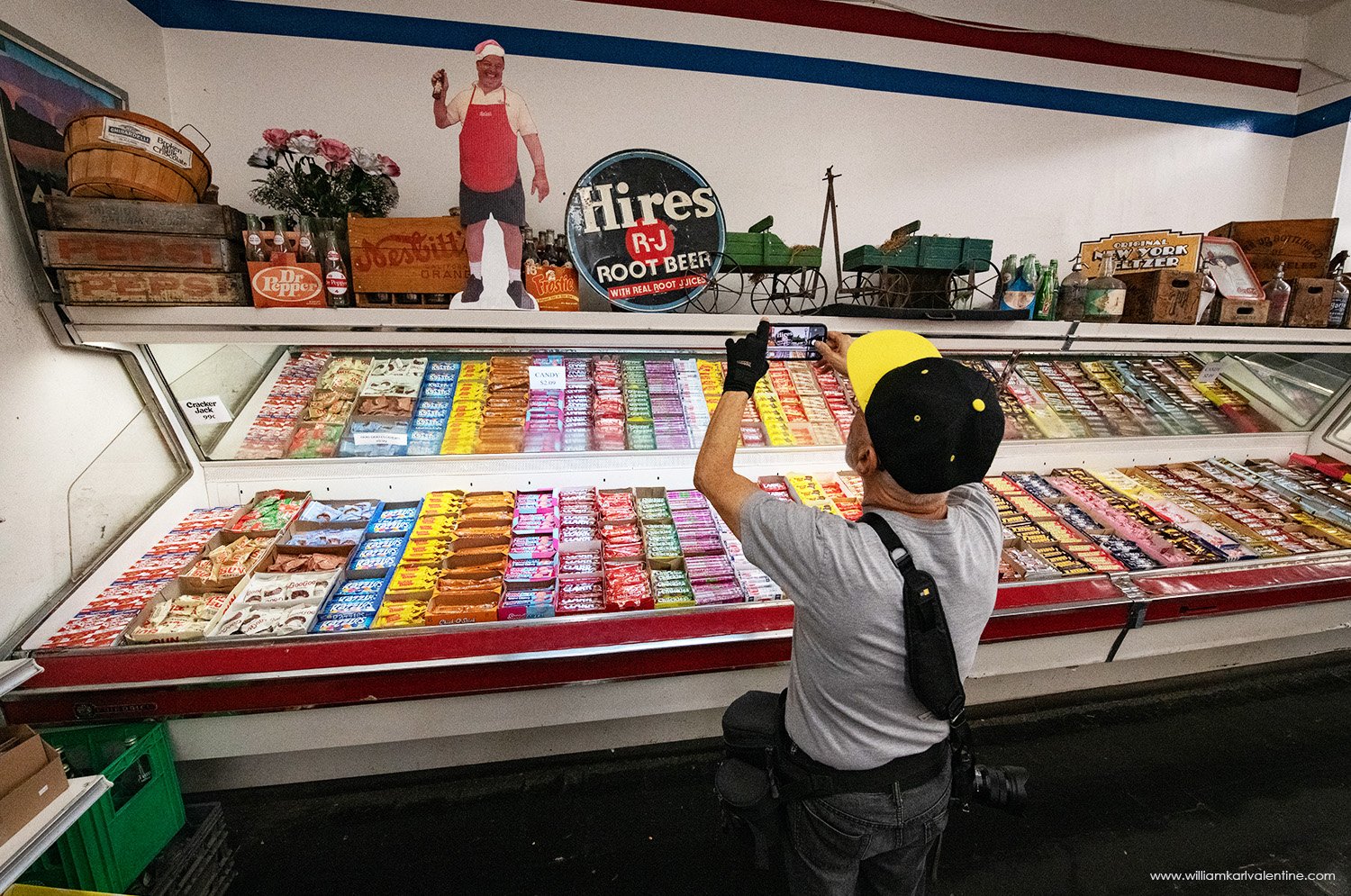
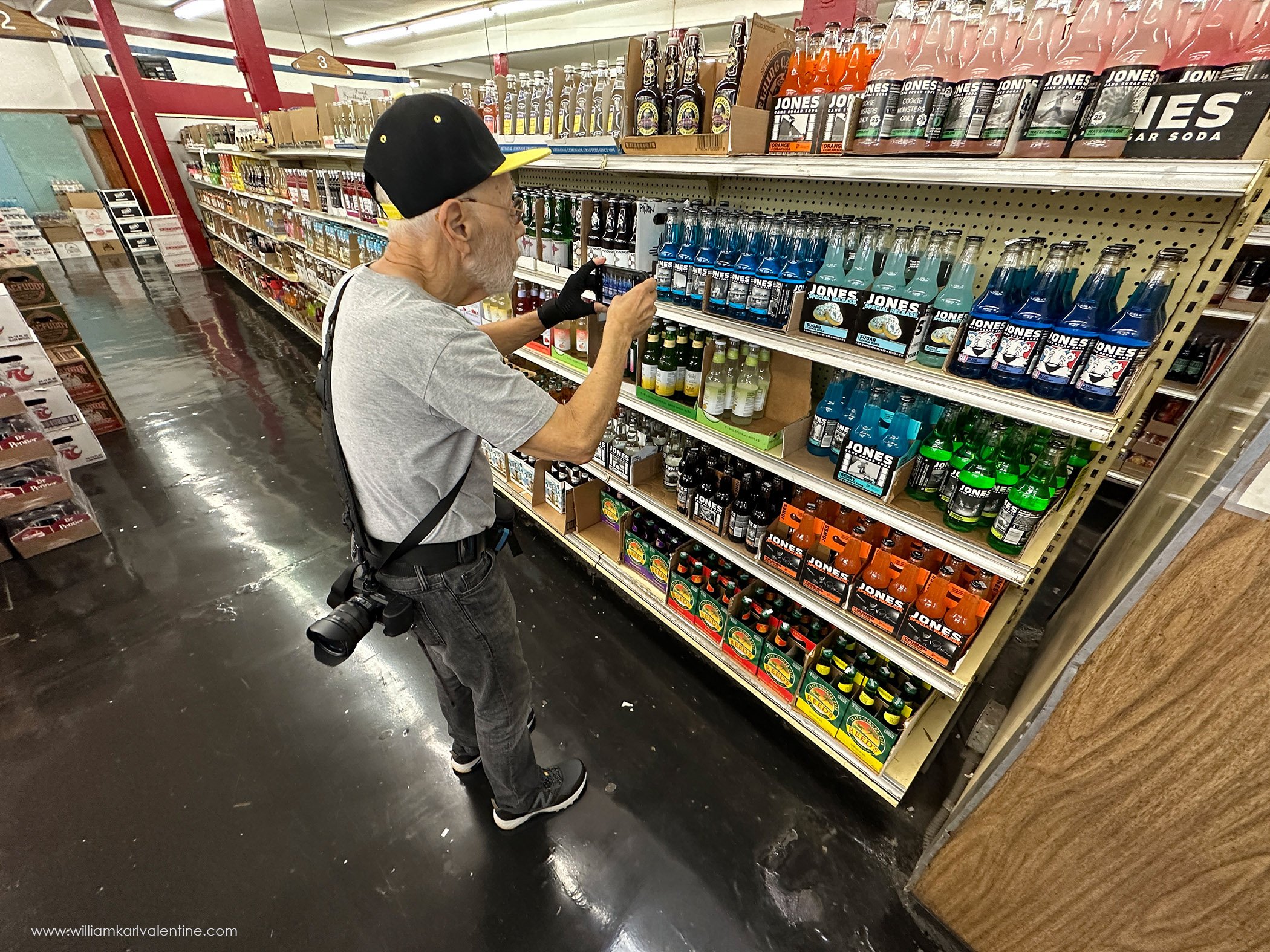
Ave and I are very different in a lot of ways, first and foremost I am 6’5”, Ave is not.  I was born in the 1960’s, Ave was “living life” in the 1960’s and 70’s; and he still attacks life today.  But I quickly discovered we are very similar when it comes to photography even though we work in different styles.  We both constantly look for images in our travels, framing things in our mind when we don’t have a camera in hand, and we both have a strong desire to document our world.  We also both feel the pressure of fleeting time and its impact on our efforts to preserve our work, so our images live on long after we are gone.  We also have a similar geek side, like where we both got excited with the visit to Galco’s Soda Pop Stop.  I bought some PEZ and Ave asked for a handful of eclectic bottle caps.  I also loved listening to Ave and Ernestine at Leaf & Spine talk about succulents for ten minutes. We discovered her shop while adventuring around York Boulevard. 

View fullsize CA DSC - 08422  9-22-23  Ernestine - Leaf & Spine
View fullsize CA DSC - 08435  9-22-23  Ave with Ernestine - Leaf & Spine
View fullsize CA DSC - 08441  9-22-23  Ave with Ernestine - Leaf & Spine
View fullsize CA DSC - 08444  9-22-23  Ernestine - Leaf & Spine

Street Photography Styles:

When it comes to photographing people on the street, Ave talks to people more, and likes to engage with his subjects.  I like to move anonymously through crowds while photographing.  I don’t want people to be aware that I am photographing them because I want to document the world as it is, without interfering with it; but I always do get incredibly powerful images when I get suspicious stares directly into my lens.  We talked about our different approaches and during the conversation I referenced Bruce Gilden who photographs in a very confrontational style, on the street of NYC with a wide-angle lens and a flash.  There is never a doubt when Bruce has taken your picture, he’s in your face.  The confrontation Bruce creates is an important part of the image.  Ave and I both like Bruce’s photographs but agreed we would never want to work in that style; we also agreed that style would not go over well in Los Angeles.

I think Ave photographs in a more methodical manner.  Granted he is 84 years old, but he is in great shape still and could move along the street faster.  He just really likes to examine everything around him and often photographs details from multiple angels to get exactly what he wants.  I like to do that as well with static subjects but when I am photographing on the street I am usually moving and reacting to the people I see.  I often “Shoot from the hip” literally, with a Sony RX100 vii with the rear screen tiled up so I can glance down and see it.  I miss some things in the frame with this approach but with it I can move about better, and people are more natural.  Missing an image is just part of the process, some things aren’t meant to be.  When I see something that is amazing I will frame it regardless of whether people will notice.  Often I have a Nikon D850 around my neck and will transition to that for those images.  I also use the DSLR camera for all the static subjects.  A DSLR camera body around the neck often helps me photograph surreptitiously with my Sony RX 100 vii.  Suspicious people focus on the DSLR body, and they don’t even look at my hands.  Good Life Lesson from my Law Enforcement days, always look to see what’s in people’s hands.

William Karl Valentine - York Boulevard Portfolio

View fullsize CA DSC-08648  9-22-23
View fullsize CA DSC-08703  9-22-23
View fullsize CA DSC-08663  9-22-23
View fullsize CA DSC-08669  9-22-23
View fullsize CA DSC-08690  9-22-23
View fullsize "Get in the Van!" CA DSC-08719  9-22-23
View fullsize CA DSC-4615  9-22-23
View fullsize CA DSC- 08341  9-22-23
View fullsize CA DSC-4525  9-22-23
View fullsize CA DSC-4554  9-22-23
View fullsize CA-IMG 7629  9-22-23
View fullsize CA DSC - 08624  9-22-23
View fullsize CA DSC-4475  9-22-23
View fullsize CA DSC-4657  9-22-23
View fullsize CA DSC-4649  9-22-23
View fullsize CA DSC-4560  9-22-23

The Experience of Photographing with Ave

The afternoon photographing with Ave was one of the coolest times I have had in a while.  I almost always photograph alone or if I am with other people I am the only photographer.  After leaving ASU I have never really had a mentor photographer.  I have had outstanding advisors like Mary Virginia Swanson but no one I went out photographing with.  Ave and I photographed well together, each discovering different things to photograph and moving at a pace that didn’t hinder either of us.  The pace was also good because it gave us the opportunity to discuss so many different things.  We meshed well, I did not set the day up looking for a mentor, I was looking to exchange ideas with an experienced peer, and I got that.  I know we both got something out of the day and developed a good friendship.  Ave even called me last week to tell me about photographing Liemert Park the weekend after we were on York Boulevard.

We discussed so many things there is no way to list everything here, and some things were just between us.  Ave life has been an adventure.  He was a successful designer in Cincinnati and when he wanted to get to the next level he followed the advice of his mentors and went to study design in Switzerland.  He met his first wife in Switzerland and has two granddaughters who are Swiss.  He taught in Philadelphia and ended up in Los Angeles because one of his former students worked at Capitol Records and introduced him to management when he had been in town on a road trip.  He had to fly back to Philadelphia to get a portfolio to show them and was hired.  We talked about some of the legendary photographers of our time, and it was interesting learning how Ave had met Danny Lyon in Milwaukee once and had seen Garry Winogrand photographing around Los Angeles on several occasions. 

I look forward to getting back on the street again soon with Ave and could see somehow collaborating with him one day.  His schedule is crazy, with pending trips to New York and Morocco coming up soon, but that also means I get to see more new images from him.  I encourage everyone who reads this post to check out Ave’s website and follow him on Instagram, you won’t be disappointed. There is also a recently completed documentary film about Ave called Ave’s America that I am looking forward to watching once the release is complete.

View fullsize CA DSC - 08728  9-22-23  Me & Ave
View fullsize CA DSC - 4498  9-22-23  Ave Pildas
View fullsize CA IMG - 7654  9-22-23  Ave Pildas
View fullsize CA DSC - 4519  9-22-23  Ave Pildas
View fullsize CA DSC - 4491  9-22-23  Ave Pildas
View fullsize CA DSC - 4487  9-22-23  Ave Pildas
View fullsize CA DSC - 08540  9-22-23  Ave Pildas
View fullsize CA DSC - 4581  9-22-23  Ave Pildas
View fullsize CA IMG - 7624  9-22-23  Ave Pildas
View fullsize CA DSC - 08406  9-22-23  Ave Pildas
View fullsize CA DSC - 4563  9-22-23  Ave Pildas
View fullsize CA DSC - 4589  9-22-23  Ave Pildas
View fullsize CA DSC - 4622  9-22-23  Ave Pildas
View fullsize CA DSC - 4534  9-22-23  (Ave waving me over for the photograph below)
View fullsize CA DSC - 08522  9-22-23  Ave Pildas

William Kart Valentine on York Blvd – photograph © 2023 Ave Pildas

Ave Pildas at York and Avenue 50

Ave’s Bio from his website:

Born and raised in Cincinnati, Ohio, Ave Pildas worked early in his career as a photo stringer for Downbeat Magazine in the Ohio Valley and Pennsylvania in the 1960's.

In 1971 Pildas began working as the Art Director at Capitol Records in Hollywood and designed and photographed album covers for the label's recording artists. He launched a career as a freelance photographer and designer soon after, specializing in architectural and corporate photography. His photographs have been exhibited in one man shows at the: Contemporary Arts Center, Cincinnati, Photographers Gallery, London, Janus Gallery, Los Angeles, Gallerie Diaframma, Milan, Cannon Gallery, Amsterdam, Gallerie 38, Zurich and numerous group shows.  His photographs are in the permanent collections of the Museum of Modern Art, New York; the Bibliotheca National, Paris; the University of Arizona as well as numerous other public and private collections. He is a Professor Emeritus at Otis College of Design. 

“Manos Arriba” CA DSC - 08450 9-22-23 Ave Pildas

In Artist, Photographer, Photography, Street Photography Tags Ave Pildas, William Karl Valentine, Garry Winogrand, Danny Lyon, Bruce Gilden, Los Angeles, Street Photography, @avepildas, Nikon, Sony RX 100 VII, Ave's America, Mary Virginia Swanson, Nikon D850
Comment

Clint Woodside, Taylor Galloway, and William Karl Valentine - LAABF 2023 at The Geffen Contemporary at MoCA

"I Can Feel You Dreaming" - Taylor Galloway

September 9, 2023

The Deadbeat Club publishers have been crushing it lately with some amazing titles. I have a few of their books in my collection so when I went to Printed Matter’s Los Angeles Art Book Fair one of my top priorities was to find their booth, introduce myself to Clint Woodside - the founder, and see what new titles they had out.

Once I got to their booth, I was immediately drawn to Taylor Galloway’s book “I Can Feel You Dreaming” (Deadbeat Club publication #85). The book looks simple at first, but it so well printed and has a handcrafted feel to it. The images are wonderful, they allow the viewer to have their own interpretations of them, and they allow for unique experiences every time you revisit the book. The copy on display was a special edition with a small print from one of the images in the book which I loved. I like trains to begin with but the way the image is framed is absolutely perfect, I dig it. Taylor’s book gave me the opportunity to introduce myself to Clint.

Clint made a solid first impression, he knows his craft and is passionate about it. I told him how much I enjoyed owning a copy of Ave Pildas’s book Star Struck and I told him how I met Ave and Ian Bates at their book signing at Arcana Books. We started talking about Taylor’s book and how the Special Edition version was editioned to only 30 copies. Clint was showing me an artist proof and the other person in their booth said that AP copy was all they had left, that the edition had sold out. I guess I made a good impression on Clint because when I said I would still buy an AP copy because I liked it that much, he turned around and pulled out #30 of 30 which he had apparently set aside. I like to think Clint wanted to find a good home for the last copy of the special edition. If that’s the case, I am thankful I struck up that conversation. I am still pumped up about adding this book to my collection.

I have had a number of conversations with publishers over the last few years, Clint definitely stands out. I know I will be adding more of Deadbeat’s titles to my collection over time and I understand why Ave decided to publish one of his most important books with Clint.

The Archival Pigment Print included with the Limited Edition book.

View fullsize Web WKV BOOK IMG_6265 8-13-23.jpg
View fullsize web WKV-LAABF August Cellphone copy.jpg
View fullsize Web WKV BOOK IMG_6268 8-13-23.jpg
View fullsize Web WKV BOOK IMG_6271 8-13-23.jpg
In Artist, Museums, Photographer, Photography, Photography Books, Photography Collector Tags Deadbeat Club, Clint Woodside, Taylor Galloway, Ave Pildas, I Can Feel You Dreaming, Geffen Contemporary, MOCA, Los Angeles Angels, Los Angeles, #deadbeatclub, @clintwoodside, #deadbeatclubpress, #independentpublishing, #photobooks
Comment

APG - 2023 Portfolio Exhibition Installation Photographs

July 29, 2023

I authored a blog post in May about my inclusion in the Atlanta Photography Group’s Portfolio 2023 exhibition. I recently received the photographs of the installation, and this post is just to share them. I again want to mention how honored I was that Shana Lopes selected my photographs for this exhibition and to have my photographs exhibited with the other outstanding featured artists.

My six photographs in the exhibition.

View fullsize webAPG-Portfolio202-InstallationImages-1.jpg
View fullsize webAPG-Portfolio202-InstallationImages-2.jpg
View fullsize webAPG-Portfolio202-InstallationImages-3.jpg
View fullsize webAPG-Portfolio202-InstallationImages-4.jpg
View fullsize webAPG-Portfolio202-InstallationImages-5.jpg
View fullsize webAPG-Portfolio202-InstallationImages-6.jpg
View fullsize webAPG-Portfolio202-InstallationImages-7.jpg
View fullsize webAPG-Portfolio202-InstallationImages-8.jpg
View fullsize webAPG-Portfolio202-InstallationImages-9 (1).jpg
View fullsize webAPG-Portfolio202-InstallationImages-9.jpg
View fullsize webAPG-Portfolio202-InstallationImages-11.jpg
View fullsize webAPG-Portfolio202-InstallationImages-12.jpg
View fullsize webAPG-Portfolio202-InstallationImages-13.jpg
View fullsize webAPG-Portfolio202-InstallationImages-14.jpg
View fullsize webAPG-Portfolio202-InstallationImages-15.jpg
View fullsize webAPG-Portfolio202-InstallationImages-16.jpg
View fullsize webAPG-Portfolio202-InstallationImages-18.jpg
View fullsize webAPG-Portfolio202-InstallationImages-21.jpg

Juror Shana Lopes and the other Photographers in the exhibition:

Artists Names and Links:

I am pleased that my work was exhibited with the other photographers and lens-based artists listed below. Collectively their accomplishments include a Pulitzer Prize, multiple Photo Lucida Critical Mass Finalists, and photographs in many prestigious permanent collections. Four of us live in Los Angeles, two in New York City, and the rest live in the following: San Francisco, Indiana, Mississippi, and Jason is in the Midwest. Hopefully you will take a moment to follow these links and learn more about their work:

Aline Smithson Instagram Web Site Linktree

  • I first met Aline ten years ago at the Medium Festival in San Diego and she interviewed me for Lenscratch about my Santa Anita portfolio and book. Aline has also featured Justin Carney’s work twice in Lenscrach as an emerging artist.

Ashleigh Coleman Instagram Web Site

Denise Laurinaitis Instagram Web Site

Justin Carney Instagram Web Site Linktree

Preston Gannaway Instagram Web Site Linktree

Michael Young Instagram Web Site Linktree

Simone Lueck Instagram Web Site

& Alternate Artists: Diane Meyer and Jason Lindsey

In Galleries, Photographer, Photography, Photography Exhibitions Tags Atlanta Photography Group, Portfolio 2023, Shana Lopes, William Karl Valentine, Aline Smithson, Ashleigh Coleman, Denise Laurinaitis, Justin Carney, Preston Gannaway, Michael Young, Simone Lueck, Diane Meyer, Jason Lindsey, Donna Garcia
Comment

BLM Protest - Newport Beach, California (NB DSC 6686 6-06-20)

Picturing Resistance Exhibition at Art Intersection Gallery - Gilbert, Arizona

July 13, 2023

I am proud to announce that legendary photojournalist, and educator, Ken Light has selected three of my photographs for inclusion in the Picturing Resistance Exhibition at Art Intersection Gallery in Gilbert, Arizona. The exhibition runs August 12th through September 30th and includes 59 photographs.

Protest against Governor Newsom’s orders to close the beaches during the Covid Pandemic - Huntington Beach, California (HB DSC 9916 5-01-20)

BLM Protest - Hollywood, California (CA DSC 5652 6-02-20)

I have enjoyed Ken Light’s work for some time, and his books “Texas Death Row” and “Course of the Empire” are in my library. Ken is a great photographer to follow on social media. Not only has he been documenting America, and other parts of the world, for 50 years, but he is also the Reva and David Logan Professor of Photojournalism and curator of the Center for Photography at the Graduate School of Journalism at the University of California Berkeley, so he has knowledge of most all current trends in photography today. Ken posted about this exhibition call on social media and I took the opportunity to get my work in front of his eyes. I didn’t know about Art Intersection before the call but in researching it some it looks like Alan Fitzgerald, the Executive Director, is overseeing a good space with a great photography community. I’m glad to have discovered Art Intersection.

With Ken selecting these images for the exhibition it gives me some validation for my pandemic portfolio which makes me very happy. I think mu pandemic era photographs will become an important documentation of what occurred during the pandemic, especially here in Southern California.

Art Intersection Gallery

207 N. Gilbert Road, Suite 201 - Gilbert, Arizona, 85234 480-361-1118

Gallery Hours: Wednesday - Saturday 10 AM to 6 PM

 
In Street Photography, Photography Exhibitions, Photography, Photographer, Galleries Tags Ken Light, Art Intersection Gallery, Gilbert, Arizona, Picturing Resistance, William Karl Valentine, Documentary Photography, Photography, Photographer, Protests, California
Comment

Owl in my Star Pine - Newport Beach, California (NB DSC 5929 11-6-22)

Small Works Exhibition - South x Southeast Gallery - August 2023

July 13, 2023

I am pleased to announce that curator Donna Garcia selected the above photograph, “Owl in my Star Pine” for inclusion in the South x Southeast Gallery’s upcoming “Small Works” Exhibition.  The work will be displayed online and in the South x Southeast’ gallery space in Molena, Georgia this August through September.   I am also excited that exhibition will hang during “Slow Exposures” Photography Festival: Celebrating Photography in the Rural South, in neighboring Concord, Georgia.

This exhibition call was a chance for me to showcase one of my lesser-known images, in this case a photograph I have never exhibited before.  I really like this photograph, but I knew when I made the exposure that the image would not fit in to any of my primary portfolios.  Didn’t matter, this is an example why you should make the exposure when you see an image that interests you even if you don’t know how you would ever use it.  Like that old paraphrased Winogrand quote says: “You photograph something to see what it looks like photographed”. I also liked the technical challenge of photographing an owl at night that far away.

Background about this Image.  If you are familiar with Newport Beach you might not expect to find a home here with two pine trees and a 100’ tall Star Pine on the property, but my house does.  I have lived here for 29 years and a couple of years ago I started hearing owls in the neighborhood, eventually they started sitting on the top of my Star Pine.  The owls come and go, sometimes I hear them every night for two or three months straight and then they will be gone for several months.  I have heard them on a couple times in the last week and not in my tree. I have used a 400mm lens with a flash on my D850 to photograph the owl before and was lucky to have been able to photograph two owls in the tree at the same time.  With most of my owl photographs I am standing within 6 feet of my front door.  For this submitted image I used my D500 with a 300mm zoom lens because I was in a hurry to get the image of the owl with the alignment of the rising moon.  This image lent itself to be cropped square so for this exhibition I had it printed and framed so it was 12” x 12” with no matting (Price $375, no edition set but limited up to 27).

More photographs of the Owls

Owl in the Rain - NB DSC 1053 12-30-22

View fullsize NB DSC 0854  12-21-22
NB DSC 0854 12-21-22
View fullsize NB DSC 0869  12-21-22
NB DSC 0869 12-21-22
View fullsize NB DSC 0872  12-21-22
NB DSC 0872 12-21-22
View fullsize NB DSC 0873  12-21-22
NB DSC 0873 12-21-22

And a few photographs from last September when the crows were going after a Cooper’s Hawk in the pine tree 20’ away from my Star Pine. I didn’t see the owl at first, he looked like he was just hanging out, but I assume that he and the hawk were both going after the young in a nearby crow’s nest.

View fullsize Cooper's Hawk -  NB DSC 5521  9-26-22
Cooper's Hawk - NB DSC 5521 9-26-22
View fullsize Cooper's Hawk -  NB DSC 5522  9-26-22
Cooper's Hawk - NB DSC 5522 9-26-22
View fullsize NB DSC 5548  9-26-22
NB DSC 5548 9-26-22
View fullsize NB DSC 5565  9-26-22
NB DSC 5565 9-26-22

I am not a nature photographer, but I appreciate God’s creations and find all the birds in my yard interesting (although I hate the crows, they are annoying), so as a photographer, I photograph them, it is just a compulsion I guess at this point.

In Galleries, Photographer, Photography, Photography Exhibitions Tags William Karl Valentine, Newport Beach, Owl, Star Pine, Documentary Photography, Night Photography, Nikon D500, Donna Garcia, South x Southeast Gallery, Small Prints, Exhibition
Comment
View fullsize Mark Cáceres’s "Brass Band"
Mark Cáceres’s "Brass Band"
View fullsize Mark Cáceres’s "Woman with Braided Hair"
Mark Cáceres’s "Woman with Braided Hair"

Mark Cáceres - Atlanta based Photographer

July 12, 2023

I have had the opportunity to exhibit my photographs with Mark Cáceres’s photographs three times over the last two years.  I respect Mark and his work.  Mark is based in Atlanta, and I had the chance to meet him, and some other Atlanta Photography Group members, last October when I went to Atlanta for an opening.  The Photography scene in Atlanta is really good, and Mark is a big part of that.

When I was preparing my blog post about getting a photograph into South x Southeast’s Small Works Exhibition I referenced the “Slow Exposures” Photography Festival which will be happening concurrently at a nearby gallery.  Their website showcased last years participants and I saw that Mark’s Photograph “Brass Band” won the People’s Choice Award and that his “Woman with Braided hair”, which I think is outstanding, earned an Honorable Mention.

Being reminded of Mark’s work again, I decided to do a quick blog post to showcase it.  His Instagram has the best examples of recent work, he just posted more images from his trip to Italy today, while his website showcases the breadth of his work.  Mark is a photographer worth following, he is capturing some great images and he does amazing things with available light.

In Artist, Photographer, Galleries Tags Mark Cáceres, Atlanta Photography Group, Atlanta, South x Southeast, Slow Exposures Photography Festival, American South, Photographer
Comment

Photographer Julian Wasser passes away at 89 →

February 16, 2023

One of my closest photography friends, and former classmate, sent me the New York Times article about the Los Angelea based photographer Julian Wasser who passed away on February 8th. It is an outstanding read about a photographer who had incredible access to document an epic period of Hollywood and Los Angeles history.

Penelope Green wrote the New York Times article on Wasser and its one of the best photographer obituaries I have read in a while. I didn’t know as much about Julian Wasser as I should have, especially since we have photographed similar topics in Los Angeles, although during different time periods. I found it interesting to learn that Wasser accompanied Weegee when he photographed crime scenes in Washington DC but what I loved most was the quote from a 2019 TV interview that Green found. Wasser told this story about his childhood: “Every night I would climb out my bedroom window and steal my father’s car when I was 12 and take pictures, and they’d be on the front page of The Washington Post, my father would say, ‘Look, there’s another Julian Wasser in Washington.’ I said, ‘Yeah, Dad.’” This is beyond epic and something I can’t ever see happening again, those days are gone.

I really focused on how much access Wasser had back then and how much things have changed even though almost everyone carries a cell phone with the capability to capture amazing images and video in almost any lighting condition. Even when I started photographing seriously in the 1980’s I was able to get places with my cameras that I would have a hard time getting permission to photograph today, especially if I was starting out. I recognized a lot of Wasser’s photographs once I started researching for this post, sorry I did not get a chance to meet him, would love to see my prints on a gallery wall with his work one day (Along with a few of my other favorite LA Photographers).

The links below are a few other resources to learn more about Wasser’s work:

Julian Wasser’s Website

Los Angeles Times Obituary article

Alexi Celine Wasser’s Instagram - Julian’s daughter made a wonderful post about her dad after he passed away. A great read.

Craig Krull Gallery - Santa Monica

Hilton - Asmus Contemporary - Chicago

ABC TV Chicago 2019 Coverage of Opening

In Photographer Tags Julian Wasser, Los Angeles, Hollywood Photographer, Watts Riots Photographer, New York Times, Penelope Green, Alexi Celine Wasser, Craig Krull Gallery, Hilton-Asmus Contemporary
Comment

Tod Papageorge at Danziger Los Angeles

July 23, 2022

I was able to get up to Danzinger yesterday afternoon and it was absolutely worth the drive. Danzinger is a great space, in Bergamot Station which has so many cool gallery spaces and is actually pretty easy to get to considering how hectic summer traffic can be in Santa Monica. The staff at Danzinger is also outstanding, they know the exhibition well and were actively engaging visitors to explain interesting facts about the work. The staff obviously has a passion for art and are motivated, I wish every gallery was like that.

Read More
In Galleries, Photographer, Photography Tags NY Times, Tod Papageorge, Santa Monica, Malibu, Venice Beach, Documentary Photography, Vintage Surf Photos, Surfing
Comment

Doug Rickard 1968-2021

February 21, 2022

I heard a week ago or so that California artist Doug Rickard had died last November 30th at the age of the age of 53.  My fear, and speculation, is he may have taken his own life, but I don’t know that for sure.  He was relatively young, there has been no cause of death given, and in reading his bio information he made no secret that he had struggled with some things in life.  I only mention this for anyone else out there who might be hurting and reads this post.  I know of a couple people who have their lives in the last couple years, we are living in some ugly times right now but there should always hope, and I encourage anyone who might be struggling to tell someone, to ask for help.

Rickard became known in the art world for his series A New American Picture which he began in 2008.  Using a Nikon D40 on a tripod, Rickard projected Google Street View images on to a large screen in his office then photographed them.  Over a three-year period, he made 10,000 to 15,000 exposures which he eventually edited down to 80 for the final product.  Aperture published the monograph of this work in 2012.

If I remember correctly, I first became aware of A New American Picture when I heard Rickard speak at the Medium Festival in 2014.  To be completely honest I didn’t like the images aesthetically and I still don’t.  In theory, his goal of documenting the areas of our country where opportunities to chase the American Dream are non-existent and impossible to achieve is a fantastic subject to be explored and documented.  I just didn’t like his approach, sitting in a safe office using the images captured by some poor Google driver who had to drive through some of the roughest cities in the country to capture those images.  Those drivers were the ones putting their asses on the line to get the images.  I can only imagine how many rocks and bottles (or worse) have been hurled at those drivers in those areas.  Another thing that bothered me was Rickard’s use of a low-end digital camera.  Not that the 6.1 MP Nikon D40 was a bad camera for what it was, there were just better models out by then and he was printing 21” x 33”.  I remember seeing a video of him working on the project and I was surprised he had two assistants helping him for something so simple.  I am old school, the process of photographing is actually going to those places myself to witness firsthand, to experience the situation then capture the images to accurately document my subject. 

But with all that said above, I am thankful for Doug Rickard’s work.  I am happy the photography world accepted his unique approach and that so many people have seen his images.  His body of work is very important.  I want diversity in images and new approaches to the medium.  I think Photography has had a habit of following trends, where a certain image style becomes popular, and that style dominates what is being shown.  The Internet has obviously impacted that, but I still see the trends in the galleries.  I wonder at times if my own work isn’t paying the price for past trends.  We have all seen the 1920-1970’s images from masters of documentary photography so much over the years that I think some recent documentary work gets ignored or discounted because gallerists and curators are looking for new product to share.  From a business perspective it makes perfect sense. 

While researching for this post I learned more about Doug Rickard, and I developed a greater appreciation for him.  I discovered Rickard was influenced by some of the photobooks that I love: American Photographs by Walker Evans, The Americans by Robert Frank, and Uncommon Places by Steven Shore.  He had a strong knowledge of the history of the medium and he seemed to respect those who came before him. I also discovered the primary reason for using Google Street View was because he had a demanding job in the software industry and couldn’t take enough time to travel to all the places he wanted to document, he realized Google Street View allowed him to explore more places than he ever could have traveled to.  In watching interviews of him online for this post I reevaluated my opinion and I understand better now that image quality didn’t matter to Rickard, in fact the poorer resolution was a desired look for his images. I also discovered Rickard’s influential website American Suburb X.  Seeing the content on the site, it was immediately apparent that Rickard had an outstanding understanding of the documentary photography world, showcasing many of my favorite image makers.  Looking at the site I think it may have been impacted by his passing and appears there wasn’t much activity on it over the last year which is unfortunate because much of the content on the site is outstanding.

I encourage you to follow some of the links in the post to get a better understanding of Doug Rickard’s work and its importance to the medium of Photography.

In Photographer Tags Doug Rickard, Aperture, A New American Picture, American Suburban X, Nikon, Documentary Photography, Documentary Films
Comment

Grand Central Terminal

New York Photographs - January 2019

November 13, 2021

I just uploaded over 30 photographs from January 17th 2019 to my New York portfolio on my website.  This blog post is to announce that and mention a few of the images which are standing out to me.

I was in Connecticut for a week and took the train in to New York City photograph that day.  The light was good that day with no clouds.  The windchill had the temperature down to about 18 degrees which did not feel that cold to me. My Nikon D500 though didn’t like the cold and shut down, luckily, I usually carry multiple cameras on trips like this do I was fine. 

I am hopeful this blog post and update to my New York Portfolio with give view some insights to how I photograph.  So often when I am in New York I will pick a few museums or galleries (Howard Greenburg in the Fuller Building is a favorite) I want to see that day and map out a straight-line route to start from.  From there I walk and usually only stop to make camera adjustments or review images.  Back in the day I would stop to change film and make notations on the canister but even with a Leica if needed I could walk and change film at the same time.  Walking five miles in a day happens often, depends on the stops and what I come across.  It is rare I stay in one location too long; the city moves and so I to as well.  I also try and blend into the scene as I photograph so moving with the flow helps accomplish that.  Moving also reduces becoming a victim since I am usually alone when I photograph.  I am mindful of the sun when choosing my routes and which side of the street I am on.  Back in the day T-Max 400 film at f/8 and 1/500th was probably my most common setting and I used a Sekonic hand meter.  Today I am often on shutter priority at 1/800th.  I appreciate the ability digital images give me to proof instantly, especially in tough lighting conditions.

View fullsize web+NY+DSC+00402++1-17-2019+COR.jpg
View fullsize web NY DSC 00449  1-17-2019.jpg
View fullsize web NY DSC 00506  1-17-2019.jpg
View fullsize web NY DSC 00494  1-17-2019.jpg

I am drawn to these images above because there is a perceived sense of tension between the people in the images. Our world today is full of tension, and the weight of those tensions have been relentless on us for years. Relationships between people, and individuals to society are not as good as they should be today.

This grouping of Warhol paintings at the Whitney is probably the most epic grouping of art pieces I have ever seen in a museum.  The grouping sums up so much about our world and life for me.  Senior Curator Donna De Salvo, Senior Curatorial Assistant Christie Mitchell, and Curatorial Research Associate Mark Loiacono organized the exhibition, so I assume one or all of them deserve credit for it.  When I saw the person with the support dog and the other man facing the cross in front of Warhol’s work, I had my image. I know I have written about it before but I will say it again, the Warhol retrospective was amazing, incredible how much work they gathered for it and the presentation in the space was perfect.

I know some people might think it is odd for me to photograph in galleries and museums where other art is on the walls.  I often find myself with the desire to photograph as a means to experience something.  I like to document moments and retain memories; the camera allows me to do that.  Over time I have often found the juxtaposition viewers have with the artwork on the walls cab create new images of value.  Plus, I am always aware of potential images, it is just how I see the world.

View fullsize web NY DSC 00552  1-17-2019.jpg
View fullsize web NY DSC 00459  1-17-2019.jpg
View fullsize web NY DSC 1722 1-17-2019.jpg
View fullsize web NY DSC 00694  1-17-2019.jpg

When I first went to photograph in New York in 1988 one of the things I was drawn to were the banks of payphones throughout the city and how many people congregated there. Over the years we have seen pay phones fade away as cell phones have made them obsolete.  That transition changed the images I was finding in the city.  Before many people I photographed walked with their heads up, looking straight ahead to avoid interaction.  Now people seem to use their cell phones for this.  Their phones give them a false sense of protection and a means to distance themselves from others.  I now look for images specifically with people and their cellphones when I photograph, I think those images can make strong statements about the world we live in today.

I like the graphic element of this image above and the style of these two women who I assume are mother and daughter.  This image can be unpacked so many ways depending on the viewer.  Some may see it as a statement about wealth and privilege in the world today.  I see it as a documentation of the mother daughter relationship and how it evolves while also staying the same in many ways.  I envision the daughter loving ice cream and getting excited every time her mom took her for some when she was young.  They probably have a special bond with all the times they have gotten ice cream over the years.  I imagine this is an especially strong bond considering the day I photographed them it was well below freezing outside and that they are sharing the same scoop.  In comparing the fashion and style of both I can also imagine that the mom has groomed her daughter to be a mirror image of her.  Obviously, I am presenting a fair amount of speculation and interpretation of the image but don’t we all do some amount with every image we see.  The girl being on her phone adds to the image as does the fact she apparently has seen me photographing them and my blurred reflection is visible on the granite wall.  Those last two facts bring some self-portrait elements into the image.  The Rolex store background is another important component of the image too obviously. 

New York is Mecca for Street Photographers.  I know Winogrand hated the term “Street Photography”, adamantly pointing out he was photographing people not the streets.  I also know many images I see today which are described to be “Street Photography” are not.  I think there are quite a few photographers out there that are enamored by the title of being a Street Photographer so they call any of their contrasty and saturated images street photography because it makes them hip.  I have recently seen drone photographs and ocean photographs listed as Street Photography…No

I identify as a documentary photographer, it is the most accurate description of my work because I have so many varied portfolios, documentation is the prominent element in all my work.  Stylistically when I photograph in cities, my work is Street Photography.  I am moving amongst people looking to capture split second moments of interaction which can have deeper meaning when examined as an image.  Street Photography is a process.  My movement through the people walking in the opposite direction while I try to blend into the crowd.  There is interaction in being there but usually I do not want that to influence my images.

When I am in New York photographing I look for my own images, I am not trying to mimic the work of icons.  But I do feel a unique energy from the city and knowing the legendary photographers who have also walked those streets with a camera. Some of my favorite photographers are:  Garry Winogrand, Bruce Davidson, Tod Papageorge, Helen Levitt, Joel Meyerowitz, Jill Freedman, Lee Friedlander, Danny Lyon, and Wee Gee.  I also like Bruce Gilden’s work but I could never photograph in his style too much confrontation for me but that is what sets his images apart. 

In Photographer, Street Photography Tags New York, Street Photography, Documentary Photography, Garry Winogrand, Jill Freedman, Tod Papageorge, Lee Friedlander, Photography, William Karl Valentine
Comment
← Newer Posts Older Posts →
Blog Index

Instagram

https://www.instagram.com/williamkarlvalentine/


Twitter

@Valentinephotog


Powered by Squarespace